Demon Huntress Chapter 1
Author:
Caution:
Audience Rating:
Publication:
Genre:
Character Age:
TG Themes:
TG Elements:
Permission:
Chapter One
I have always been the mistake—not the kind people whispered about behind closed doors, but the quiet kind, the flaw you notice only when everything else is perfect. In a family of legends, I am the imperfection that never quite fits the story: no strength, no magic, no mark of blessing burned into my skin by the old gods, not even the faint consolation of cleverness. My bones are bird-fragile, my breath shallow, my hands softer than they should be in a clan of warriors. I am the afterthought, the shadow at the edge of every portrait, the one who lingers behind as the others surge forward into stories worth telling. Even my dreams feel smaller, outshone and outpaced, flickering feebly in the wake of my family’s brilliance.
Calling myself an “ordinary civilian” is generous. Civilians at least have the comfort of anonymity, the safety of numbers, and the excuse of ignorance. I have none of those. I am painfully aware of how fragile I am, how thin my bones feel beneath my skin, how easily the world could break me if it ever tried.
And it did.
My family, on the other hand, is famous.
The Demon Hunters of Argon City—spoken of in taverns and temples, praised in council halls, feared by the things that crawl out of the dark. Our clan’s banners, inked with warding sigils and frayed by centuries of battle, hang in every hall. The walls of our home are lined with relics: shattered demon masks, claws sealed in lacquered boxes, and swords that hum with old magic. My parents lead the clan, their names spoken with reverence and, sometimes, dread. Their blades have ended wars no one ever wrote down, and their rituals keep the shadows at bay. Outsiders cross themselves at the mention of our family, and even the bravest flinch when the hunting horns sound at midnight.
I am their third child, born only minutes before my twin sister, Su. Technically, that makes her the youngest, but no one has ever mistaken me for anything but the baby of the family. Su and I share a birthday and almost nothing else; she entered the world wailing, fierce and red-faced, while I arrived silent, barely breathing. From the beginning, she was the storm, and I was the shadow clinging to its edge. Our bond is a strange one, woven from shared glances and the secret language of twins, yet marked by a gulf I cannot cross. She excels at everything that matters to our clan—quick with a blade, quicker with a retort, her laughter always ringing out ahead of me. We are two halves of a story; everyone expects to have the same ending, but I am always the page left blank.
Su is strong. Sharp. Brilliant with a blade. She trains harder than anyone, her determination burning bright, and she never hesitates to defend the family’s honor, or mine, with words or steel.
Miko, my older sister, carries herself like a living legend, calm and terrifying in equal measure. She is the one people look to in a crisis, her voice steady and unwavering, her skill with the naginata matched only by her compassion beneath the cold surface. Miko rarely raises her voice, but when she does, even our father pauses to listen. She is both shield and spear—protector and enforcer, the quiet center of our family’s storm.
My brother Tanji—tall, disciplined, already carving his own name into history. He is the one up before dawn, practicing kata in the courtyard while the rest of us sleep. Tanji is patient with me in a way no one else is, offering silent support and sharing small, hard-won smiles. He leads by example, the standard-bearer for everything our clan is supposed to be, yet he never makes me feel small on purpose. If Miko is the legend and Su the fire, Tanji is the foundation—steady, unshakable, and always present.
Then there’s me. Where Su blazes with confidence, and Miko commands with quiet strength, and Tanji stands unshakable as stone, I am a pale echo—soft hands, weak lungs, a body that never learned how to fight back. Their footsteps leave marks in the world; mine barely disturb the dust at their heels. I watch them move through our family’s rituals with ease, their skills honed and their purpose clear, while I struggle to keep up, always a step behind, always hoping no one notices how lost I am amid their certainty. Still, they love me. That’s the strange part.
My father doesn’t know what to say to me most days, but he always walks on the side closest to the street, his silent presence reassuring even when words fail us both. Tanji never teases me, never looks down on me, even when he clearly doesn’t know how to include me. He just… stands between me and danger without thinking about it, his hand sometimes steadying my shoulder when the world feels too loud. Su is relentless—a storm of energy and fierce loyalty—dragging me into her orbit, making sure I am always beside her, never behind. Miko will braid my hair with patient hands while humming old lullabies, and in the evenings, she sets a cup of tea beside me, whether I ask for it or not. My mother’s laughter fills the kitchen, and when she calls us to the table, it is with an embrace wide enough to gather even my shyness into warmth. We may be different, but our lives are stitched together by small kindnesses—a hand on a back, a shared glance, a promise whispered in the dark. For all the ways I fall short, my family’s love is a shield that nothing in this world has broken yet.
But my mother, Miko, and Su?
They dote on me relentlessly, but it’s more than that—it’s the way our mother calls us her "little trio," linking our arms together as we walk through the market, making sure no one is left behind. She tells stories while we cook dinner, letting Su stir the miso and Miko slice the vegetables, while I’m trusted with setting the table, each role a tiny ritual of belonging. Sometimes we’ll all squeeze into her futon during thunderstorms, whispering secrets while the rain thrums against the roof and our mother braids flowers into our hair by lantern light. At the bathhouse, she’ll scrub our backs and sing, her voice rising above the steam, making us believe—if only for a moment—that nothing outside that little world could ever harm us. They drag me shopping, argue over clothes I don’t really care about, insist on fixing my hair, pulling me along to nail salons and fabric markets while I sit quietly and let them fuss. I don’t complain. Not really. Their love wraps around me like armor I never earned, and in those moments, surrounded by laughter and gentle hands, I almost believe I belong.
Before we were old enough to understand what it meant, my parents made them all promise. Duty, in our family, is not just an expectation but a legacy—etched into our bones as deeply as the scars left by battle. Each of us was raised to believe that our strength, our lives, belong first to the clan and then to the city beyond our walls. There are rules for everything: how to hold a blade, how to stand watch at dusk, how to kneel in prayer before the ancestral altar. We pass down techniques and stories like precious heirlooms, reminders that every choice we make reflects on those who came before us—and those who will come after. For my siblings, this duty is pride and purpose, a torch they carry unflinching. For me, it is a weight I cannot lift, but one I am nonetheless expected to bear.
Protect him.
Because that’s what demon hunters do. They protect the ones who can’t protect themselves.
Unfortunately, promises don’t stop the world from turning.
That evening, Argon City was bathed in amber light, the streets warm with the scent of cooked spices and oil lamps being lit for nightfall. Ours is a small city tucked between two slow rivers—a patchwork of narrow lanes, old stone bridges, and tiled rooftops faded by sun and rain. Vendors call out from crooked stalls, the clang of a blacksmith’s hammer echoing between weathered houses, while children chase each other beneath tangled strings of lanterns. Neighbors know each other by name, and rumor travels faster than the wind. I volunteered to pick up food—something simple, something safe. Just a short walk.
I didn’t even make it halfway home.
The city’s easy warmth faded, replaced by a hush that prickled along my skin. Street sounds—the laughter, the hawkers’ calls—fell away, swallowed by a hush that felt unnatural, as if the city itself was holding its breath. Shadows stretched longer, pooling dark and heavy at the corners of every building. The amber light twisted, turning sickly, and the air pressed down on me, sharp and suffocating, as if the city itself had drawn a breath and forgotten how to let it out. The crowd thinned, faces pale and wary as people hurried to shutter doors, their conversations clipped and eyes darting to the edges of the street. The lamps flickered, their glow eaten away by something that felt cold and hungry.
Then I smelled burning metal.
I knew what that meant.
My heart began to pound as the shadows at the alley’s mouth thickened and twisted, coiling upward into something monstrous. The air itself seemed to warp and ripple, and from the darkness, a shape clawed itself into existence—tall, hunched, its limbs impossibly long and jointed wrong, as if it had only just remembered how to wear a body. Its skin glowed like cracked embers beneath charred flesh, the heat shimmering off its form. A mane of blackened horns crowned its head, and flames licked hungrily from its claws, carving scorch marks into the stone as it moved. Its mouth split into a grin full of needle teeth, and when it turned toward me, its eyes blazed with a predatory intelligence, bright and ancient and utterly merciless.
A fire demon.
Terror rooted me in place for a heartbeat, everything I’d learned about demons crashing over me in a single, breathless instant—their hunger, their cunning, the stories of hunters who never returned. My mind screamed at me to move, but my body felt distant, clumsy with fear. My hands shook as I fumbled to activate the alert sigil my family insisted I carry, the rune flaring cold and blue against my palm. I didn’t wait for hope or heroics. I turned and ran, every instinct shrieking that this was not a story I could survive.
I was never fast.
My breath tore painfully from my lungs as heat chased me down the street, every exhale scorched by the demon’s pursuit. I could feel its presence behind me—an inferno gaining ground, each footfall sending waves of blistering air licking at my back. Shadows danced along the walls, thrown wild by the demon’s flames, and the stench of burning stone filled my nose. Sparks rained down, searing tiny holes through my clothes and skin, while the sound of claws scraping against cobblestone sent terror spiking through my chest. My legs burned, my vision blurred, and the crackling roar of fire grew closer—too close, as if the night itself was collapsing into a storm of heat and hunger.
The alley ended in a dead wall, and the awful truth crashed over me: there was nowhere left to run. Panic clawed at my throat as I whirled around, heart pounding so loudly it drowned out the world. The demon filled the mouth of the alley, firelight flickering over its twisted grin. I was trapped—caught like prey in a snare, every nightmare I’d ever had made real and monstrous before my eyes. I turned just as the demon lunged.
Pain exploded through me. White-hot. Unbearable.
I felt my chest give way beneath claws that burned and tore at the same time—fire and agony searing through my ribs, the pain so intense it swallowed every thought. I tried to scream, but all that came out was a desperate, wet gasp. Fear crashed through me, raw and animal, as I realized I couldn’t move my arms, couldn’t even draw in enough breath to sob. The world tilted as I fell, the stone beneath me cold and slick with blood that didn’t feel real anymore. My mind reeled with images of my family, of everything I was about to lose, and the terror of dying alone in the dark pressed in as surely as the demon’s weight.
I heard shouting—a wild, desperate chorus that cut through the roar of flames. My family burst into the alley in a rush of steel and fury, the clan’s warriors reduced for a moment to terrified parents and siblings. My father’s voice thundered commands, raw with panic, while Tanji flung himself forward with reckless abandon, blade drawn and eyes wide with horror. Miko’s composure shattered, her legendary calm giving way to anguish as she tried to shield me even as the demon towered over us. Su’s scream was the loudest, a sound torn from her soul, her hands reaching for me with a terror I’d never seen in her eyes. My mother’s face was a mask of grief and rage as she hurled herself at the demon, her sword catching firelight as she fought to reach me. All their training, all their strength—useless in the split second it took for them to see just how fragile I had always been. They had sworn to protect me, and now they could only watch as I slipped away, the smell of burning blood thick in the night.
As my vision dimmed, I caught one last glimpse of fire meeting steel, of my mother’s scream ripping through the night, of Su reaching for me with a face I had never seen so afraid.
I wanted to apologize. For being weak. For being slow. For needing protection one last time. But my lips wouldn’t move, and the words dissolved behind my teeth as the world slipped further away. A cold hush settled over the alley, broken only by the distant clash of steel and the sound of my family’s cries—anguish and rage braided together, echoing through the city’s shadowed streets. I thought of the warmth of home, the quiet rituals, the laughter I might never hear again. Grief and gratitude tangled in my chest, but above all, a strange peace settled in: I was not alone, not truly, even in these final moments. The darkness closed in before I could say a word.
And that should have been the end of my story. But in Argon City, stories are stubborn things, and sometimes even death is only the beginning.
I awoke to silence.
Not the gentle hush of dawn, but the grim, suffocating quiet meant for mourning—a silence so absolute it pressed on my chest like a final weight. The air felt thick with sorrow, every breath laced with the ache of loss. This was the hush that falls over a home where laughter has been chased away, the stillness that shrouds a city after the bells for the dead have rung. Not the peaceful kind, but the heavy, reverent stillness reserved for the dead.
The air smelled of incense and cold stone—sharp herbs burned to purify, to ward, to honor. Pale sunlight filtered through the high lattice windows, cutting thin bars of gold across the flagstone floor. Shadows clung to the corners, lingering where the candles could not reach. Silent, white-robed elders moved like ghosts along the temple’s edges, their footsteps muffled by woven mats, while offerings of fruit, rice, and folded paper talismans crowded the altar. Outside, the wind rattled the prayer bells, their hollow chimes echoing faintly through the stillness. I knew that scent. I had grown up with it. The Demon Hunter’s Temple only smelled that way when someone important had fallen.
That was when understanding struck me like a blade.
They were mourning me.
I lay upon the ceremonial platform, my body washed and dressed, hands folded over my chest as if I belonged to the gods now instead of the living. My skin looked almost translucent in the cold temple light, lips tinged blue, hair combed neatly back as if sleep might return me. I was a stranger in my own body—fragile, still, and heartbreakingly small beneath the folds of ceremonial silk. The heavy scent of incense clung to my skin, unable to mask the faint, metallic trace of blood that lingered in the air. There were white lotus petals scattered around my head, a symbol of purity and passing, and a single charm against evil spirits tucked into my palm. My family stood around me, faces drawn tight with grief that hadn’t yet accepted reality. My mother’s shoulders trembled. Su clutched Miko’s arm so hard her knuckles were white. Tanji stood rigid, jaw clenched, eyes fixed on the floor as if he looked up, he might break apart. Even in death, I looked like the child they had always feared losing—too delicate for this world, and now, finally, gone from it.
I wanted to move.
I wanted to scream that I was here.
Before I could even draw breath, the world burned.
A sudden, unnatural hush swept the temple. Every candle guttered, and the air shimmered with invisible power. Then—like a thunderclap from a stormless sky—a brilliant golden light tore through the temple ceiling, as if the heavens themselves had split open, and the gods had chosen this moment to intervene. An unearthly choir rang out, voices layered and echoing in a language older than memory. The light was blinding, unmistakable, alive—it slammed into my body with merciless force, searing through skin, muscle, bone—through things deeper than flesh. Every nerve ignited at once, and I felt the presence of something vast and ancient watching, judging, choosing. I was no longer just my family’s broken child, but the center of a divine reckoning.
A scream ripped from my throat, high and raw, animal with agony.
I barely heard it.
Pain consumed everything.
It wasn’t like being cut or burned. It was as if I was being torn open from the inside out—every memory, every fear, every piece of me laid bare beneath that terrible golden light. I felt small and exposed, terrified that whatever force had chosen me would find me unworthy and leave me hollow. My mind reeled between panic and awe. I wanted to scream, to beg for mercy, to cling to the fragments of myself that had always felt fragile. But beneath the pain, there was something else—a rising sense of wonder, of possibility, of all the things I might become. Fire raced through my veins, but it wasn’t fire like the demon’s. This was hotter. Sharper. Purifying. It hurt, but it also filled the emptiness I had carried my whole life with something bright, wild, and utterly new.
I felt hands on me.
Heard voices screaming my name.
My family rushed forward, panic exploding through the room as the dead body they had prepared to bury screamed beneath their hands. Shock and disbelief twisted their faces—my mother’s hands trembling as she tried to cradle my head, sobs breaking free in great, wracking gasps. Su clung to my arm and wailed, her fierce composure shattered, tears streaming down her cheeks as she pleaded for me to hold on. Miko pressed her forehead to mine, chanting desperate prayers through clenched teeth, while Tanji’s grip tightened, his own eyes wild and shining with tears he refused to let fall. My father’s voice—so often unshakable—cracked as he called my name, falling to his knees beside me, his arms awkward as if he no longer knew how to protect me from forces so vast and terrible. Around us, the clan elders looked on in stunned awe, some crossing themselves, others bowing low in reverence or fear. For a moment, the roles of hunter and hunted, protector and protected, blurred into raw, aching humanity—love and terror and hope colliding beneath the golden light.
None of it mattered. The world around me blurred at the edges, sounds muffled as if I were sinking beneath black water. The pain was absolute—a tidal wave that stole my breath and blurred the faces of those I loved into streaks of gold and shadow. I tried to cling to the hands pressed against me, to the voices calling my name, but they slipped away, growing distant and indistinct. My thoughts scattered, memories fluttering like moths against the looming dark. Then—suddenly—
Nothing. Not relief, not release, just a bottomless hush. The light vanished, warmth and sensation ebbing from my body as if I were being gently unstitched from the world. The world collapsed inward, every color and sound folding into a single, silent point.
Darkness swallowed me whole, soft and endless, and I let go.
I did not wake.
Instead, I drifted, weightless and adrift, as if unmoored from the world and my memories alike. I floated through a space without edges or light, where time unraveled into silvery threads and every thought shimmered at the edge of dreaming. My mind drifted in a deep, quiet void—no pain, no fear, no weight. I felt the brush of something vast and gentle, like the wings of unseen spirits stirring the dark, and heard distant, musical whispers that trembled just beyond understanding. My body felt… whole. More than whole. I couldn’t feel my heartbeat, yet I knew it was there, a pulse joined to something older, something infinite. I couldn’t feel my breath, yet my lungs were full, as though I was breathing starlight instead of air.
I had never felt so… right.
Voices reached me faintly, rising and falling like echoes drifting on a distant tide, as if spoken through layers of water and stone. Each word shimmered at the edge of my awareness, some sharp with worry, others blurred by disbelief. I caught fragments—a sob, a whispered prayer, the crack of a knuckle as someone wrung their hands.
“…still unconscious…”
“…pulse is strong…”
“…that light—what was that?”
“…he should be dead…
The outside world pressed in, muffled and half-remembered, as if I hovered between waking and dreaming, tethered by the voices of those who refused to let me go. Sometimes their words arrived warped and distant, drifting over me like scattered petals on a midnight stream—my mother’s plea, Miko’s steady prayers, Tanji’s voice thick with unshed tears, Su’s raw cries that threatened to break apart the veil between worlds. I felt their longing, their grief, their hope, each emotion stretching out to anchor me in the dark. Even as I floated somewhere beyond reach, their love was a golden thread, glimmering through the void, pulling me gently toward life.
My family.
The clan elders.
I wanted to answer them.
I tried to pull myself toward the sound, toward the world, but it was like swimming through heavy, silken darkness that clung to every thought. My mind thrashed against the weight, desperate to reach the surface, but I kept slipping back, each effort leaving me more exhausted than the last. Sometimes a glimmer of light or a familiar voice would give me hope—just enough to make me struggle harder, only to be pulled under again. The urge to awaken, to breathe, to exist, became all-consuming, a silent battle against the hush that held me suspended. It was like hovering just beneath waking, aware yet unable to rise, as if some invisible current was binding me in place. Whatever had touched me—whatever had changed me—was not finished.
Something inside me was settling—a hush at the core of my being, as if all the scattered, broken pieces were finally falling into place. The strange energy that had flooded me began to coalesce, aligning my spirit and my body into a shape I barely recognized. I hovered, waiting on the threshold between what I had been and what I might yet become, suspended in that final, trembling moment before awakening. For the first time in my life, I was not weak. I was not in pain. I was not afraid. I felt strength blooming through my veins, quiet and certain, and a deep, abiding calm that I had never known. The old fear had fallen away, replaced by a sense of purpose that pulsed like a second heartbeat. Whatever waited for me beyond this moment, I was ready to meet it. I was becoming something else—something new. And as the world began to pull me back, I carried with me the golden thread of my family’s love and the memory of the boy I once was, stepping forward into the unknown.
Eventually, I awoke.
Awareness crept in quietly, like dawn seeping through shoji screens—soft, gradual, and almost reluctant. At first, I floated in the space between worlds, untethered and empty, uncertain if I was body or memory, alive or only remembering what it was to be alive. Little by little, sensation returned: the faint weight of a blanket, the cool air brushing my cheek, the distant murmur of voices, and the gentle warmth of sunlight. Not with a gasp. Not with a jolt or some dramatic lurch upright like in the movies. I woke the way people are supposed to wake—slowly, gently, as if nothing extraordinary had happened at all. As if the pain, the light, the death itself had been nothing more than a vivid, impossible dream. For a moment, I simply breathed, letting the world remake itself around me—familiar, strange, and impossibly new.
My eyes opened.
I was staring at the ceiling of my bedroom.
The day’s first gold seeped through the shoji screens, painting shifting patterns on the floor and bathing the room in quiet warmth. The faint crack near the corner was still there, the one Tanji had promised to fix months ago, tracing a jagged path across the plaster like an old scar. Familiar wooden beams arched overhead, their rich scent lingering in the air, mingling with the faint aroma of tatami and the distant hint of breakfast rice. Outside, sparrows chattered on the windowsill, and somewhere in the house, floorboards creaked as the world began to wake. The morning light filtered in through the paper screens just the way it always had, softening the edges of everything it touched. For a disorienting moment, I wondered if everything had been imagined—if the fire demon, the temple, even my death had all been nothing more than a nightmare my mind had conjured.
Then I heard breathing beside me.
My mom sat in the chair next to my bed, asleep.
Her posture was awkward, clearly not meant for rest, her head tipped forward as exhaustion finally claimed her. Loose strands of hair framed her face, and faint lines etched deeper into her brow than I remembered. Her clothes were wrinkled, and her hands—one near mine, fingers curled like she had been afraid to let go—bore the faint scent of antiseptic and incense. Shadows clung beneath her eyes, dark and heavy with too many sleepless nights. I had never seen her look so worn down, so small in the quiet morning light, her strength spent in worry and hope for a child she was never sure she’d see awake again.
My chest tightened.
I didn’t want to wake her.
Carefully—too carefully—I slipped out of bed, still groggy, the heaviness of sleep clinging to my limbs. My feet met the floor, and I almost stumbled, caught off guard by how steady I felt—how my legs moved with a surety and ease I’d never known. My balance had always been precarious, but now there was a new center, subtle and strange. My joints didn’t ache. My chest rose and fell with deep, effortless breaths. Everything was quieter inside me: no pain, no frantic heartbeat, just a gentle thrum of energy beneath my skin. I flexed my fingers, expecting weakness, but found only a quiet strength. It was as if I was inhabiting someone else’s body—or perhaps, for the first time, truly inhabiting my own.
I ignored it.
Still half-asleep, still convinced reality hadn’t caught up with me yet, I quietly padded toward the bathroom.
Walking felt strange. My stride was different, my hips moving in a way that made me vaguely aware of myself without understanding why. There was a tension in my legs and a subtle sway that felt entirely foreign—a silent warning that something fundamental had shifted. I brushed the thought aside, focused only on not making noise, still half-convinced I was dreaming. Then, in a moment of careless routine, I glanced down—
—and the world flipped upside down. Shock hit me like cold water, stealing my breath and freezing every muscle. For a split second, my mind refused to process what I was seeing, scrambling for any logical explanation. This couldn’t be real. It was impossible. But the evidence was undeniable, written in the lines and curves of a body that was, impossibly, unmistakably, mine.
And screamed.
The scream ripped out of me, wild and guttural—a sound so loud and raw it scraped my throat and echoed off the bathroom tiles. Panic flooded every nerve, turning my legs to water as I stumbled backward, desperate to escape my own reflection. My hands flew to cover myself, as if that could erase the impossible, as if the force of my terror could press the world back into the shape I remembered. The sound lingered in the air, a jagged note of horror that made the house fall instantly, terribly silent.
Footsteps thundered instantly.
Voices shouted my name.
The house woke all at once.
The bathroom door remained closed, but a soft knock followed almost immediately. My mom’s voice came through, calm and steady in a way only she could manage, even now. I could hear the tremor she tried to hide, the catch in her breath as she fought to keep her own worry locked away for my sake. “Haruka, honey,” she said gently—a name that felt strange and new in the air, but undeniably meant for me. “I know you’re probably confused right now, but I’m right here, okay? You’re safe. We’ll figure this out together. Just breathe for a moment. If you could finish up in there, we can sit down and talk about everything. Try not to get too worked up until then.”
Her words were a lifeline, threaded with patience and fear, reaching through my panic with the same steady assurance she’d always used to calm nightmares and soothe scraped knees. Even in this impossible new world, my mother’s love wrapped around me, soft and unbreakable, urging me to hold on just a little longer.
Try not to get too worked up.
I let out a shaky breath and did what my body apparently expected, sitting down on instinct rather than thought. For a long moment, I just sat there, heart thundering, breath coming in shallow bursts as the truth pressed in on all sides. My hands trembled in my lap, fingers twisting together as if they belonged to someone else. I could feel the difference in every muscle, every breath, the subtle weight and shape that was new and undeniably real. Memories of the golden light and the chaos that followed flickered through my mind, but none of it felt as impossible as the simple fact of my own body. That was when awareness fully settled in—not as a single jolt, but a slow, rolling tide. There was no denying it anymore: I wasn’t just different. I was a girl.
I squeezed my eyes shut, willing myself to wake up from what had to be a nightmare. For several seconds, I stayed perfectly still—listening for the telltale static and fuzziness that sometimes came with dreams. Slowly, I pinched the soft skin of my arm—hard enough to sting. The sharpness of the pain made my breath catch, but the world didn’t waver or shift. I cracked one eye open, half-expecting the familiar ceiling of my old life or the sudden jolt of falling back into my real body. But nothing changed. The cool tile pressed solidly against my feet. The delicate slope of my shoulders, the new weight on my chest, the sound of my mother’s anxious voice behind the door—none of it faded. Each detail anchored me with a clarity that was almost cruel. I wasn’t dreaming. This was real, as real as the racing of my heart and the trembling in my hands.
I forced myself upright, legs wobbling, and crept closer to the bathroom mirror. My heart hammered with every step, a frantic rhythm in my chest. The bright morning light caught the edge of the glass, illuminating a face I recognized with a jolt so sharp it stole my breath. Staring back at me was not just any girl—she was hauntingly familiar. Her features were an uncanny echo: the same almond-shaped eyes, the same arch to her brows, the same subtle dimple that only appeared when she was about to smile. My gaze flicked to the faint scar above her left eyebrow—a scar I’d watched my twin sister get years ago when we tumbled together down the garden steps. I raised a trembling hand to trace the same mark on my own skin, fingertips grazing the ridge in disbelief.
The jawline was softer now, the lips fuller, the hair longer and shaggier than I remembered from my own reflection—yet every line, every angle, was hers. Even the way the nose curved, the shape of the ears, the shadow of a birthmark just under the jawline. I touched my face, feeling the unfamiliar contours, half-expecting the mirror to fog or distort, to give me back the boy I remembered. But the girl in the glass only mirrored my confusion, her dark eyes wide with shock and something like grief, something like awe.
I glanced down, taking in the rest of me: the narrower shoulders, the new, unfamiliar weight on my chest, the curve of hips that hadn’t been there before. When I looked up again, there was no denying it—the universe had pressed my sister’s likeness onto me so perfectly that for a dizzying moment, I wasn’t sure where she ended and I began. My breath came in shallow gasps as I reached for the edge of the sink, needing something solid to hold onto. I was her now, at least in body—a living echo, a reflection made real.
For a long moment, I stood frozen, staring at the mirror as reality settled over me in slow, heavy waves. My pulse echoed in my ears, and I tried to steady my breathing, gripping the cool porcelain of the sink for support. The face staring back—my sister’s face—studied me with wide, uncertain eyes. Memories of our childhood flickered in my mind: whispered secrets, shared laughter, the comfort of knowing there was always someone in the world who looked like me. Now, that comfort felt strange, almost fragile, as if I had stepped into her shadow and become the living echo of someone else’s life.
I let my hand fall away from my cheek and watched the girl in the mirror do the same. Slowly, a tentative acceptance began to settle in—a fragile understanding that whatever miracle or curse had rewritten my body, I could not turn away from it. My old self was gone, replaced by this new, uncanny reflection, and no amount of wishing or denial could undo it.
With a trembling breath, I straightened my shoulders and met my own gaze, determination flickering beneath the lingering fear. Whoever I was now, whatever I had become, I would have to find my place in this new world—as myself, and as the mirror of the sister I loved.
Demon Huntress Chapter 2
Author:
Audience Rating:
Publication:
Genre:
Character Age:
TG Themes:
TG Elements:
Permission:
Chapter 2
I took my time in the bathroom after that. My hands trembled at first as I closed the door behind me, heart still racing in my chest. I leaned against the cool tile, forcing myself to take slow, deliberate breaths—counting each inhale and exhale until the edges of my panic began to blur and soften.
Not because I wanted to, but because I needed to breathe—needed a few quiet moments where the world wasn’t staring at me, waiting for explanations I didn’t have. I pressed my palms to the sink and let the cold porcelain anchor me in the present, repeating to myself that I was here, that I was safe. I washed my face slowly, letting the cool water run over my skin, grounding me with each splash. I focused on the small, ordinary motions—turning on the faucet, squeezing toothpaste onto my brush, the simple rhythm of brushing my teeth. Each movement felt slightly unfamiliar, like my body had rewritten the rules while my mind was still catching up, but I clung to the ritual, steadying my nerves one careful action at a time.
When I finally opened the door and stepped back into my room, everyone was there. They weren’t just waiting—they’d gathered, drawn together by worry and hope, filling the space with a quiet solidarity. The air hummed with the unspoken understanding that whatever happened next, no one would face it alone.
They had arranged themselves without realizing it—my parents closest to the bed, Tanji standing stiffly near the wall, Miko beside him, and Su hovering awkwardly near the foot of the bed as if she didn’t quite know where she belonged anymore. My father’s hand rested reassuringly on my mother’s shoulder, their faces tight with concern but softened by relief at seeing me upright. Tanji kept glancing at me, as if torn between reaching out and holding himself back. Miko’s eyes shone with tears she refused to let fall, her arms wrapped protectively around herself. Even Su, usually so brash, looked uncertain, but her presence radiated a fierce, silent loyalty. For a moment, I could feel the invisible bond that held us together—a web of love and shared pain, fragile yet unbreakable.
The moment I walked in, Tanji sucked in a sharp breath.
Miko gasped outright.
Their eyes flicked from me to Su and back again, disbelief written plainly across their faces. It wasn’t subtle. It wasn’t polite. For the first time, the resemblance between us was undeniable—the same tilt to our chins, the same arch to our brows, even the way our hair caught the light in matching shades. It must have been like looking at two versions of the same person, one familiar and the other impossibly new. They looked like they were trying—and failing—to reconcile what they knew with what they were seeing.
Su’s reaction was… something else entirely.
She took a sharp step back, as if the sight of me had physically startled her. Her face went beet-red in an instant, eyes wide and unblinking as she stared at me like I’d grown a second head. Her gaze darted between my face and hers, comparing, searching, almost desperate to prove to herself that what she was seeing was real. I could practically see her thoughts short-circuiting, her jaw working silently as she tried to find something—anything—to say. Shock was there, yes—but beneath it, unmistakable and deeply awkward, was a flicker of jealousy, mingled with something else: a grudging, bewildered pride that made the moment even more complicated.
I didn’t miss the way her gaze lingered for half a second too long.
Probably the curves. It hit me then—Su wasn’t just jealous of my appearance, but of how easily I’d slipped into a body that she’d always wished for herself. The confidence she wore like armor suddenly looked a little thinner, and I realized that for all her bravado, she was quietly measuring herself against me, wondering why transformation had come so effortlessly to me when she still had to fight for every bit of comfort in her own skin.
That realization made my skin prickle uncomfortably.
I shifted my weight from foot to foot, hands fidgeting at my sides, suddenly hyper-aware of my body in a way I’d never been before. My shoulders hunched in an unconscious attempt to make myself smaller, and I kept glancing at the floor, avoiding everyone’s eyes. I wished—absurdly—that I could tuck myself behind the doorframe and disappear, or at least find a way to be invisible in my own skin.
Mom and Dad, meanwhile, were calm.
Too calm.
Mom offered me a small, reassuring smile, the kind she used when she was trying not to overwhelm me. But her eyes were glassy with unshed tears, flicking over my face and hair as if memorizing every changed detail. She reached out instinctively, stopping herself just short of cupping my cheek, her hand hovering in the air for a heartbeat before she let it fall. Her shoulders trembled with the effort of holding herself together, and I could tell she was fighting the urge to fuss, to ask if I was hungry, cold, in pain—anything to make this feel like a normal day. Dad studied me quietly, his expression thoughtful rather than shocked, as if he were examining the results of something he already knew was coming.
That was when it clicked.
They weren’t surprised by how I looked—my new face, my hair, even the way I stood. Not like my siblings were. They’d already seen me like this.
Whatever had happened—whatever that golden light had done to me—it hadn’t been a surprise to them. Or at least, not anymore.
The room was thick with unspoken questions.
No one said anything right away.
And for the first time since I woke up, I realized just how irreversible this was.
They weren’t mourning me anymore.
They were trying to understand who—or what—I had come back as.
Dad cleared his throat and stepped forward, the steady calm in his voice cutting through the tension in the room. He gestured toward the bed with the kind of quiet authority that made everyone pay attention, his presence centering us all.
“Sit down,” he said gently, but there was no mistaking that he expected to be listened to. For a moment, the chaos of emotions faded, and we all fell into the familiar pattern of letting him take charge—grateful, in that instant, to have someone guiding us.
I did, knees wobbling as I crossed the space, then perched on the edge like I always had—out of habit more than comfort—hands folded tightly in my lap. My shirt brushed against my legs, unfamiliar and awkward, and I tucked my feet back, trying to make myself smaller. The mattress sagged beneath me, grounding me, but I couldn’t shake the sensation of being on display. The room felt too small suddenly, filled with eyes and memories and things that couldn’t be taken back.
Dad met my gaze, steady and unflinching.
“I don’t know how much you remember,” he said, “but you were killed by a fire demon.”
There was no drama in his voice. No attempt to soften it.
I nodded. “I remember,” I said quietly. The heat. The claws. The way the world had gone cold.
He continued, “You really did die. We mourned you for two days. The clan gathered. Preparations were made.” His jaw tightened for just a moment before he went on. “We sat vigil by your side, the house so full of relatives and friends that it barely felt like ours. Everyone brought food, stories, prayers—anything to fill the silence. Then the golden light struck you. We heard you scream. When we reached you, you were breathing again. It was chaos—your body twisting, changing, as if the light was rewriting you right in front of us. Your mother tried to reach for you but the heat nearly burned her hands. The rest of us could only watch, helpless, until at last you lay still and alive.”
My fingers curled slightly against the fabric of the bed.
“And then,” he said, “we felt it.”
He placed a hand over his own chest.
“Your Hunter Core awakened. For the first time in your life, it emitted power.”
The words hit harder than the demon ever had. For a moment, the room seemed to tilt, every heartbeat thudding in my ears. My whole life, I'd been the one without power—the fragile one, the exception, the one the others always had to protect. Now, in a single sentence, everything I understood about myself was upended. The truth landed like a physical blow, making it hard to breathe, my hands curling into fists as I tried to process what it meant to suddenly belong to the world I'd always watched from the outside.
“That was two days ago,” Dad continued. “Over those two days, your body… changed. Adapted. Became what you see now.” His gaze softened. “Your siblings didn’t know. We kept them away until you woke. That’s why their reactions were… what they were.”
I looked around the room again.
Tanji’s expression had shifted from shock to something like awe, the beginnings of a proud smile tugging at his lips as if he was seeing something miraculous. Miko’s eyes were glossy, her hand pressed over her mouth, shoulders shaking gently as she struggled to hold back tears—of joy, of disbelief, of relief. Su stood frozen, arms wrapped around herself, still flushed, still staring at me like she wasn’t sure I was real. For a second, no one seemed able to speak. It was as if the truth had momentarily stolen the air from the room, leaving only wonder, gratitude, and the tentative hope that maybe—just maybe—things would be all right after all.
And for the first time, something inside me clicked.
A wild, uncertain blend of wonder and disbelief rushed through me. I wasn’t the fragile one in the room anymore. I wasn’t the one they had to shield. The words kept echoing in my mind: I had a Hunter Core. I could feel it, a strange warmth humming deep in my chest—foreign and thrilling all at once. For years, I’d watched my family walk through danger with a power I could only envy, always left behind, always different. Now that same power pulsed inside me, real and undeniable. It was exhilarating—and terrifying. I was one of them. For the first time, I belonged not just by name or blood, but by the same spark that made them who they were.
The realization was too big. Too heavy. I didn’t know how to hold it without breaking, so I did the only thing I could think of.
I tried to joke.
I glanced at Su, let a teasing lilt creep into my voice, and forced a crooked smile. “Well… I guess you’re a little jealous now,” I said, making a show of smoothing my hands down my sides and striking a mock model pose, hip cocked and eyebrows waggling in her direction. “What with my bigger curves and all.” I tossed my hair with exaggerated flair, hoping to lighten the tension, and shot her a mischievous grin just to see if I could get a rise out of her.
The words barely finished leaving my mouth before I knew I’d misjudged the moment. Regret crashed through me—sharp and immediate, shame curling in my stomach as I realized how careless I’d been. I hadn’t meant to hurt Su, hadn’t meant to make light of something that obviously ran so much deeper for her. The joke, meant to ease the tension, landed wrong, and I wished I could take it back the instant I saw her face.
Su’s face crumpled.
Tears spilled over, fast and unrestrained, and before I could react, she crossed the room and slammed into me, arms wrapping tight around my shoulders. The force of it knocked the breath from my lungs.
“You big dummy,” she sobbed into my shoulder. “Don’t you ever—ever—die on me again.” There was a rawness in her voice I’d never heard before, a tremor that spoke of sleepless nights and endlessly replayed memories. I could feel her shoulders shaking, her whole body wracked with the kind of hurt that didn’t fade just because I’d come back. For Su, watching her brother die hadn’t just been terrifying—it had carved out a wound, deep and jagged, that she was still carrying.
I froze, then slowly lifted my arms and held her back.
“Do you have any idea how much that hurt?” she continued, her voice muffled, shaking. “Watching you die? Thinking you were gone? I—I kept thinking about all the stupid fights we had, all the things I never got to say. I thought I’d never get another chance to annoy you, or see you roll your eyes at me, or just…be your sister again. Just—just promise me you’ll be safe from now on. Please.”
My throat tightened.
I rested my chin against her hair, breathing her in, grounding myself in something real and familiar. For a few long moments, we stayed like that—twin hearts pounding in the same rhythm, each of us clinging to the other with the kind of desperate relief only siblings can understand. The years of rivalry, teasing, and unspoken competition melted away, leaving behind a fierce, uncomplicated love. I squeezed her tighter, feeling her grip return just as strong, and realized that in this new world, whatever else changed, she and I would always find our way back to each other.
“I promise,” I said softly. And for the first time in my life, I believed it might actually be a promise I could keep.
One by one, they came to me.
Tanji hugged me awkwardly at first, stiff as a board, before his arms tightened like he was afraid I might vanish again if he let go. I heard him breathe out a shaky laugh against my shoulder, and when he finally pulled back, his eyes shone with a rare, unguarded affection. Miko cried openly, her grip firm and grounding as she whispered how scared she’d been, how relieved she was that I was still here. She pressed her forehead to mine for a moment, a childhood habit we’d outgrown but both remembered, and I squeezed her hand, a silent promise that I wouldn’t leave again. Mom held me the longest, rocking slightly like she used to when I was little, murmuring that everything would be okay now—that they would all help me adjust, no matter what had changed. Her hands stroked my hair, gentle and rhythmic, the same way she soothed us after nightmares, and the familiar warmth of her embrace made me feel safe in a way words never could.
Even Dad, usually so reserved, pulled me into a brief but solid embrace, his hand heavy and reassuring on my back. He held me just long enough to let me know this was real, then stepped back, clearing his throat as he told me in a rough whisper how proud he was. For a moment, we were all tangled together in a knot of arms and shared relief, the awkwardness and pain of the last days replaced by a fragile, fierce joy. I realized then that whatever else had changed, the love between us—the bond that made us a family—had only grown stronger.
By the time they stepped back, my chest felt too full, emotions piling up faster than I could process them. I wiped at my eyes, trying to steady myself—
Smack.
It wasn’t hard. More surprising than painful. Su waggled her brows as if daring me to protest, her lips twitching at the corners, and she let out a dramatic sigh loud enough for the whole room to hear.
I blinked and looked up.
Su stood in front of me, arms crossed, lips pulled into a familiar pout, but the sparkle in her eyes was pure mischief.
“That,” she said, huffing, “is for coming back with better curves than me.”
She gave my arm a theatrical poke, then grinned, cocking her hip and tossing her hair in deliberate imitation of my earlier pose. “Just don’t let it go to your head, princess.”
For half a second, I just stared at her.
Relief rushed through me, so bright and sudden it nearly knocked the breath from my lungs. The tension I’d been carrying for days finally broke, loosened by the easy teasing and the normalcy of her voice. My vision blurred.
Happy tears spilled over, hot and unstoppable—not because she’d hit me, not because of anything physical, but because she wasn’t treating me like I was fragile. Or broken. Or different. She was treating me like me, and in that moment, all the fear and uncertainty melted into a fierce gratitude.
I laughed weakly through the tears and grabbed her before she could say anything else, pulling her into a tight hug. She squeaked in surprise, then immediately clutched me back just as hard.
We cried together, foreheads pressed, shaking with relief and grief and everything in between.
For the first time since I’d woken up, the knot in my chest loosened.
I hadn’t just survived.
I still belonged.
Mom clapped her hands together, the sound sharp but warm, instantly commanding the room’s attention. Her voice cut through the leftover chaos with a practiced authority that brokered no argument, the same tone she used to restore order when we were little. She started assigning tasks—Tanji to set the table, Dad to heat up leftovers, Miko to help her in the kitchen—turning confusion into purpose with just a few brisk words. She announced that everyone should eat first and then added, almost casually, that she would be taking the girls out afterward to buy me some clothes, her gaze daring anyone to challenge her plan. In that moment, she wasn’t just offering comfort, she was taking charge—reminding us that some things, like family routines and a mother’s will, could anchor us even when everything else felt uncertain. I didn’t have the energy to object, and honestly, the word eat was enough to keep me moving. My body felt hollow in a way that went deeper than hunger, like it needed something solid and ordinary to anchor me.
I slipped back into my room to change, automatically reaching for my own clothes from the closet. The familiarity of them was comforting for exactly two seconds before reality asserted itself. My hands hesitated, hovering over shirts and jeans that had once been second skin, and a creeping sense of unease prickled at the back of my neck. The shirt slid on easily enough—at first. But the moment I pulled it down, the fabric stretched tight across my chest, clinging in ways that felt alien and refusing to settle the way it always had before. I stared at my reflection, the outline of my new shape unmistakable beneath the old cotton. Trying to ignore the sinking feeling in my stomach, I turned my attention to my pants, convinced the problem was temporary. But as I tugged and twisted, it hit me: none of these clothes were ever going to fit right again. The realization was sharp, leaving me unmoored—like I’d lost another piece of the person I used to be.
It wasn’t.
No matter which pair I tried, none of them fit properly. Some wouldn’t go past my thighs, others refused to button, and one pair didn’t even make it over my hips. Each failed attempt sent a fresh wave of frustration and disorientation through me. I sat on the edge of my bed, staring at the small pile of rejected clothes on the floor, irritation and embarrassment mixing in equal measure. These were my clothes—shirts I’d worn to family dinners, jeans I’d broken in over years, hoodies that still smelled like old detergent and rainy days. They were supposed to fit. The fact that they didn’t make the changes feel suddenly and painfully real, like I had lost a last, private piece of the person I used to be.
Eventually, with a defeated sigh, I swallowed my pride, “Su. I need some help.”
She appeared in the doorway almost instantly, wearing a massive grin that told me, far too clearly, that she had been waiting for this exact moment. Her eyes flicked briefly to the discarded pants on the floor before she clasped her hands behind her back, rocking slightly on her heels like she was barely containing herself. There was a glint in her eyes—one that always meant trouble—and the kind of exaggerated innocence that never boded well for me. She leaned against the doorframe, whistling an off-key tune as if butter wouldn’t melt in her mouth, clearly savoring every second of my predicament.
“Ohhh, you need help?” she asked sweetly.
Before I could answer, she brought her hands forward and revealed what she’d been hiding, a wicked gleam in her eyes. At first, I tried to convince myself it was just a pair of pink shorts folded oddly, clinging to denial for half a heartbeat—but that hope died the second I got a proper look at it. It was a skirt. Not even a long one—light fabric, simple, unmistakable, and exactly the sort of thing I would never have chosen for myself. Su waggled it between two fingers, her smile growing triumphant, clearly savoring her victory. For once, she had managed to get one over on me, and she knew I couldn’t wriggle out of it.
I stared at it, then at her. “No.”
“Yes,” she replied immediately, her grin widening.
I opened my mouth to argue, then closed it again. There was no winning this. The fight drained out of me in a breath—a silent, heavy surrender that felt oddly familiar, like the countless other times I’d let Su have the last word just to keep the peace. She was enjoying herself far too much, and I knew from experience that pushing back would only make her dig in harder. With a resigned glare and a sag of my shoulders, I reached out and took it from her, muttering that I was absolutely getting her back for this. The weight of silent resignation settled over me, part irritation, part reluctant amusement, and I let it carry me through.
She just giggled and darted out of the room before I could say another word.
Pulling the skirt on felt strange in a way I couldn’t quite describe. Every movement made me hyper-aware of my bare legs, the fabric swishing softly and exposing skin that had always been hidden before. The waistband sat too high, the hem too short, and I kept tugging at the sides in a futile attempt to make it feel less revealing. My reflection looked like someone else—a stranger in borrowed clothes, cheeks flushed with embarrassment and uncertainty. I kept catching glimpses of myself from new angles, startled by the curve of my hips, the length of my legs, all on display for the whole world to see. My arms folded protectively, I adjusted the skirt awkwardly, scowling at my reflection, trying to convince myself this was temporary and not worth getting worked up over. After a moment, I forced myself to leave the room, every step stiff and awkward, reminding myself that everyone was already waiting.
When I rounded the corner into the kitchen, the entire family was seated at the table. Dad noticed me first. His eyebrows shot up, and a look of pure exasperation flickered across his face before he didn’t say anything—just dragged a hand down his face in a slow, weary face-palm that told me he immediately understood exactly how this situation had come about. There was a twitch at the corner of his mouth, like he was fighting not to smile, but he covered it with a sigh, the kind reserved for the kinds of chaos only daughters and sisters could cause. He shook his head slightly, eyes glinting with resigned amusement as he muttered something about "your mother’s side of the family."
Su, on the other hand, completely lost it. She pointed at me, howling with laughter, her chair nearly tipping over as she doubled up with glee. Her face lit up with unrestrained delight—a mix of mischief and sibling triumph—, and she crowed, "It suits you, sis!" loud enough for the neighbors to hear. She clapped her hands in mock applause, wiping tears from her eyes, clearly savoring every second of my humiliation and making sure the whole family was in on the joke.
She burst into laughter, nearly tipping sideways in her chair, clearly delighted with herself. I shot her a look that promised revenge, which only seemed to make her laugh harder. Tanji, bless him, suddenly found his food utterly fascinating, staring down at his bowl as if it contained the meaning of life and not wanting any part of what was happening. His ears went a little pink, and he hunched over his rice, the picture of someone desperately trying not to get dragged into sibling antics. Miko covered her mouth, shoulders shaking as she tried—and failed—to hide her amusement, her eyes dancing with mischief as she peeked over her fingers at me. Even she couldn't suppress a tiny snort of laughter, her earlier tears now replaced by a relieved lightness. Mom let out a small giggle of her own, clearly entertained despite herself. She shook her head in mock disapproval, but there was pride and affection shining in her eyes. For a moment, the room hummed with a kind of giddy, collective relief—everyone savoring the simple joy of being together, of teasing and laughter returning as easily as breath.
I sighed—a long, quiet breath that carried all the weight of silent resignation. There was no point fighting it. I took my seat, carefully smoothing the skirt as I sat down, acutely aware of how ridiculous I felt and how little anyone else seemed to care. My shoulders sagged as I let the moment wash over me, surrendering to the embarrassment and the laughter around the table. Su finally caught my eye again, still grinning, and I gave her my best death glare in return. She stuck her tongue out at me like we were kids again, and I couldn't help but feel a reluctant smile tug at the corners of my mouth, the sting of resignation softened by the comfort of being home.
And despite everything—the embarrassment, the awkwardness, the changes I still didn’t understand—I felt something warm settle in my chest. The laughter and teasing lingered in the air, weaving through the scent of dinner and the familiar clatter of dishes. I looked around the table—at Su’s smug grin, Tanji’s averted gaze, Miko’s watery smile, Dad’s resigned amusement, and Mom’s gentle pride—and saw not just the chaos of the last few days, but the unbreakable threads running between us. Nothing had shattered. Nothing had broken beyond repair. If anything, we’d found a new way to be together: bruised, changed, a little ridiculous, but still whole.
This was still my family. And as the evening wore on, the noise and warmth of home wrapping around me, I knew that no matter how much more changed, we would figure it out—together.
Demon Huntress Chapter 3
Author:
Audience Rating:
Publication:
Genre:
Character Age:
TG Themes:
TG Elements:
Permission:
Chapter 3
Mom bundled the three of us—her and three girls—into the car and drove us to the mall like this was just another weekend errand. In a strange way, that helped. We’d done this kind of shopping trip so many times before that it barely registered as an event anymore. But this time, everything felt different for me. Just a few days ago, I hadn’t been one of the sisters giggling in the backseat, but their brother. Now, I was squeezed between Su and Miko, trying to act natural while my mind spun with the reality of it all. Whatever had changed about me, whatever I had become, the ritual itself was familiar enough to keep my nerves in check—and maybe, for a little while, let me pretend nothing was different at all.
The skirt was still an issue.
It was my first time wearing one in public, and the sensation was impossible to ignore. The soft fabric brushed against my bare legs with each step, making me hyperaware of my movements. I couldn’t help but tug at the hem, convinced it was riding up even when it wasn’t. Every gust of air and every glance from a passerby set my nerves on edge, and I caught myself walking differently—taking smaller, more careful steps, always checking to make sure I wasn’t showing too much. I didn’t love how exposed it made me feel, how aware I was of my legs every time I moved, but I also knew I didn’t really have a choice. This was part of adapting, part of learning how to exist in a body that no longer followed the rules I’d lived by for years. I told myself I’d get used to it eventually, even if that eventually felt very far away.
My sisters, on the other hand, were having the time of their lives.
The moment we stepped into the first clothing store, Mom and my sisters seemed to transform into a whirlwind of purpose. I barely had time to take in the endless racks before they descended on me, arms full of hangers and bundles of bright fabric. Everything in my size, everything in every color—skirts, jeans, blouses, jackets, pajamas, and things I didn’t even recognize. My sisters buzzed with excitement, and Mom’s voice kept drifting over the racks with practical reminders about essentials.
It wasn’t just a few outfits; it was a full-on wardrobe overhaul. I was surrounded by the three of them, clothes piling up in my arms until I could hardly see over the stack. Every time I managed to put something down or hand it off to a fitting room attendant, someone else shoved another option at me—this top, that dress, oh, you have to try these leggings, and don’t forget a raincoat. It was overwhelming, a little embarrassing, and strangely touching all at once. Their energy swept me along, giving me no time to dwell on how completely unprepared I was to pick out my own style. I was handed armfuls of clothes and herded into the changing room before I had a chance to protest. I lost count of how many times I changed, stepping out to reactions that ranged from thoughtful approval to outright excitement. Somewhere along the way, it stopped feeling surreal and started feeling practical. I needed clothes. These were clothes. Some of them even felt… right.
By the time we checked out, my pile included everything a girl apparently needed, from everyday wear to outfits I wasn’t sure I had the confidence to pull off yet. It hit me then, standing there with bags digging into my hands, that I suddenly owned a whole wardrobe of clothes—a wardrobe filled with possibilities, but also with risks. Some of the skirts and tops were cut a little higher or tighter than I was ready for, colors and styles that would draw more attention than I’d ever wanted. I tried to imagine myself wearing some of the bolder pieces in public, and my stomach did a nervous flip. It was liberating in a way, but also terrifying. I wasn’t sure when—or if—I’d ever feel comfortable enough to wear them, but now they were mine, waiting for that day.
Then we reached the store, and everyone always treats this like a nightmare in transformation stories.
A lingerie store. The mannequins in the window wore lacy bras and matching panties, and the displays inside seemed to glow with pastel colors and silky fabrics. The air was perfumed, soft music played overhead, and for a split second, I felt like I was intruding on a secret world I’d never been meant to enter.
My sisters shot me sympathetic looks, and even Mom seemed to sense my nerves. I tried to walk in as I belonged, but my heart was hammering in my chest. I stayed close to them, letting them lead the way, pretending I wasn’t overwhelmed by the rows of delicate underthings—by the knowledge that, this time, I wasn’t just holding bags or waiting near the door. I was here to get my first sets of lingerie.
I didn’t panic. I didn’t freeze. I didn’t even hesitate.
I’d been in here plenty of times before, helping my sisters pick things out, holding bags, offering opinions when asked. The rows of bras and panties, the shelves of camisoles and slips, the rainbow of lace and cotton—none of it was unfamiliar. I could probably have found my way blindfolded to the section Su liked best, or recited Mom’s preferred brands. Lingerie stores had always been part of the background noise of family shopping trips, never mysterious, never intimidating. The only difference this time was that I was shopping for myself. I’d already accepted that fact long before we walked through the doors.
Getting measured was quick and routine, almost boring. Once I knew my size, any last traces of nervousness vanished. I felt oddly comfortable, like this was just another shopping trip—even if the contents of my basket were all new to me. I moved through the store with purpose, picking out colors and styles I liked without overthinking it. My hands skimmed the racks with an easy confidence, pausing to check fabrics or compare patterns the way I'd watched my sisters do for years. I paid attention to comfort and aesthetics, grabbing things that felt practical as well as things I simply liked the look of. Panties were no different. I made sure they matched, choosing a mix of briefs and thongs without any particular ceremony. To my sisters' surprise, I was just shopping, completely at ease, as if I'd always done this.
At some point, I noticed my sisters watching me.
They looked almost disappointed.
It dawned on me that they’d probably expected more embarrassment, more awkwardness, maybe even some visible struggle. They were waiting for me to blush or fumble, but I didn’t give them the satisfaction. I felt nothing but a kind of practical excitement, completely focused on finding what I liked—lace, cotton, sporty, cute, whatever caught my eye. It was freeing to just be honest about my tastes and comfort, not worrying about what anyone else thought.
And then, remembering the skirt incident from earlier, I decided it was my turn for a little payback. I picked up a bra I liked and held it up between Su and me, giving it a thoughtful look. “You should get this one,” I said, loud enough for a few other shoppers to glance over. Then I tilted my head, pretending to reconsider, and announced, “Oh, wait—looks like I’ve got you beat in the chest department now, sis. Don’t worry, maybe next time.”
Miko choked on a laugh, and Su’s face turned crimson—sweet, sweet revenge. I dropped the bra into my basket with a satisfied grin, feeling not just unbothered but totally in control.
I dropped it into my basket before she could respond.
Miko looked between us and snorted, her laughter ringing out loud enough for a few shoppers to turn and stare. Our older sister always loved watching her two younger sisters bicker, and this was no exception. “Damn, Su. She got you good.” She grinned at both of us, clearly amused by the spectacle we were making of ourselves.
Su’s face went bright red, but she didn’t argue. She pressed her lips together, fighting a smile, and gave me a playful shove on the shoulder. She knew exactly what this was—payback for the skirt. Still, she wasn’t about to let me get the last word. She pointed at me and smirked, her embarrassment quickly morphing into mischief. “Just wait,” she said, narrowing her eyes at me in mock warning. “When it’s time to develop your hunter armor, I’ll be the one laughing.”
I groaned, already regretting everything.
The shoe store was fine right up until I noticed the stack of boxes next to the counter. Sneakers, sandals, boots, heels—every kind of shoe imaginable, in every possible color, style, and height. My family had apparently decided I needed a pair for every occasion, and the pile kept growing until it looked like I was starting my own store. I froze mid-step and counted them, disbelief sinking in as I reached ten. The sheer number of shoes was overwhelming, and I had no idea how I’d ever wear them all. I actually gasped and face-palmed on the spot, drawing a laugh from Miko.
I was incredibly grateful Mom was paying, because the only money I had was carefully set aside for college next year, and there was no way I was sacrificing my future for shoes. The relief I felt at not having to pay for any of this was almost as powerful as the shock of seeing the total. By the time we left the mall, arms weighed down with bags, it felt like we’d spent a small fortune rebuilding my wardrobe from scratch.
I was exhausted, overstimulated, and still trying to wrap my head around everything that had changed. Every muscle in my body ached from hauling bags and trying on outfits; my feet throbbed, and my mind was buzzing with all the newness piled on top of me. Yet, beneath the tiredness, there was a deep well of relief—relief that it was over, that I’d survived the ordeal, and that somehow I’d managed to come out the other side with everything I needed. But for the first time since I’d woken up, none of it felt like a loss.
It felt like preparation.
By the time we finally made it home, my arms ached, and my head was buzzing. There was no dramatic collapse onto my bed, though—I still had work to do. I hauled the bags to my room and spent the next three hours doing something mindless and necessary: the menial task of putting away my new wardrobe after a long morning of shopping. One by one, I emptied my drawers and closet, folding away clothes that no longer belonged to me—shirts that would never sit right on my shoulders again, pants that had become relics of a body I no longer inhabited. I packed them neatly into boxes, unsure whether I was storing them out of sentiment or simple habit, then replaced them, piece by piece, with the new clothes we’d bought. Hanging up blouses and skirts, stacking shoes, folding pajamas and underwear, I found the repetition oddly grounding. Each trip to the closet felt like a small act of acceptance, even if my body and style were still unfamiliar. It was slow, deliberate work, but it helped settle the noise in my head and made the day’s chaos feel more distant.
It was slow, deliberate work. Sorting. Folding. Hanging. Creating order where everything else felt chaotic. By the time I finished, my room looked the same on the surface, but nothing inside it was truly familiar anymore. When I finally sat down on my bed, the quiet rushed in all at once, leaving me alone with my thoughts for the first time since I’d woken up.
That was when everything caught up to me.
Sitting alone in my room, surrounded by boxes of old clothes and drawers filled with new ones, the reality of it all finally landed. For the first time since waking up, I stopped distracting myself with errands and chores and actually let myself think. What did it mean, really, to have died and come back not just as someone new, but as something new? In the quiet, it was impossible not to face it head-on: I wasn’t just a girl now, I was a demon hunter—reborn, remade, and given a second chance that most people never got.
Those two facts—being a girl and being a hunter—sat uneasily together in my mind, not because they contradicted each other, but because they forced me to reevaluate everything I thought I knew about myself. I turned them over and over, looking for meaning, for some thread that connected the old me to the new. What did it mean to hold both these truths at once?
Slowly, I began to understand: I was no longer just someone’s sibling, the kid who needed protection. Now, I was someone with power, able to shape my own destiny. My life had changed in every conceivable way, but so had my place in the world. I could finally step forward as my whole self, not just as a shadow of who I used to be. Which life was better—my old one or this new one? I honestly couldn’t say. I’d barely taken my first steps into this life, and already it demanded answers I didn’t have.
Being female was… complicated.
I started to weigh the pros and cons of everything I had gained and lost. The cons were obvious: suddenly being in a body that felt foreign, stumbling over social expectations and unfamiliar routines, and feeling exposed and awkward in situations I’d never considered before. I’d have to relearn so much—how to move, how to dress, even how to carry myself in public. The stares, the whispers, the sense that everyone knew something about me that I was still figuring out myself. That alone was daunting.
But the pros were undeniable, too. For the first time, I wasn’t fragile. I wasn’t the weakest link or a liability that needed to be guarded at all times. I had been given a second chance, one that came with strength, power, and a sense of belonging. Once I received real training, I would be able to stand on my own. I could protect others instead of always being the one in need of protection. I was no longer on the outside looking in—I was finally part of the world I’d longed to join, even if my path there was unexpected.
The balance between loss and gain was real, but for the first time, I could see both sides—and it almost felt like hope.
That mattered to me more than I wanted to admit.
Right now, I have power, no idea how to use it, and a Hunter Core—just like the rest of my family. For so long, I’d watched from the sidelines as my mom and sisters trained, hunted, and protected the clan, always knowing I didn’t quite belong in that world. Now, with a core of my own, everything was different. I could finally join the family business, train alongside them, and face the same dangers instead of being shielded from them. But even so, I could feel the difference. The potential. The certainty that I could eventually become strong enough that my family wouldn’t have to step in front of danger for me anymore.
I liked that.
As for being female… were there really any reasons it should bother me this much? Sure, everything about my life was different now, but having these new powers—even if I had to learn them in a new body—wasn't a bad thing. Half the world was female, after all, and they carried themselves through life with grace, with power, with confidence. My mother and sisters were anything but weak. They were proof—living proof—that strength had never belonged to one body type or one role. If anything, they’d thrived in ways I never had. If they could do it, so could I.
So what was I actually losing?
I thought back to my old life, stripping it down to the truth rather than nostalgia. I hadn’t had girlfriends. I’d been picked on constantly. I’d lived under the shadow of my siblings, relying on Su more times than I cared to count to get me out of trouble. I hadn't had a future in the clan—not really. In a way, I’d just been surviving next to the world around me—close enough to see everything, but always at a distance, never invited in. I was respected and protected, but always on the outside looking in, never truly part of it.
The Demon Hunter Clan was my family in every way that mattered, even if I’d never been one of them by definition.
Now I was.
That realization settled into me slowly, heavy but steady. But then, unexpectedly, a wave of euphoria bubbled up inside me—bright and electric, pushing out the last shadows of doubt. For so long, I had existed on the edge, watching my family fight, lead, and celebrate together while I remained on the outside. Now, I could finally step into my rightful place in the clan, not as an afterthought or someone to be protected, but as a true member. I felt hope blooming in my chest, wild and overwhelming. Whatever I had lost, whatever parts of my old life I might miss, they were outweighed by something I had never been allowed to hope for before: belonging, and the promise of a future where I was never left behind again.
A place.
A future.
A chance to stop being the one who needed saving.
I lay back on my bed, staring at the ceiling, and let the weight of it all sink in. I didn’t have answers yet. I didn’t know who I would become or how this new life would unfold. But for the first time, the uncertainty didn’t feel like fear.
I realized, as I breathed in the quiet of my room, that hope had finally taken root where fear once lived. The struggles I now faced for being a girl—awkwardness, uncertainty, learning curves and all—did nothing to dampen the joy I felt. There was excitement buzzing just beneath my skin, a sense that the world was open to me in ways I’d never imagined. For the first time, I was looking forward, not back. Whatever challenges came next, I was ready to meet them head-on, confident that I belonged here and that the future waiting for me was one worth chasing.
A soft knock sounded at my door, pulling me out of my thoughts and scattering the hopeful excitement that had been building inside me. I glanced up, a little startled to find myself back in the present. Before I could answer, Su’s voice followed, quieter than usual as she asked if she could come in. I told her yes without hesitation. I already knew this wasn’t just hard for me. She had always had a twin brother, and now she had a twin sister instead, and that kind of shift didn’t come without its own weight.
She stepped inside and closed the door behind her, then sat down beside me on the bed. My room was still a strange mix of old and new. Cardboard boxes of old boy’s clothes lined one wall, waiting to be stored away, while bright new blouses and skirts hung neatly in the closet. Shopping bags and shoe boxes crowded the foot of my bed, and the faint scent of department store perfume lingered in the air, mixing with the familiar smell of my old comforter. Posters I’d never bothered to take down—a band I used to love, a worn-out anime character—were reminders of a life that already felt distant.
For a moment, neither of us spoke. She twisted her fingers together, a habit she’d had since we were little, one that always meant she was nervous or afraid of saying the wrong thing.
“Haruka,” she said finally, her voice gentle but tinged with concern. I could hear the worry woven through every syllable, like she was afraid I might break if she pushed too hard. “How are you feeling about all of this?” Her eyes searched my face, waiting for any hint that I wasn’t okay—ready to help, if only I’d let her.
I looked at her and managed a small smile, one that felt more thoughtful than happy. “Honestly? I was just wondering that myself,” I admitted, my voice softer than before. “I’ve been sitting here trying to figure that out. If you’re asking whether I miss being a boy, that’s something I’ve been debating.”
She didn’t argue or tease me. Instead, she leaned in and wrapped her arms around me, pulling me into a tight hug. The embrace was thick with emotion—grief for what we’d lost, confusion for what we were still becoming, and a fierce love that hadn’t faded even as everything else changed. Her grip was firm, grounding, like she was afraid that if she let go, I might disappear again. I felt her shoulders shake slightly as she spoke, her words muffled against my hair. There was a heaviness in the air, a mutual ache for the brother-sister bond we’d lost, even as we clung to the new sisterhood that had taken its place. The feeling of loss lingered, woven through our hug, but so did the certainty that we still had each other.
“I don’t want to lose you,” she said, her voice trembling. “I’ve always loved you. When you died, it felt like I lost part of myself. Even now, I’m still scared you’ll leave again—that you’ll just… vanish, and I’ll be alone. I don’t ever want you to leave me.” Her arms tightened around me, desperate and scared, as if she needed to convince herself I was really there and not just another memory about to slip away.
My chest tightened, emotion catching in my throat. I hugged her back just as tightly, trying to pour all the reassurance I could into my arms. I held her close, rocking gently, as if I could shield her from the pain she was still carrying. Resting my forehead against hers the way we used to when we were kids, I whispered little comforts, promising I wasn’t going anywhere. The embrace was thick with shared pain and love—a silent promise that even if everything else had changed, I would never leave her behind.
“I’m still here with you, Su,” I said softly, squeezing her hand for reassurance. “I’m not going anywhere. Not again. I promise, you’re stuck with me for as long as you want. We’ve lost enough—we’re not losing each other. I love you too. And I really hope we won’t have to be apart until we’re old and die at the same time.”
She let out a shaky laugh at that, the sound wobbling with leftover fear as she tried to laugh away her worries. Her eyes were a little too bright, and she blinked quickly, forcing herself to smile. Pulling back just enough to look at me properly, she tried to play it off, but I could see the relief and lingering anxiety mingling behind her expression. This time, her gaze wasn’t shocked or uncertain. It was familiar, searching, as if she were confirming something she already knew.
"So," she said after a moment, tilting her head, "how do I feel about you being a girl?" She pretended to think it over, tapping her chin with exaggerated seriousness. "Honestly? I'm not seeing any downsides. You have a Hunter Core now. You're gorgeous—just like me—so you’re going to have boys drooling over you."
I recoiled immediately, making an exaggerated gagging sound and waving my hands. “Wait, no. No boys. Ewww.” Just the thought of being with a boy sent waves of nausea rolling through me—something deep in my gut twisted at the idea, so strong and instinctive I almost laughed at myself. It wasn’t embarrassment; it was pure, visceral discomfort, like my whole body rejected the concept on reflex.
She blinked, then her grin spread slowly and wickedly. “Oh, really? So you’re hitting for the home team now?” she teased, nudging me with her elbow. "Guess that means I’ll have to keep an eye on you at sleepovers." There was a playful glint in her eyes. "Maybe you'll be the one giving girls heart palpitations instead."
“Yes,” I said without hesitation, meeting her teasing with a smirk of my own. "But if you think I'm going to start flirting with your friends at sleepovers, you've got another thing coming." I jabbed her lightly in the ribs, rolling my eyes for emphasis. "Besides, after all the pillow fights and late-night ghost stories, I'm pretty sure your friends are far more scared of you than they’d ever be of me."
She laughed, the sound bright and full of relief. “Perfect. That means we won’t have to compete over boys—thank god! I was worried for a second you’d end up with a crush on the same guy as me. My ego couldn’t take that kind of defeat.” She grinned and nudged me. "Guess the universe did us both a favor."
I just had to roll my eyes at her, but I couldn’t stop smiling. Her comment was so very Su—equal parts ridiculous and endearing—, and it felt good to fall back into our old rhythm. Sitting there with her, joking the way we always had, something inside me finally relaxed. Whatever had changed, whatever still scared me, one thing felt solid and unmovable.
Still, as I watched Su joke and tease, I couldn't help but wonder if that was really the problem. Was it just about boys and friendly competition, or was there something deeper we were both skirting around? Was all this laughter covering up fears neither of us wanted to name out loud? I tried to catch her eye, searching for a hint of what was really going on beneath the banter.
"Is that what you were really worried about?" I asked, giving her a quizzical look as I leaned back against the headboard.
Su stared at me for half a second before she burst out laughing. “Absolutely,” she said, feigning outrage. "Your rack is just too big, and I do not want to have to compete against you for guys. Besides, if we both liked boys, I’d have to resort to sabotage!" She waggled her eyebrows and poked my side. "I guess I’ll just have to keep you away from my friends instead—don’t think I won’t!"
I groaned and rubbed my face, but couldn’t hide the hint of a smile tugging at my lips. “Oh, come on, Su. I’ve never even dated before. You know that. All I ever got from the kids at school were taunts and stupid names.” I placed my hands under my chest, giving her a dramatic look. “Are these really a big problem for you, or are you just jealous you’ll have to fight off all the admirers for me?”
She snorted, and for a second, the heaviness between us lightened. Still, I added, with a softer note, “Besides, how many times did you have to step in and save me from being bullied?”
Her teasing and my own sarcasm didn’t erase the past, but for a moment, it let us both breathe a little easier.
Her smile faded, replaced by a familiar pout. “Too many,” she said. “I hated how they treated you. I hated it so much.” Her hands clenched in her lap, and a wave of sorrow washed between us—the ache of old wounds and the hurt we both still carried. For a moment, it was just loss, sharp and unsoftened, hanging in the air.
But Su wouldn’t let it stay that way for long. She shook her head, taking a shaky breath, and then her expression shifted again, a spark of mischief returning to her eyes. "Yes, those are definitely going to be a sore point between us. But, can you imagine the look on Vanessa’s face when she sees the new you?" The tease was gentle, almost reassuring—a reminder that even in the middle of grief, we could still laugh together.
I rolled my eyes so hard it almost hurt. I couldn’t believe this was my life now—was I seriously going to have to deal with petty jealousy just because I was pretty and well-developed? “Please. Why would I care what she thinks about me? It’s not like I ever mattered to her. Besides, it’s usually the girls who get upset over her stupid ranking system.”
Su stared at me.
Not teasing. Not amused. Just… stunned.
“Are you kidding me?” she asked slowly. “Have you looked at yourself?”
The realization hit me all at once, and I face-palmed hard enough to sting. “Forget I said that,” I muttered. “I just hope I can survive the rest of the school year without any drama.”
Su snorted. “Haruka,” she said flatly, “you are going to be the start of so much drama.”
I blinked. “What? Why?”
She rolled her eyes this time, clearly done explaining the obvious. “You know what? Never mind.”
I sighed and flopped back onto the bed, staring up at the ceiling while Su laughed softly beside me. Of all the things I thought I’d have to worry about when I came back to life, I never expected ‘being too pretty’ or ‘dealing with jealousy’ to make the list. I couldn’t help a little snort of disbelief—was this really my life now? Was I really going to have to deal with people resenting me for something as shallow as looks, when not so long ago I’d have done anything just to be noticed at all?
But as ridiculous as it seemed, something about it made me want to laugh. After everything—the pain, the loss, the struggle to belong—here I was, facing a future full of new challenges I’d never imagined. Some of them might be shallow or petty, but that didn’t make the possibilities any less real.
That thought should have terrified me. Instead, lying there with my sister at my side, it just felt… inevitable. And maybe, for once, I wouldn’t be facing it alone. If my biggest problems going forward were rumors, drama, and jealousy, then honestly? I was ready for it. Because for the first time, I was more than just a shadow on the sidelines—I was finally myself, and the world would just have to get used to it.
Demon Huntress Chapter 4
Author:
Audience Rating:
Publication:
Genre:
Character Age:
TG Themes:
TG Elements:
Permission:
Chapter 4
I woke as the morning sun filtered through my window, soft light slipping past the curtains and warming my face. My room felt strange—like a set put together overnight, too neat and new. The pale blue walls were bare except for a single mirror and a few generic prints. Everything here was new: the white vanity with its unopened bottles of perfume and hairbrushes still in their packaging, a rack of clothes that still smelled like the store, a dresser full of unfamiliar undergarments, and a jewelry box with tags still dangling from delicate bracelets I didn’t remember choosing. There were no old posters, no clutter, no trinkets from childhood. Even the bedding was crisp and unwrinkled, floral and soft in a way that felt like it belonged to someone else. The air was scented faintly with lavender—probably from one of the new sachets someone had placed under my pillow. For a few quiet seconds, I lay there staring at the ceiling, suspended in that fragile moment between sleep and awareness where nothing has quite caught up to you yet. Then I shifted, sat up, and the unfamiliar weight of my body pulled me fully into consciousness.
The awkwardness returned immediately.
I swung my legs over the side of the bed and sat there for a moment, gathering myself. The sensation was so alien—my legs felt lighter, my balance subtly different, the brush of unfamiliar fabric against my skin making me hyper-aware of every movement. A strange mix of curiosity and discomfort twisted in my chest as I glanced down at my body, still struggling to accept that this was really me now. There was a flutter of anxiety—like I was trespassing in my own skin—but underneath it, a hesitant hope that maybe, with time, I could learn to be at home here. I realized I really needed to shower. I’d avoided it yesterday, partly out of exhaustion and partly because I hadn’t been ready to deal with… everything. But avoiding it wasn’t helping, and I was starting to feel gross. If I was going to get used to this body, I couldn’t keep pretending it didn’t exist.
The shower turned out to be an ordeal—mentally, not physically. The water was hot, the pressure just right, but every second beneath it felt like an invasion. It was impossible to avoid looking down, impossible to ignore the foreignness of every curve and angle. I tried to move quickly, scrubbing with a kind of detached urgency, keeping my eyes mostly shut, but the sensation of touch alone made my thoughts spiral. My brain rebelled at the intimacy of it all—the act of cleaning this new body felt more like trespassing than self-care. Shame and discomfort prickled at my skin, far deeper than the heat of the water. I kept thinking about my sisters, about how this shape mirrored theirs, and that made it worse. The overlap between familiarity and difference unsettled me, lines blurring until I hardly recognized myself. I just wanted it to be over, to step out and never have to do this again.
It was gross.
I scrubbed a little too hard, trying to drown the thoughts in hot water, but they lingered stubbornly. How was I supposed to get past this? I tried everything I could think of—counting my breaths, focusing on the simple mechanics of washing, even humming under my breath to drown out the noise in my head. I reminded myself, over and over, that it was my body now, no matter how strange it felt. That distinction mattered. I tried not to look down; when I had to, I forced myself to name each feature neutrally, like inventory: arm, shoulder, hip. I repeated it to myself like a mantra, even though it didn’t magically make the discomfort vanish. Sometimes I pretended I was just borrowing this body, an actor playing a part, just to get through the worst moments.
Eventually, I rushed through the rest of it, dried off quickly, and focused on getting dressed. That part almost felt normal, surprisingly so. Pulling on clothes, smoothing fabric, fastening things into place—it was familiar enough to ground me. The bra clasp took a bit of fumbling, my fingers clumsy and impatient, but I managed it without too much frustration.
By the time I was done, I felt… present. Still unsettled, but functional.
I headed downstairs and found Dad and Tanji already seated at the table. The kitchen was bright, morning light spilling across the worn wooden floor and catching on the chipped edges of the counter. The table was cluttered with mismatched plates, a carton of eggs, and a stack of toast still steaming. Dad’s coffee machine gurgled in the background, filling the space with the sharp, earthy scent of brewing beans. Cabinets stood slightly ajar, revealing crowded shelves of bowls and spice jars. A pan sizzled quietly on the stove, and a half-eaten jar of jam left a sticky ring near Tanji’s elbow. The whole room felt lived-in, a little messy, but anchored by the routines that had survived every change. The smell of breakfast hung in the air, comforting in its normalcy. I sat down with them, wrapping my hands around a mug just for something to do.
Tanji was the first to speak. He studied me carefully, his gaze lingering a little longer than usual, searching my face for any sign that the morning had been too much. His posture was relaxed, but his fingers drummed restlessly against his mug—a nervous habit I recognized from tense family moments. He didn’t bombard me with questions or try to make light of things; instead, he watched for the tiny cues, the way I held my shoulders or avoided his eyes, the pauses between my words. It wasn’t like he was assessing a threat, but more like he was checking for cracks he might’ve missed, quietly offering support just by being present. “Haruka,” he said, his voice gentle, “how are you holding up?”
I thought about it before answering, searching for honesty instead of reassurance. The truth was, I felt everything at once—awkward, disoriented, exposed, and oddly hopeful. My skin didn’t quite feel like mine; every movement set off a ripple of self-consciousness, and sometimes it was all I could do not to flinch at my own reflection. But beneath that discomfort, there was a strange, persistent sense of relief—like I’d finally escaped the fragile shell that had always kept me apart. “It’s still strange walking around in this body,” I admitted. “But I don’t feel as weak as I did before. And I’m not really that upset about being a girl.” I hesitated, then continued. “Mostly because now I have the potential to be strong like the rest of you. I hated being the one everyone treated like I was made of glass.”
Dad nodded slowly, his expression serious but gentle. “We know that was hard on you,” he said. “We tried to do what we thought was best to keep you safe.”
“I know,” I replied, meeting his eyes. “And I’m grateful. I really am. I’m glad you were all there for me.” I looked down at my hands, then back up again. “I just didn’t want to be the one who always needed protection.”
There was a quiet moment after that, heavy but not uncomfortable. Dad reached across the table and rested his hand briefly over mine, grounding and warm. His thumb brushed gently against my knuckles, a silent reassurance that needed no words. The roughness of his skin, so familiar and solid, anchored me in the moment. I felt the quiet strength behind the gesture—a promise that, even as everything else changed, he was still there for me.
“You won’t be,” he said. “Not anymore.”
And for the first time since waking up in this new body, I felt something settle deep in my chest—not certainty, not confidence, but the beginning of trust. That simple, wordless gesture from Dad meant more to me than I could have said. It broke through the fog of strangeness and fear, reminding me that even if everything else had changed, I wasn’t alone. For a moment, I could feel the strength of his love anchoring me, steady and unconditional. Not just in my family, but in myself.
Whatever challenges lay ahead—training, school, the world beyond these walls—I wouldn’t be facing them as the fragile one anymore. I didn’t know exactly what the future would hold, and fear still gnawed at the edges of my resolve, but I was determined to keep moving forward, step by step. I would learn how to live in this new skin, to make it my own. I’d face each day with the hope that, even when things felt overwhelming, I could become someone stronger, someone I could trust—someone who could stand in the shadows and not be afraid.
I would be facing them as a hunter.
Dad led me through the clan’s training wing, the stone floors cool beneath our feet and the air carrying the faint metallic scent of charged sigils and oiled weapons. The wide, arched corridors echoed with the sounds of distant sparring—boots striking mats, the sharp clash of wooden swords, the low thud of bodies hitting padded walls. Racks of training weapons lined one side, gleaming under strips of enchanted light, while the opposite wall displayed banners bearing the clan’s emblem and faded marks from years of drills. The training rooms themselves were separated by heavy glass, each chamber filled with shifting obstacles, moving targets, and the hum of arcane wards powering defensive barriers. Old chalk marks and scuffed footprints crisscrossed the main hall, a testament to the generations of hunters who had trained here before me. This was the heart of the Demon Hunter compound, a place I’d only ever been allowed to visit as an observer before. Now, walking beside him with purpose, I felt the weight of that change settle over me.
Eyes followed us.
Whispers didn’t, at least not openly, but I could feel the attention all the same. The clan had already heard about my resurrection—news like that traveled fast—but none of them knew about my physical changes. As we passed, some hunters looked confused, others curious, a few openly startled. A hush seemed to follow us, eyes lingering just a second too long as old friends tried to match my new face with the memories they held. I caught snippets of uncertain glances, the tightening of a jaw here, the sympathetic nod of another there. A handful of the younger trainees looked at me with a kind of awe, as if I’d become a living legend overnight, while some veterans kept their distance, wary or unsure what to say. Walking beside my father, the clan commander, made it impossible to pretend I wasn’t the focus of their attention—but beneath all the stares, I sensed something else too: a tentative acceptance, a willingness to watch and see who I would become.
Master Trainer Gabriel approached us near the center of the hall, his posture crisp and formal as he bowed. “Good morning, Commander Masaru and Su,” he said respectfully. “How may I serve you?”
Dad cleared his throat. “Good morning. This is not Su. This is Haruka. After her Hunter Core activated, this is how she now appears.”
I saw the confusion flicker across Gabriel’s face the moment he looked at me—his well-trained composure slipping for a fraction of a second. His eyes darted from my features to my father, searching for some sign or explanation. I could tell he was scanning for familiar cues, trying to reconcile the person before him with the memory of who I had been. The uncertainty in his expression was quickly masked, but not before I caught it—a glimmer of disbelief and curiosity, as if he was running through every possibility and still coming up short.
Gabriel paused mid-motion, his sharp eyes flicking back to me. The silence stretched just long enough to be uncomfortable before he inclined his head again, more deeply this time. “My apologies, Miss Haruka.”
I resisted the urge to shrink under the attention.
Even before Dad spoke, I could feel the weight of what was about to happen. I was going to be scanned—my new Hunter Core would be revealed, and whatever abilities or fate had crystallized in me would finally be known to the entire clan. After that, there would be no more hiding: training would begin in earnest. I would have to prove myself, not just as a hunter, but as this new version of myself. The thought made my heart pound with anxiety and anticipation, equal parts dread and hope. Everything that happened from here would shape who I’d become in the eyes of my family, the clan, and myself.
“We need to have Haruka scanned,” Dad continued. “She needs to begin training.”
“Of course,” Gabriel replied immediately. “Right this way.”
He led us into the testing chamber, a circular room lined with arcane panels and dormant conduits etched into the walls. The air was cool and faintly tinged with ozone, a subtle charge humming just beneath the surface. Arrays of crystalline sensors glimmered along the ceiling, each one reflecting fractured patterns of light onto the polished floor. At the center stood a reinforced chair surrounded by faintly glowing runes, their color shifting in time with my pulse as I approached. Around the perimeter, heavy glass partitions separated this chamber from a bank of monitoring consoles, where clan technicians and senior hunters observed every scan and reading. The whole space felt clinical and ritualistic at once—a fusion of ancient magic and cutting-edge technology, designed to reveal secrets no ordinary room could hold. I sat down as instructed while Gabriel handed me a pair of tinted lenses to protect my eyes.
“These will shield your vision,” he explained calmly. “The Hunter Core will be stimulated externally to reveal your combat alignment and manifestation.”
I slid the lenses into place just as the room dimmed. Gabriel moved to the main console and pressed a sequence of glowing sigils, his voice low and precise as he recited the activation phrase. The arcane panels around the chamber pulsed in response, a deep hum vibrating through the reinforced chair. I felt the runes at my feet flare brighter as the crystalline sensors above adjusted, tracking my every breath. Then, with a crisp chime, a focused beam of condensed light lanced out from the ceiling and struck my midsection, heat blooming outward as it made contact. I gasped, fingers curling into the armrests as my Hunter Core reacted, the sensation immediate and intense—like something inside me was both waking up and being revealed all at once.
Power surged.
The effect was immediate and overwhelming. My heart hammered, each beat echoing in my ears as energy rippled outward from my core, making my skin tingle and prickle with awareness. My muscles tightened and released, almost as if calibrating themselves to a new set of instructions. Not violently, but insistently, like something waking up and stretching after a long sleep. My body felt light, unanchored, as if gravity itself had loosened its grip. Heat radiated beneath my skin—warmth that wasn’t painful, but potent—like the first deep breath after holding it far too long. I felt fabric shift against my skin—not tearing, not burning, but changing. The sensation was strangely intimate, like the armor was forming in response to me rather than being imposed from the outside. All the while, my senses sharpened: lights seemed brighter, the hum of magic louder, every small movement amplified until it felt like the world had narrowed to the space I occupied and the transformation taking place within me.
When the light faded, I stood.
My hunter form had fully manifested.
My new demon huntress armor was a fusion of elegance, menace, and ruthless practicality, with deep Japanese influences woven into every detail. Dark leather wrapped my torso in a reinforced halter-style bustier, its matte finish absorbing the light, layered over subtle plating that flexed with my every breath. Shadow-grey accents traced the seams, forming an intricate pattern of runes and stylized kanji for "shadow" and "protection" that shimmered faintly when I moved—wards for silence and resistance, stitched with the care of old-world artisans.
The lines of the bustier and shoulder guards echoed the gentle curves of samurai do-maru armor, overlapping for flexibility while maintaining a sense of traditional structure. A deep, indigo sash—reminiscent of an obi—was cinched tightly at my waist, its knot carefully tied to anchor my form and recall the discipline of the old clans. Tiny charms in the shape of torii gates and fox masks dangled from the twin belts at my hips, subtle nods to shrine guardians and spirits of cunning and protection.
My legs were clad in fitted shorts, reinforced at the seams with hidden panels of lightweight armor. The fabric hugged me like a second skin, offering freedom of movement but never sacrificing protection. Lace-lined thigh stockings, patterned with swirling sigils and stylized sakura blossoms, rose up to meet high, armored boots. The boots themselves were marvels of design—sleek, segmented, and shock-absorbent, their silhouette inspired by the split-toed design of jika-tabi favored by ninja. The soles were engineered to dampen sound and provide perfect traction even on the slickest stone. The heels were just high enough to shift my balance forward, making every step feel poised to launch—momentum and agility, not vanity, dictating their shape.
A short waist cape flared behind me, cut asymmetrically to break up my outline. The fabric was a weave of midnight blue and silver-black, treated to shimmer like oil in low light and grant brief camouflage when I stood still. Its movement was weightless, almost ghostly, and it doubled as a distraction—drawing the eye away from my true center of gravity in combat. Along the hem, a subtle embroidered motif of cranes in flight and curling waves nodded to the spirit of perseverance and the ever-shifting nature of the hunt.
Black leather gauntlets armored my forearms, etched with faint sigils that pulsed softly in time with my heartbeat—wards for speed, grip, and focus. The knuckles were reinforced but flexible, optimized for both deflection and unarmed strikes. The forearm guards were shaped and lacquered in the style of kote, the armored sleeves of samurai, with a hint of stylized gold inlay reminiscent of ancestral family crests. Twin belts rested low at my hips, heavy with pouches for throwing knives, smoke pellets, and other tools of the trade. A short sword hung at my left side, perfectly balanced with a hilt wrapped in midnight cord and decorated with a tsuba in the shape of a crescent moon, while a pistol sat secure in a holster on the right—each weapon ready to be drawn in a heartbeat, their placement so intuitive it felt as if I’d always carried them.
Even the jewelry had purpose: a slim choker at my throat bore a single obsidian magatama bead, an ancient symbol of protection and spiritual power. Fingerless gloves allowed for maximum sensitivity and dexterity, while faint lines of silvered thread traced hidden pockets and quick-release clasps throughout the ensemble. Every piece was designed for the huntress I’d become—no wasted ornament, no unnecessary weight, just the distilled essence of danger, movement, and purpose, all carrying a quiet homage to the warriors who came before me.
The armor felt… right. Too right, maybe—so much so that it unsettled me. I turned my hands over, staring at the intricate runes and the subtle Japanese flourishes, feeling both powerful and exposed. For a split second, pride warred with embarrassment. If Su saw me like this—saw the way this form fit me so naturally, how different I looked from her—what would she think? Would she be jealous, disappointed, relieved, or just confused?
A hot flush crept into my cheeks. I didn’t want her to see me like this yet—not until I understood it myself. This wasn’t armor I’d chosen. It was armor that had chosen me, and part of me wanted to keep that private, to hold onto the mystery until I could make sense of it on my own terms.
Before I could stop myself, the first words out of my mouth were, “I can’t let Su know about this.”
A beat passed.
Then Su’s voice crackled over the chamber’s speaker system, unmistakably amused. “Too late for that,” she said, followed immediately by a pair of giggles.
I groaned, lifting a hand to my face, mortified. Heat rushed to my cheeks and the back of my neck as the reality sank in—my entire family was seeing me like this, draped in an outfit that screamed femme fatale. Every detail seemed to shout for attention: the fitted bustier, the high boots, the way the armor hugged my form in all the ways I least wanted to showcase. Su’s armor was practical, almost modest, built for defense and discipline. Mine looked like something out of a myth, daring and dramatic, the kind of thing that belonged to a shadowy heroine in a forbidden story. The thought of Dad, Tanji, even the clan elders witnessing me like this sent a fresh wave of humiliation rolling through me. I felt at once powerful and utterly exposed—like the armor was a confession I hadn’t meant to make, and there was no way to hide from it now.
Gabriel’s voice cut through my spiraling thoughts, steady and authoritative as the scan finished processing.
“Hunter classification confirmed,” he announced. “Shadow Assassin.”
The words echoed in the chamber, heavy with implication.
I lowered my hand slowly, heart pounding as the meaning settled in. Hearing my classification—Shadow Assassin—echo in that chamber left me reeling. Anxiety twisted my stomach, a thousand questions flaring behind my eyes. What if I wasn’t good enough? What if they expected too much from me, or worse, saw only the risks and not the potential? Whatever I had become—whatever my Hunter Core had decided for me—it wasn’t just about strength anymore. It was about living up to a role that carried as much danger as it did honor, and the weight of that expectation pressed down on me, sharp and cold.
I wasn’t meant to stand on the front lines.
I was meant to move through the dark.
And suddenly, the future felt a lot closer than I’d expected.
Gabriel didn’t raise his voice, but the room seemed to quiet anyway, the faint hum of the conduits fading as his attention fixed on me. He stepped closer, circling once as if reading the armor the way a scholar read scripture, his eyes tracing the lines where leather met sigil and where balance met intent. Every motion was measured, and when he spoke, it was with the authority of someone who had seen dozens of Cores, but rarely one like this.
He nodded to the subtle Japanese motifs, the shadowy runes, the form-fitting lines. “This is a manifestation of your Core’s true intent, Haruka. Armor does not lie—it reveals the very nature of what you’ve become.” His gaze was both proud and analytical, weighing not just the armor but what it meant for the clan. “A Shadow Assassin,” he said at last, “is not a brute-force hunter. You are not meant to stand in formation or hold a line. Your role is precision—every movement, every strike, every decision is meant to change the course of a battle before it even begins.”
He tapped a control panel, and the lights along the wall shifted, projecting a translucent map of a cityscape broken into layers—streets, rooftops, alleys, sublevels. Red markers flared briefly, then vanished, replaced by shifting silhouettes and moving shadows. Points of entry highlighted in gold, escape routes in blue, and potential ambush sites flickered across the model in rapid succession.
Gabriel gestured to the shifting map, his tone calm but intense. “Your battlefield will rarely be open ground. It will be the places others overlook—high above, deep below, in the liminal spaces between light and darkness. You will be sent where information is scarce, and danger is layered, where a single mistake could mean the loss of an entire squad or the unleashing of something worse.”
He let the projections cycle through images: cultists gathering in secret, a demon slipping through cracks in reality, corrupted hunters lurking in the ruins. “You will move where others cannot,” Gabriel continued. “You are trained to infiltrate, to track, to eliminate high-value targets before they ever reach civilians or organized resistance. Demons that hide. Cult leaders. Summoners. Corrupted hunters. You are the blade that never announces itself, the answer to threats that cannot be allowed to escalate.”
His gaze flicked to me, and for a moment, his voice softened. “It is not a glamorous role, Haruka. There is no glory in the shadows—just necessity, and the trust that you will do what is required, unseen. Your success is measured by what never happens, by disasters averted in silence. But it is a role only a select few can shoulder. Your Core has chosen you for a reason.”
I swallowed, the weight of it settling into my chest.
“Shadow Assassins are rare,” he went on. “They require a Hunter Core capable of extreme focus, rapid adaptation, and controlled lethality. Your armor reflects that—lightweight, responsive, designed to move with you rather than protect you from everything. You will rely on awareness, speed, and timing more than endurance.”
He gestured toward the short sword at my hip. “Your primary weapon will be close-range, silent, and precise. The blade is for clean work. The firearm is a contingency—loud, yes, but decisive when silence is no longer an option.”
I shifted slightly, feeling how naturally the weapons sat against my body, how my balance adjusted without conscious effort. That, more than anything else, unnerved me.
Gabriel noticed. He always noticed.
“Do not mistake instinct for loss of control,” he said calmly. “Your Core is not taking you over. It is aligning you. Shadow Assassins feel this early—an awareness of angles, of exits, of threats that haven’t announced themselves yet. With training, it becomes a tool. Without it, it becomes anxiety.”
That… explained a lot.
“You will also be trained in concealment,” he added. “Not invisibility—misdirection. Breaking sightlines. Using light and shadow as terrain. Your cape, your boots, and even the elevated heel all serve a function. Momentum. Silence. Vertical movement.” He paused, then allowed himself a faint smile. “Nothing about this form is ornamental.”
I let out a breath I hadn’t realized I was holding.
Dad’s voice came over the intercom, steady but unmistakably proud. “What about survivability?”
Gabriel inclined his head slightly in acknowledgment. “Shadow Assassins do not survive by enduring damage,” he said. “They survive by not being hit. In your case, Haruka, your Core offers more than just evasion.” He turned to the console, bringing up a spectral overlay of my vitals and aura. “You have heightened reflexes—reaction times at the very edge of human capability, bordering on precognition. Your spatial sense is so acute that you can sense threats approaching from blind spots and adjust your movement before an attack even begins.”
He pointed out a faint glow on the readout. “Your Core also grants reflexive reinforcement—microbursts of energy that harden your body at the moment of impact, allowing you to absorb glancing blows without lasting harm. And under low-light or shadowed conditions, your healing factor accelerates dramatically. Cuts close, bruises fade, and your stamina recovers at a rate far beyond the norm, especially when you remain unseen.”
He looked back at me, his voice both warning and reassuring. “You are built to strike, vanish, and recover before the enemy understands they were targeted. But you are also built to survive the impossible—so long as you trust your instincts and remain in motion. The shadows are your shield, your breath, and your lifeline.”
A chill ran down my spine—not fear, exactly, but clarity. For the first time, I truly understood what my powers were for. My body was not made to draw attention or inspire awe, but to slip through danger like water, to move before anyone noticed, to end threats in silence. The shadows I once feared now felt like allies—concealing me, healing me, lending me their strength. Every new instinct, every surge of reflex, made sense in this context: I survived by trusting the darkness, by letting my awareness stretch into every corner of the room, by moving without hesitation.
This wasn’t about being flashy.
It wasn’t about being pretty.
It was about ending fights before they began.
“And one more thing,” Gabriel said, his tone sharpening just a touch. “Shadow Assassins operate alone more often than not. You will work with teams, yes, but you must be comfortable trusting yourself. Your judgment. Your restraint.”
Restraint.
That word mattered.
I nodded slowly. “I can learn that.”
Gabriel met my eyes, and for the first time since I’d entered the room, his expression softened. “You already are,” he said. “The Core would not have chosen you otherwise.”
The projection faded, the lights returning to normal. My armor remained, solid and real, its weight no longer strange but reassuring. For the first time since my resurrection, the shape of my future stopped being abstract. I looked down at my hands and felt a quiet certainty take root—a sense of direction I’d never known, clear as the edge of a blade. The doubt and confusion that had haunted me since waking in this new body finally ebbed, replaced by an understanding that was both humbling and empowering. I could see the path I was meant to walk, dangerous and lonely as it might be, and I felt ready to claim it as my own.
I wasn’t just a hunter now.
I had a role.
A purpose carved from shadow and choice, not brute strength—and somehow, that felt exactly right. There was comfort in knowing who I was meant to become, in having a place in the story that was uniquely mine. For the first time, the future felt like something I could reach for, not just survive.
Gabriel didn’t give me time to overthink it.
The moment Gabriel finished speaking, I expected a pause—a chance to catch my breath, process, maybe even change out of the armor I still felt so exposed in. Instead, the floor beneath my boots shifted with a soft mechanical hum, and faint lines of light traced themselves into a wide circle around me. The entire atmosphere changed without warning. The training chamber reconfigured itself in real time, walls sliding just enough to break familiar sightlines, shadows deepening in corners that hadn’t existed a second before. All the reassuring structure of the room vanished, replaced with uncertainty and a prickling sense of vulnerability.
I barely had time to register the change before Gabriel’s voice cut through, cool and unyielding: “Reflex test. No weapons. No instruction beyond this: don’t get hit.”
There was no warning, no gentle transition from acceptance to action. They threw me straight in, and my body and mind had to scramble to keep up.
That didn’t sound reassuring.
I barely had time to inhale before the first pulse came.
A faint click—too quiet for normal ears—was my only warning. Out of the corner of my eye, a needle-thin bolt shot toward my left shoulder, launched from an automated turret hidden in the wall. My body reacted before my mind could process the threat. I twisted aside, the motion smooth and instinctive, feeling a rush of displaced air skim past my shoulder where the bolt would have struck. There was no conscious thought, just the seamless coordination of trained reflex and Core instinct.
I froze for half a heartbeat, shocked by myself, heart thundering as I realized how close the strike had come.
A split second later, a second pulse fired from behind—this one sharper, a metallic hum giving it away at the last instant. I didn’t turn. Instead, I felt the pressure of threat at my back and let my knees buckle, dropping flat to the ground. The bolt passed close enough overhead that I felt the electric tingle of its magic charge in my hair, the air crackling as it barely missed me. My palms slapped the cool floor, and I instinctively rolled forward, keeping my center of gravity low, already anticipating the next attack.
My boots slid against the floor as I folded low, one hand catching the ground while my weight shifted effortlessly forward. Another bolt hissed overhead, close enough that I felt heat brush my hair. My heart slammed hard against my ribs, adrenaline flooding my veins, but beneath it was something else—clarity. The room seemed sharper somehow, angles and distances snapping into focus like a map unfolding in my head. I could almost see the trajectories of the bolts before they fired, my senses drinking in every subtle shift in the air, every flicker of movement from the walls.
I rolled to the side just as the next pulse erupted where I’d been, came up into a crouch, and immediately moved again. The training kept escalating—bolts came in unpredictable patterns, sometimes two at once, sometimes with a fake-out hum to throw me off. I learned to use the environment, ricocheting off walls, diving behind obstacles, and melting into the deepest shadows where the sensors struggled to track me. Sweat prickled at my brow, but I forced myself to keep breathing slow and steady, letting instinct guide my feet and hands.
My body responded faster with every pass, each dodge more fluid than the last. I felt the Core’s presence humming beneath my skin, lending me the confidence to drop, roll, or leap without hesitation. Every time a bolt grazed close, my muscles tensed and released, energy rippling along my nerves, letting me spring away from danger at the last instant. Even mistakes became lessons—I adapted, recalibrated, found new angles, never lingering in the same place for more than a heartbeat.
This wasn’t thinking.
This was knowing.
Shadows weren’t just the absence of light anymore—they became allies, almost alive with possibility. I felt my awareness stretching outward, sensing the cool density of darkness as if it could shield me, recharge me, and point the way forward. I no longer had to think about where to move; my instincts nudged me into the deepest pockets of shade, my body angling itself so that attacks would have to travel the longest, most difficult path to reach me. Each movement fed into the next, fluid and efficient, as if my muscles had been waiting their entire existence for permission to move this way.
As the training intensified, my perception sharpened further. I could feel the subtle differences in temperature and texture along the border of every shadow. When I pressed myself against a wall, it was as if the darkness itself responded—a faint coolness settling over my skin, a brief surge of energy rising in my limbs. I realized I could read the room through the way the shadows bent and shifted, almost like a sixth sense alerting me to threats before they fully emerged.
A bolt clipped my arm.
It didn’t hurt so much as it surprised me, a sharp sting followed by a burst of heat that vanished almost instantly. My body responded on its own, a brief tightening beneath the skin, reinforcement flaring and then fading before panic could set in. That moment of contact made me newly aware of the layered defenses at work: the reflexive hardening, the rapid healing, the way adrenaline and shadow worked together to keep me moving and whole. With every test, I became more attuned to the powers that had once felt alien, and more confident that I could survive whatever the darkness demanded.
“Good,” Gabriel’s voice echoed calmly from somewhere above. “Do not correct. Continue.”
The test escalated.
What had started as simple dodges soon became a dance, each sequence of evasion flowing smoother than the last. More pulses came, faster now, with irregular timing and angles designed to overwhelm. But it was as if my senses had sharpened with every pass—I felt the attacks coming seconds before they arrived, subtle disturbances in the air and faint shifts in shadow that tugged at my awareness. I began to anticipate, not just react, my mind mapping out likely trajectories before the bolts even fired.
My breathing stayed steady—not because I was calm, but because my body refused to waste oxygen. I found myself moving with greater confidence, able to pivot, roll, and leap between danger zones without a moment’s hesitation. Each time I slipped past an attack, a small surge of pride flickered in my chest, quickly replaced by the urge to do better on the next one.
At one point, I vaulted off the wall without realizing I’d decided to do it, twisting midair to land behind a column of shadow that hadn’t existed until I needed it. The maneuver was effortless—my boots barely made a sound, my landing precise. I felt myself adapting, learning the rhythm of the test, embracing the rush of movement for its own sake. Reflexes and instinct melded with training; my awareness stretched further, picking up more cues, more possibilities for escape and repositioning. The more I trusted my Core, the more natural it all became.
That scared me.
Not because it felt wrong—but because it felt right.
The final pulse came without warning, straight toward my chest—a blur of motion and threat that felt almost personal after so many near-misses. Instinct and training fused in that last moment: I sidestepped, caught the momentum, and redirected it into a controlled spin that carried me out of the strike zone entirely. The world seemed to slow, the air cool and sharp as the bolt fizzled out against the far wall. Then, just as suddenly, the lights brightened abruptly, signaling the end of the test.
For a heartbeat, I simply stood there, breathing hard as adrenaline finally caught up to me. My hands trembled slightly, not from exhaustion but from the realization of what I’d just done. Sweat prickled along my brow and spine, my pulse loud in my ears. The silence in the chamber felt electric, each breath an echo of the frantic motion from moments before. I wasn’t sure if I wanted to laugh, cry, or collapse right there on the floor—a dizzy mixture of triumph, disbelief, and relief flooding through me.
It was over. And somehow, I was still standing.
The floor returned to normal.
Silence settled in.
Gabriel’s fingers danced quickly over the console, eyes flickering across the data streaming in. “Time to first reaction,” he read aloud, his tone sharper now, “point two seconds. You maintained sustained evasion under pressure, even as the patterns escalated. No evidence of panic or freezing. Zero cognitive delay—your instinct and Core alignment are synchronized.”
He paused for emphasis, letting the numbers and words sink in. “Your awareness of the environment was exceptional. You adapted to new threat angles in real time, using both the physical space and your Core’s gifts to reposition. Wounds closed within seconds, and your energy reserves barely dipped. By the end, your evasion rate exceeded the predicted maximum for your classification.”
He looked up, offering a rare, genuine note of approval. “That’s not just good for a first test, Haruka. That’s remarkable. You have the makings of a true Shadow Assassin.”
I swallowed.
Dad’s voice came through the intercom, low and careful. “Haruka?”
“I’m okay,” I said, though my voice shook just a little.
Gabriel approached, studying me not like a commander evaluating a soldier, but like a craftsman examining a blade fresh from the forge. His gaze was appraising, proud, and just a touch reverent, as if he recognized something rare in the making. “You did not hesitate,” he said. “You did not panic. Most importantly, you did not overcorrect—even when attacked from angles that would trip up experienced veterans.”
He met my eyes, his tone earnest. “Shadow Assassins fail when they try to think their way out of danger. You trusted your instincts, moving from threat to threat with the flow and precision your Core provides. That is the mark of true alignment.”
He let the silence hang, the significance of his words settling into the moment. “You adapted faster than I anticipated—using the environment, reading your opponents, and recovering from mistakes without losing confidence. That is exceedingly rare for a first trial.”
I looked down at my hands, still faintly warm with residual energy. “I didn’t know I could do that.”
“You didn’t,” Gabriel replied, and this time his voice was gentle. “Your Core did—, but you let it. That partnership is what sets you apart. If you nurture it, there is no ceiling to what you can achieve.”
That answer should have unsettled me more than it did.
Instead, I found myself caught between two realities—the old instincts of fear and fragility clinging to the edges of my mind, and the undeniable evidence of what I had just done. My hands still tingled with the memory of every dodge, but a part of me kept waiting for the familiar crack, the pain, the helplessness that had always followed even the smallest mistake. It was as if my mind hadn’t caught up to my body yet. Some defensive part of me braced for scolding, or for the moment when someone would rush to my side and gently say, “You’ve done enough, let us handle it from here.”
But that moment never came. Instead, a quiet certainty took root.
For the first time in my life, my body had moved without fear of breaking. Without needing someone else to step in. The weakness I’d lived with for years felt distant, like something that belonged to another person entirely. My thoughts still circled the old limitations, but with every breath, they faded just a little more, replaced by the shock and wonder of strength.
I wasn’t glass anymore.
I was fast.
And somewhere deep inside, wrapped in shadow and steady resolve, my Hunter Core pulsed in approval.
The lights in the chamber dimmed again as the replay activated, ghostly projections of my movements flickering across the far wall. Every dodge, every shift of weight, every razor-thin escape was displayed in slow motion, the room silent except for the soft hum of the playback. I watched myself slip from shadow to shadow, bending my body just out of reach, reacting with a precision I’d never imagined possible. It was strange and almost surreal to witness: the girl in the projection looked fearless, her motions sharp and beautiful, as though she’d been born to do this. For a moment, I felt a wave of disconnection—pride and disbelief warring inside me. Was that really me?
As the footage looped through some of the closest calls, I caught glimpses of my family watching from behind the glass. Dad’s face was unreadable, but his posture spoke of cautious hope. Tanji’s eyes widened with every impossible dodge, and even Gabriel looked momentarily impressed. But it was Su’s reaction that drew my focus.
Su’s voice cut through the silence, brittle with a mix of awe, envy, and resignation.
“I can’t even do that,” she whined, folding her arms as she stared at the projection. “I have to block. Every time. If something comes at me, I brace and take it head-on.” She jabbed a finger at the screen. “You didn’t block anything. You just weren’t there anymore.”
The way she said it stung a little, but underneath her words was something softer—a kind of bewildered admiration. I glanced at her, unsure whether to feel proud or embarrassed. “I didn’t plan it,” I said honestly. “I don’t think I even realized what I was doing until it was over.”
“That’s what’s unfair,” Su shot back, though there was no real anger in her tone. “You just… slipped out of the way like it was nothing. Meanwhile, I’ve spent years training my guard stance so I don’t get flattened.” Her armor was built for resilience, for standing her ground and absorbing punishment, the shield-bearer who protected others by being an unbreakable wall. I remembered countless drills where Su would root herself, using her whole body to deflect blows that would have shattered me—her power was about presence, about being the line that nothing could cross.
Gabriel stepped closer to the projection, pausing it on a frame where I’d twisted aside from a strike by the barest margin. “That difference,” he said calmly, “is not a matter of skill. It is alignment.”
Su looked at him, still pouting. “Meaning?”
“Your Hunter Core reinforces defense,” Gabriel explained, nodding to Su. “You absorb impact, redirect force, and hold ground. Your strength comes from standing firm, enduring everything thrown at you, and outlasting your enemies. Haruka’s Core, on the other hand, prioritizes evasion and positional control. Where you endure, she disappears. Her abilities are about movement, never being where the danger strikes, and using the environment to her advantage. It’s a different kind of courage—one founded on trust in her own instincts rather than trust in armor or strength.”
I glanced at Su, realizing how fundamentally our alignments shaped not just our powers, but our personalities and the way we faced the world. She was the shield; I was the shadow. And both roles, for all their differences, mattered equally on the battlefield.
Su huffed. “Must be nice.”
I shifted awkwardly, rubbing the back of my neck. “If it helps, I don’t think I could block like you do, even if I tried. That stuff looks terrifying.” There was a kind of awe in my voice, because Su’s approach required standing firm and making herself a target. She had to trust her armor, her strength, and her willpower to absorb every blow. I, on the other hand, was learning to trust my instincts and the space between attacks—my path was about never being caught, about reading intent before a strike landed and letting the world’s chaos flow around me. Where Su’s courage was in withstanding the storm, mine was in slipping between the raindrops.
That earned me a sideways look. “You say that now,” she said. “Just wait until you realize you’re expected to do all that without getting hit at all.” Her words carried a challenge, but also a grudging respect. Our expectations were different: Su’s failures would be measured in bruises, mine in whether I existed at the moment of impact at all.
Dad’s voice came through the intercom again, thoughtful rather than amused. “Both paths carry risk,” he said. “Defense fails when pressure overwhelms. Evasion fails when there’s nowhere left to move.”
There was a pause, as if everyone in the room weighed the truth of that statement. Su’s way meant standing her ground until the world battered itself tired against her—her greatest weapon was endurance, but her greatest vulnerability was being surrounded, pinned, or facing an enemy who never tired. My path, on the other hand, was to flow around resistance, to refuse to be cornered, but if I ever ran out of places to go, or misread the field for even a second, I’d be just as exposed as the glass self I used to be.
Gabriel nodded in agreement. “Which is why Shadow Assassins train spatial awareness more rigorously than any other class. You are not avoiding danger blindly,” he added, looking directly at me. “You are choosing where danger is allowed to exist. Su must become the wall; you must become the wind.”
That sent a small chill through me. The wall and the wind—neither invincible, but together, impossible to overcome.
Su sighed dramatically and flopped back into her chair. “Still unfair,” she muttered. Then she glanced at me again, her expression softening. “But… you looked amazing out there.”
I blinked. “Amazing?”
She nodded, and for a moment her bravado dropped away, leaving nothing but fierce pride and sisterly love in her eyes. “Yeah. You didn’t look scared. You didn’t look like you were about to break. You looked like you belonged. I know how hard that was for you, and I’m so, so proud.”
Her hand reached out, squeezing mine—warm, steady, fingers lacing through mine in a way that said she’d never really let go. “I used to worry about you every single day,” she admitted softly, voice thick with emotion. “But now I see you like this, and it’s like… I always knew you had it in you. I love you, Haruka. No power in the world will change that.”
She smiled, just a little, eyes glistening with happy tears she tried to blink away. “I don’t have to jump in front of things for you anymore, do I?”
The question caught me off guard, but there was no fear in it—just hope, and trust, and the joy of seeing me finally free from the limits that used to bind us both.
“No,” I said after a moment, squeezing her hand back. “You don’t. But I’ll always want you by my side.”
She nodded, seeming to accept that, then smirked faintly. “Good. Because I don’t think I could keep up with you now anyway.”
As the replay faded and the chamber lights returned to normal, I felt something settle into place inside me. Su’s envy wasn’t resentment. It was relief. The same relief I felt knowing I could finally stand on my own.
I wasn’t hiding behind her shield anymore. I was learning how to move through the world without needing one. And for the first time, the shadow wasn’t something cold or empty to fear. It felt companionable; it wrapped around me like a soft mantle, a place to rest and gather strength rather than a void to be lost in. The darkness didn’t mean isolation anymore—it meant possibility, freedom, the quiet confidence that I could choose when and how to step into the light.
Somehow, the shadows felt like home now. I was no longer just surviving in them—I was thriving, and I was no longer alone.
Demon Huntress Chapter 5
Author:
Audience Rating:
Publication:
Genre:
Character Age:
TG Themes:
TG Elements:
Permission:
Chapter 5
Going back to school felt more intimidating than facing the training chamber.
The next morning, Su and I rode the bus with the rest of the hunter kids. The vehicle was already buzzing when we climbed aboard, boots thudding against the metal steps. The hunters were sprawled in their usual seats—some dozing, others swapping stories in low voices. Bags stuffed with weapons and gear jammed the overhead racks, rattling every time the bus hit a pothole. We all wore the same crest somewhere on our uniforms, marking us as clan, as family, as something set apart. There were no civilians on this bus—only hunters, some still half-asleep, some sharpening blades or checking their comms. The air had a sharp tang of metal and sweat, and the windows fogged up from the body heat and humidity. Su took the seat beside me, placing her bag squarely on her lap, shoulders squared, and gaze forward. I could feel the weight of everyone’s attention, the silent calculation in every glance. Some hunter kids nodded to us, silent solidarity in a world that demanded it. Others just watched, measuring what had changed since my return. Everyone knew who we were. That had never changed. Being part of the Demon Hunter Clan was no secret, and it carried rules that extended far beyond the compound walls. Even on the bus, the hierarchy was rigid—who sat up front, who kept watch near the driver, who got the left window, who claimed the back row. It was all ritual, all habit. And with every mile toward Argon City, I felt the old routines settling around us like armor.
Hunters were not allowed to fight back against civilians. Not because we lacked the right, but because we carried the risk of doing real damage without meaning to. A shove, a punch, even a reflexive response could seriously injure someone who didn’t have a Hunter Core reinforcing their body. But words—those were fair game. Hunter kids learned early that the only acceptable form of retaliation was verbal: sharp comebacks, dry put-downs, and a sense of when to let silence do the work. We were taught never to escalate, never to threaten, but never to let a civilian’s insult go unanswered, either. The rules were clear—no physical retaliation, but if someone wanted to test you with words, you could give as good as you got. Sometimes, that was the only line of defense we were allowed.
The civilians, for the most part, understood the unspoken balance. Everyone knew the rules, even if no one wrote them down. Civilians could talk back to hunters, sling words and rumors as much as they liked, but it never went further than that. Physical confrontations were off-limits—everyone knew what a hunter could do, even if they’d never seen it firsthand. If a civilian pushed too hard, the consequences weren’t immediate, but the memory stuck. No one wanted to be the kid remembered as someone a hunter had chosen not to save when things went wrong. That kind of reputation lingered longer than bruises. So most civilians kept their distance, sniping with words but never crossing the invisible line that separated bravado from recklessness.
Vanessa and Caleb, however, lived outside that balance.
Where most civilians respected the boundaries—trading only in rumors and words, careful not to cross the invisible line—Vanessa and Caleb seemed to delight in testing just how far they could push. They made a habit of provoking female hunters in particular, choosing their targets with a calculated cruelty. Their taunts were never physical, but they knew exactly what words would sting the most: mocking a hunter’s strength, questioning her loyalty, twisting every rule until it bent in their favor. While others kept their distance, Vanessa and Caleb saw the rules as a challenge, not a warning. They pushed with sharp smiles and sharper tongues, confident that their status would shield them from any real consequence.
They came from families so wealthy their homes were surrounded by private walls, advanced security grids, and wards strong enough to keep demons out entirely. They had never needed hunters. Never depended on us. And because of that, they had never learned restraint.
As the bus hissed to a stop in front of the school, the hunters filed out in a practiced order—older kids first, then the newest, each moving with the kind of discipline that only years of ritual could create. Boots thudded softly against the metal steps, bags slung over shoulders, a few last words exchanged in hushed voices. Su stood first and stepped into the aisle, her back straight, eyes scanning the lot before stepping down. It was instinct at this point. The clan had always positioned themselves ahead of me, a quiet shield formed from habit and love. Even now, even after everything that had changed, she moved the same way. I followed, hyper-aware of the weight of my own steps, my heartbeat loud in my ears. Trepidation pooled cold in my stomach, twisting tighter as I moved toward the door. The sunlight outside felt too bright, the eyes of the world waiting just beyond the bus doors. I tried to steady my breathing, remembering every lesson about holding my head high—even when I wanted to disappear into the crowd.
I followed close behind her.
The moment Su’s boots hit the pavement, tension crackled in the air—sharp and immediate. Vanessa was already there, arms crossed, posture radiating practiced superiority, her eyes fixed on Su with a predatory gleam. Her entourage hovered just behind her, eager and vicious in the way only followers could be, feeding off the anticipation of a confrontation. Conversations in the parking lot dimmed as students noticed the standoff, and for a heartbeat, it felt like the entire morning had been building toward this collision. Vanessa’s presence was a challenge thrown down at Su’s feet, her smirk promising trouble before a single word was spoken. The other hunters stiffened, instinctively bracing for the verbal onslaught they all knew was coming.
“Well, if it isn’t number ten,” Vanessa said sweetly. “I thought you got the hint and decided not to come back.”
Her sycophants laughed on cue.
Vanessa tilted her head slightly, eyes flicking past Su as if searching for something beneath her notice. “So where’s that loser brother of yours?” she continued. “I need him to go fetch me a drink.”
That was enough.
I stepped forward, breaking the old formation for the first time. I knew what I was doing—choosing this moment, this place, to out myself to the whole school. The rumors and whispers had already begun, but until now, I’d stayed in the safety of the hunter ranks, letting Su and the others act as my shield. Instead, I put myself in the open, drawing every eye and daring them to see me as I was now—changed, no longer hiding, no longer the silent brother in the background. It was terrifying, but it was also a relief: if the school was going to talk, I wanted them to talk about the truth.
“You mean me?” I asked calmly.
Every eye snapped toward me.
I crossed my arms beneath my chest, aware of the way the movement shifted my posture and drew attention, but I didn’t flinch away from it. The old anxiety threatened to surface, but I held onto my new resolve, letting the tension in the air settle around me like a cloak. “I don’t think I’ll be getting you anything, Vanessa.” My voice was steady, louder than I intended, and I saw her eyes narrow at the challenge. “You see, I’m a hunter now. I’m not that weak little boy you used to boss around when Su wasn’t nearby.” There was a charged silence, the kind that came before a storm. I didn’t look away. Instead, I took a slow breath, letting everyone see that I was different—and that Vanessa’s words didn’t hold the same power over me anymore.
The crowd around us went dead silent.
Then the gasps came.
Confusion rippled outward, whispers breaking out like sparks catching dry grass. All around us, students froze mid-step or craned their necks for a better look, some with open-mouthed shock, others with frowns of disbelief. A ripple of uncertainty ran through the crowd—some kids exchanged nervous glances, unsure if they should cheer, gossip, or pretend nothing had happened. Someone near the back muttered, “How did that skinny loser turn into… this?” Another voice followed, louder and incredulous. “There’s no way that’s Haruka.” The tension felt electric, every reaction amplified by the fact that no one quite knew where to stand: hunters and civilians, loyalists and skeptics, all measuring the new rules in real time.
I turned slightly, letting my gaze sweep across the gathered students, feeling the weight of every stare. Instead of backing down, I pressed forward, letting my words cut directly at Vanessa’s fragile throne. “What do you think?” I asked, voice clear and challenging. “Is it time for a new number one?” I held Vanessa’s gaze deliberately, lifting my chin just enough for everyone to notice. “People like you only keep power if everyone else stays afraid. Maybe it’s time someone else set the rules.” The crowd drew a collective breath, the tension thickening as I refused to look away first. Vanessa’s smirk faltered, just for a moment, and I knew I’d struck a nerve.
The murmurs swelled.
Vanessa’s face hardened, her composure cracking just enough to reveal panic beneath the polish. Her perfect makeup—red lips, sharp liner, not a hair out of place—suddenly looked brittle, a mask that couldn’t quite hide the way her jaw clenched or the flush rising to her cheeks. Her brown eyes flashed, wide with fury and the kind of fear that comes from losing control. For a split second, her shoulders hunched and she looked smaller, like a queen whose throne had been shaken. Then she snapped back, spine rigid, voice pitched higher than before, desperate to reassert her dominance. “I’m the queen of this school,” she shouted, her words echoing across the parking lot. “You’ll never dethrone me.”
I looked at her for a long moment, then sighed.
“Why do you care so much?” I asked, my tone turning almost bored. “It doesn’t mean anything once we graduate. You’ll go off and do whatever you do, and no one will ever ask if you were queen of your class.” I let my gaze sharpen just a little, then softened it with deliberate indifference. “Certainly none of my clan cares. They care about the four children of the Clan leader—two of whom are Su and me.”
I gave her a small, dismissive smile—a real dismissal, not cruel, just final. Then I flicked my hand in a subtle wave, as if brushing away a gnat. “So… bye-bye, Vanessa.”
The act was casual but unmistakable. I turned away without waiting for her response, signaling to everyone that the conversation—and her authority—no longer concerned me. The power in the moment came from my refusal to argue, to even treat her as a threat. I walked away with my head high, leaving Vanessa with nothing but the eyes of the crowd and the echo of my indifference.
Without waiting for a response, I turned and walked past her.
The rest of the hunter kids fell in behind us, moving as a unit the way we always had. I could feel their presence at my back—silent, reassuring, like the promise of backup in a fight. It wasn’t just a habit; it was a show of support, a statement to everyone watching that I wasn’t alone, no matter how much the rules or the rumors tried to isolate me. One of the older hunters gave me a brief nod of approval, and another offered a faint, knowing grin. That was enough.
As we entered the school, Su leaned closer with a sly smile and whispered, “I thought you wanted to avoid drama.”
I exhaled slowly. “I did,” I admitted. “I’m just tired of being harassed.”
She bumped her shoulder lightly against mine, then rolled her eyes with mock exasperation. “Sure, but next time you steal the spotlight, at least warn me so I can get popcorn.”
I snorted, the tension finally loosening in my chest. “Deal.”
As the doors closed behind us, I felt the eyes of the school still burning into my back. But instead of shrinking under the weight of their attention, I felt emboldened. There was a kind of happiness bubbling up inside me—unexpected, but real. I knew I’d done something that mattered, not just for myself, but for every hunter who’d ever been told to keep their head down. The hierarchy had shifted, whether anyone liked it or not. My steps felt lighter, and for the first time in a long while, I was excited to see what came next, not just dreading the fallout.
And for once, I hadn’t needed someone to step in front of me to make it happen.
By the time Su and I reached our first classroom, the tension had already arrived ahead of us.
The room buzzed with low conversation that faltered the moment we stepped inside. Sunlight slanted through tall, smudged windows, catching the dust motes in the air and turning the old chalkboard a muted gray. The desks were arranged in neat rows, but the students themselves were scattered—some perched on desktops, others hunched over their bags, mid-whisper. As soon as Su and I entered, the atmosphere shifted: heads snapped up, a pen fell and rolled noisily across the floor, and a few students looked away as if caught eavesdropping on a private moment. Some of the hunters nodded subtly or offered brief glances of acknowledgment, sliding into their seats with practiced calm. The civilians, by contrast, hesitated, their conversations dying on their lips, eyes flicking between me and each other as if waiting for a cue. A few kids whispered urgently behind cupped hands, while others watched openly, their curiosity outweighing their manners. There was a tautness in the air—part awe, part suspicion, and part fear of the unknown.
I felt every eye on me as I walked to my desk, the familiar room suddenly transformed by my own presence. For the first time, I wasn’t invisible—I was the axis around which the entire classroom shifted.
It was strange how familiar the room still felt—the same scuffed floors, the same chipped desks, the same old posters curling at the corners—while everything about how I existed within it had changed. I could sense the attention not just visually, but spatially, a subtle awareness of posture and distance that made it impossible to forget where everyone was.
Su slid into the seat beside me, leaning back casually, her presence a quiet anchor.
Whispers rippled through the room, careful and hushed, but not careful enough to keep me from hearing. Some students gossiped behind raised hands, while others exchanged wide-eyed glances or scribbled frantic notes to friends.
“That’s her, right?”
“I heard she got attacked.”
“By a fire demon. They say she nearly died.”
“No way she should be back this fast…”
“She looks different. Taller, maybe? Or just… not the same.”
“I heard the clan did something to her. Like, rebuilt her or something.”
“Do you think she’s dangerous now?”
“Wouldn’t cross her. Not after what happened.”
“Vanessa looks pissed. Did you see the parking lot?”
Someone dropped a pencil, the sound sharp in the sudden lull that followed, and for a moment, it felt like even the room itself was holding its breath.
The teacher arrived just then, cutting through the tension before it could spiral further. Mr. Hoshino paused in the doorway, momentarily framed by the morning light. He was a slight man, always immaculately dressed, with a silver streak in his hair and an uncanny ability to quiet a room with nothing more than presence. His eyes swept over the class, taking in the unusual silence and the way every student’s attention was fixed on me. When his gaze landed on me, it lingered for a beat—curious, assessing, but not unkind. The faintest hint of surprise flickered across his face before he masked it behind his usual composure.
For a moment, I wondered if he would address it—if he would acknowledge the change, the rumors, or the tension that had taken hold of the class. But he only adjusted his glasses, a practiced gesture that signaled both patience and authority, and stepped fully into the room.
“Take your seats,” he said evenly, his tone steady but a shade gentler than usual. “We’re starting.”
Routine asserted itself, but it didn’t erase the curiosity. Even as Mr. Hoshino began the lesson, I caught him glancing my way once or twice, as if quietly taking stock of the new balance in his classroom.
As the lesson began, attention kept drifting back to me. Students glanced over notebooks, watched my reflection in the window, then leaned close to whisper when they thought I wasn’t listening. A few of the hunter kids gave me subtle nods—not admiration, not envy, just acknowledgment. Among us, surviving an attack wasn’t something you celebrated.
Vanessa sat three rows ahead, her back straight, posture immaculate. She didn’t turn around once, but I could tell she was listening to every whisper, absorbing the shift in attention like a threat to be measured. Caleb, less subtle, stole frequent glances back at me, his expression hovering somewhere between disbelief and calculation.
When the bell finally rang, the restraint snapped.
Chairs scraped, voices overlapped, and the room flooded with motion as students filed into the aisle. The moment the bell rang, the atmosphere snapped back into chaos—desks shifting, backpacks slinging over shoulders, the volume in the room rising as pent-up whispers finally burst free. Some students made a beeline for the doorway, eager to report everything they’d just witnessed; others lingered, casting sideways glances in my direction, debating whether to approach or avoid. A few, braver or simply more curious, drifted closer, questions on the tip of their tongues—"Are you okay?" "What really happened?"—but most hesitated, caught between fascination and uncertainty. The hunter kids moved without thinking, forming loose barriers that looked accidental unless you knew what to look for—a gentle shield of solidarity, buying me a moment of space to gather my things. I could feel the eyes and the speculation following me out into the hall, the story of that morning already mutating with every retelling. In the brief, charged silence before the corridor swallowed us, I realized a new chapter had started—and for better or worse, I was at the center of it.
I gathered my things and stood, meeting Su’s eyes.
“You okay?” she asked quietly.
“Yeah,” I said after a moment. “They just weren’t expecting me back yet.”
She smirked faintly. “They definitely weren’t expecting this.”
As we stepped into the hallway, the noise followed us—speculation, rumors, half-formed theories about what kind of training or medicine could change someone so much after an attack. None of them came close to the truth. Voices dipped as I passed, but the words still slipped through: "Is that really her?" "She looks different." "Did you see her in the parking lot?" There were sidelong glances, eyes that darted away when I looked back, and the occasional bold stare that lingered a second too long.
I didn’t feel the need to correct them. Instead, I let their curiosity roll off my shoulders, holding my head high and moving with the confidence I hadn't known I possessed. The stares no longer felt like daggers—more like spotlights, sometimes hot and uncomfortable, but proof that I couldn’t be ignored anymore. I caught snippets of envy, disbelief, even grudging respect as I passed. It was strange, and not always pleasant, but I realized I could stand it.
For once, I wasn’t bracing for ridicule or waiting for someone to step in front of me. I was simply aware of my surroundings, of how the space around me shifted as people adjusted their paths. Every footstep and mutter felt like part of the new rhythm of my life, and I walked on, refusing to shrink or disappear.
This wasn’t fear.
I felt the stares like a current against my skin—dozens of eyes, quick glances that flicked away if I met them, and the steady hum of names, rumors, and half-truths swirling in the air. Some faces held open curiosity, others masked discomfort, and a few wore outright suspicion. The murmurs followed me from classroom to hallway to cafeteria, sometimes sharp, sometimes whisper-soft, but always present. Every comment was a test: Would I flinch? Would I snap? Would I let them know they could reach me?
But I kept my head high, refusing to let those stares chase me back into old patterns. I matched their curiosity with my own even gaze, letting them look, letting the rumors bounce off without ever sticking. If I felt the sting of a harsh word or the ache of being seen as strange, I let it pass through me, not around me. The more I didn’t react, the more the murmurs shifted—from mockery to uncertainty, from suspicion to something like respect.
It was recalibration.
And the school was already doing it—quietly, unwillingly, but inevitably. Each step I took was a reminder that I was still here, still myself, and not afraid to be seen.
Vanessa still didn’t confront me directly.
That alone told me everything I needed to know.
By the middle of the day, the whispers had shifted again—not just in volume, but in content. They followed me down the hallways, clung to locker rows, drifted through classrooms in half-finished sentences. I caught pieces of them as people passed, always just loud enough to hear, never loud enough to challenge.
“He was a guy before, right?”
“There’s no way a demon attack does that.”
“I heard the hunters can rewrite bodies if they want to.”
“So what is he now? Are we just supposed to pretend that’s normal?”
Vanessa didn’t spread outright lies. She was smarter than that. She spread questions—carefully, deliberately, always just enough to get people talking without making herself the obvious source. I realized then what she was doing: she wasn’t interested in getting me in trouble, or even in turning people actively against me. She was undermining certainty. Planting seeds of doubt, making my presence feel like a disruption, a problem to be solved. Her power had always come from controlling the narrative, and now she was shifting it from fact to confusion—because as long as the story was unstable, no one could fully accept me, and no one would ever let me forget I was different.
By lunch, the rumors had sharpened into something uglier, the kind that made people uncomfortable just repeating them, which only made them spread faster.
“They say he didn’t really survive the attack.”
“That the clan did something to him.”
“Of course, they’d cover it up. He’s the commander’s kid.”
“Is he even still… himself?”
I felt the stares before I heard the words. Some people looked at me like I was fragile glass. Others looked at me like I was a problem they didn’t want to think about. A few didn’t look at all, eyes sliding away the moment I met them, like acknowledging me might force them to pick a side.
Su slammed her tray down when we sat at lunch, her jaw tight. “She’s doing this on purpose,” she muttered. “She’s turning you into a question mark.”
“I know,” I said quietly.
Across the cafeteria, Vanessa and Caleb held court at their usual table, the epicenter of a cluster of students hungry for their approval. Vanessa lounged back in her chair, head tilted with self-satisfaction, her laugh ringing a little too loudly as she recounted some story—probably about me. Her perfect nails traced idle circles on the polished surface of the table, and every so often, she leaned in to whisper to Caleb, the two of them sharing a look of conspiratorial pride. They watched the waves their campaign had created, eyes following the way students shifted seats, glanced our way, or hurried to share the latest version of the rumor. Vanessa’s posture was all confidence, her smile sharp and knowing, as if she could feel her influence weaving through the room. Caleb, for his part, looked smug and pleased to be in her orbit, occasionally scanning the crowd to measure the effect. Whenever their eyes landed on me, it was with the cool appraisal of victors surveying the field, satisfied with the chaos they’d set in motion. For them, the cafeteria was more than a place to eat—it was the stage for their handiwork, and today, they were proud of the performance.
That bothered me more than the whispers. I couldn’t help but scoff as I watched Vanessa and Caleb bask in the attention, so proud of the chaos they’d sown. Their smugness was almost theatrical—Vanessa’s sharp smile, Caleb’s lazy confidence, their heads bent together as if they’d just won a game no one else was playing. The urge to roll my eyes was almost overwhelming, but I settled for a quiet, derisive exhale, refusing to grant them any more of my energy than that.
“They’re saying you shouldn’t be here,” Su whispered. “That you make people uncomfortable.”
I swallowed. That part stung more than I expected. “Tough shit, I’m not going to hide. I am not going to let them get to me.”
Vanessa’s version of events wasn’t that I was dangerous. That would’ve backfired—hunters were allowed to be dangerous. Instead, her campaign was subtle, insidious: she reframed me as unnatural. She didn’t just spread rumors—she asked pointed questions, always in earshot of the right people, letting doubt fester and multiply. She made my transformation seem like a violation, a disruption of the invisible rules that held the school’s social fabric together. Every whispered, “He was a boy—now he’s not. What does that mean?” was a seed she planted, never directly accusing, just inviting others to fill in the blanks with their own discomfort and suspicion. In doing so, Vanessa turned my existence into a debate, a controversy that people argued about in corners and over lunch, making me the center of uncertainty rather than outright hostility. That was her genius: she didn’t have to attack me. She just had to make everyone else second-guess whether I belonged.
When I finished my lunch and stood to throw away my trash, the cafeteria seemed to tip on its axis. Conversations faltered, forks paused mid-bite, and a ripple of stares followed me to the bin. The hush wasn’t hostile so much as wary—like everyone was waiting to see how I’d react to the silent treatment and the sudden space carved around me. I felt a prickle of irritation at the way chairs shifted just a little farther away, how no one dared speak directly but made their judgment clear by moving out of my orbit. Still, I straightened my shoulders and kept my steps measured, refusing to hurry or shrink.
As I turned to leave, I caught Vanessa and Caleb watching me, their satisfaction obvious, as if my isolation was a victory. I met Vanessa’s eyes for a brief, cold second, letting my own expression harden into something unreadable. If she wanted a reaction, she wouldn’t get it—not anger, not shame, not even acknowledgment. I walked past without flinching, head high, letting my calm be the only answer I gave.
Su took my hand again, squeezing it once. “She wants you to react,” she said. “If you snap, if you say the wrong thing, she’ll twist it.”
“I know,” I said, and I did. More than that, I could feel it now—the same awareness that had guided me through the reflex test. Not shadow this time, but social pressure points. Who was watching? Who was listening? Who was repeating what to whom?
Vanessa wasn’t just spreading rumors.
She was mapping influence, tracing the ripple effects of each planted question and watching who repeated her words, who hesitated, and who leaned in to listen. It was almost impressive if I hadn’t been the target. But as I watched her, I started to see the pattern—the way she nudged her followers to escalate just a little, the way she steered conversations without ever getting her hands dirty. It was a game of social chess, and I saw every move she made.
And she was sloppy. She underestimated how closely I was paying attention, how much I’d learned from years on the outside looking in.
By the time the lunch bell rang, the cafeteria was buzzing, the rumor already mutating into different versions depending on who was telling it. Some sounded almost sympathetic. Others were openly cruel. A few were clearly trying to provoke a reaction by repeating things louder when I walked past.
Instead of anger, a sly grin tugged at my lips. I realized I now understood her strategy—understood it better than she thought possible. Let them talk, I thought, letting the taunts and sideways glances slide right off me. The more I ignored them, the more desperate they seemed to get for a reaction that never came. That grin stayed with me as I left the cafeteria, a secret victory in the middle of all the noise.
I didn’t give them one.
As Su and I left together, the hunter kids fell in around us without comment. No one announced it. No one needed to. It was instinct—quiet, deliberate solidarity.
Once we were out of earshot of most of the crowd, Su nudged me gently, her eyes searching my face for cracks. “You handled that better than I would have,” she murmured. “I’d be tempted to knock Vanessa’s teeth out.”
I let out a breath somewhere between a sigh and a laugh. “That’s what she wants. If I snap, she wins. She’s running a campaign, not a war. All she wants is to keep me off balance.”
Su rolled her eyes, a smile twitching at the corner of her mouth. “Still—watching her face when you didn’t flinch? Chef’s kiss.”
I grinned, the tension lightening between us. “I get it now. She’s not just spreading rumors; she’s testing the boundaries. Seeing how far she can push before someone pushes back.”
Su’s tone grew more serious. “And?”
“And she thinks I’m still the same person who used to keep his head down,” I replied. “But I’m not. I can see what she’s doing—every move, every whisper. She just doesn’t know I’m already three steps ahead.”
The realization settled cold and clear. For the first time, I felt not just resilient, but quietly confident. If it were a game, I finally knew the rules—and I was ready to play. The more I watched Vanessa work, the more obvious it became that she didn’t actually understand the game as well as she thought she did. She relied on old patterns, convinced that control of the story meant control of the outcome. But she missed the nuance—the way things changed when the target refused to play along, when rumors met silence, and silence became power. She thought she was the only one pulling strings, never realizing that I’d already started weaving my own.
Vanessa thought this was a battlefield she controlled because it was social, not physical. She thought hunters were powerless here because we weren’t allowed to fight.
She didn’t understand that Shadow Assassins didn’t win by confrontation.
We won by patience. By watching. By gathering every careless word and every overconfident smirk and storing it away for the precise moment when it could be used as leverage. I started strategizing, mapping out the social landscape just as she did—but with sharper edges. I listened more than I spoke, letting Vanessa believe she was guiding the narrative, all the while building a mental list of her allies, her weak points, and the cracks in her influence. Every time she repeated herself, every time she tried too hard to convince someone, it gave me more to work with.
It wasn’t enough to wait for her to slip; I was going to help her do it. I started planting my own seeds—quiet, subtle comments, questions that turned her certainty into suspicion, nudges that made even her closest followers wonder why she cared so much. I would let her overextend, talking far too much for someone who thought she was safe, and then I would strike—not with rumors, but with the truth she’d tried so hard to bury.
By the end of the day, I understood something important.
Vanessa wasn’t afraid of confrontation.
She was afraid of losing control of the story.
So I stopped trying to correct it.
The next time someone whispered too loudly near my locker, I didn’t flinch or glare or walk away faster. I did the opposite. I slowed down. I let my shoulders relax. I met their eyes briefly and then looked away again, like there was something I didn’t want to talk about—not because it was shameful, but because it was classified.
When a girl from my history class hesitantly asked, “Is it true… about the attack?” I didn’t deny it. I just said, “It wasn’t supposed to happen the way it did,” and let the sentence hang unfinished between us. My answer was carefully vague, not a lie, but not the whole truth, either. I could see her eyes widen, the cogs turning as she tried to piece together more than I’d given her. I made sure others overheard, planting just enough uncertainty to steer the questions away from me and toward the bigger picture. Was it the clan’s fault? Was something being covered up? It was subtle, a gentle nudge that redirected the flow of gossip without drawing attention to myself. That was all it took.
By the fourth period the next day, the rumor had evolved on its own.
“He wasn’t supposed to survive.”
“The clan didn’t expect his Core to activate like that.”
“They don’t even know what he is yet.”
None of it was technically wrong. None of it was complete.
At lunch, I sat with Su and the other hunters like usual, but when a civilian girl approached—clearly nervous, clearly curious—I didn’t shut her down. I answered carefully, vaguely, the way Gabriel had taught me to speak when clarity was more dangerous than silence. I let my words trail off, giving her just enough to wonder about. "I can’t really talk about clan procedures," I said quietly, glancing around, making sure a few others were within earshot. "There are… rules."
I could practically feel the curiosity building, see the way heads turned at that single loaded word. Instead of denying or defending, I let the implication hang, inviting questions I had no intention of answering. When someone pressed, I simply shrugged, an almost conspiratorial smile ghosting across my lips. "You know how it is with hunter business. Some things aren’t for everyone to know."
That word—rules—spread like wildfire. But this time, the narrative was shifting again, moving away from me as the anomaly and toward the secrets everyone suspected but never spoke aloud. Suddenly, it was less about what was wrong with me and more about what the clan might be hiding from everyone else. Vanessa’s certainty was met with new skepticism, her influence diluted by the whisper of secrets she couldn’t control.
I felt it shift around me—the air of the cafeteria changing as speculation thickened. People leaned closer together. Phones came out, messages flying under tables. Vanessa didn’t look at me once, but I could feel her attention snap sharply in my direction, like a predator sensing movement. For the first time, her posture was tense, her laughter a little too brittle, her conversations forced. She tried to reassert control, but the current had changed, and she knew it. Watching her struggle against the tide she’d set in motion gave me a deep, quiet satisfaction—a sense of victory that didn’t need to be spoken aloud. I caught her eye once; the uncertainty flickering across her face was better than any comeback I could’ve delivered. I savored it, letting my own small smile linger as I turned away. The story no longer belonged to her.
By the last period, I heard her voice for the first time that day.
The echo of lockers slamming and the drone of after-school chatter faded as Vanessa’s voice cut through, sharp and insistent. “He’s doing it on purpose,” she said loudly near the lockers, not quite shouting, but close enough to draw attention. “You can tell. He wants people scared. Typical hunter power trip.”
I paused at my locker, hands still, feeling the eyes of a dozen students sliding our way as the tension thickened. I could sense the calculation in Vanessa’s tone—the way she wanted to reclaim the narrative with sheer volume. I didn’t turn around immediately. Instead, I let the silence stretch, letting everyone feel the weight of her accusation hanging in the air. Good. That was exactly what I wanted: her losing her cool, her mask slipping.
When I did look back, I kept my expression carefully neutral—curious, even faintly amused, letting the power dynamic settle squarely in my favor. “Scared of what?” I asked calmly, my voice carrying just enough for the surrounding crowd to hear.
Vanessa faltered, just a fraction of a second too long, her glare hardening as she realized the crowd was watching her reaction as closely as mine. For the first time, there was a hitch of uncertainty in her posture—a realization that her words no longer set the tone, that she could be questioned, too.
“That’s what I thought,” I continued evenly, shifting my stance to face her fully. “People keep saying things, but no one ever explains what they’re actually afraid of.” A hush rippled through the onlookers, the narrative slipping further from her grasp with every second she hesitated.
A small crowd had formed now. Hunters. Civilians. A few kids pretended not to listen, but their eyes kept darting between us, the fluorescent hallway lights flickering in their glasses. The air was thick with deodorant, cafeteria grease, and the metallic tang of adrenaline; the hush was broken only by the distant slam of a locker and the soft, nervous shuffles as students leaned in, breath bated.
Vanessa scoffed, recovering quickly, but her bravado felt brittle. She squared her shoulders, her fingers drumming anxiously against her phone case, lips pursed as she tried to summon her old authority. “You know exactly what I mean. You were a boy, and now you’re—” Her voice faltered, catching on the edge of the word, her gaze flickering from me to the crowd as she realized just how many people were watching for her to slip. “Different. And suddenly we’re all supposed to be okay with it.”
I tilted my head slightly, feeling the cold of the locker door press against my back, the paint chipped beneath my palm. My voice was steady, my heart hammering, but my face calm. “I was attacked by a demon,” I said. “I survived. Everything else you’re talking about is just… speculation.”
A ripple ran through the circle of onlookers—a sharp inhale, a few whispered exchanges, the scent of bubblegum and sweat and something sharper, like fear or excitement. The word speculation seemed to hang in the air, heavy as thunder.
Vanessa took the bait. Her eyes flashed, cheeks flushed with frustration and something close to panic. “Oh, come on,” she snapped, her voice cracking just a little. “You expect us to believe the clan didn’t do something to you? You’re the commander’s kid. If anyone gets special treatment, it’s you.”
I watched her carefully, noting the subtle tremor in her voice, the way her friends shuffled behind her, uncertain. The satisfaction was undeniable—a quiet, delicious certainty that I was no longer the one on trial. Vanessa was unraveling, and the crowd could sense it. I let a small, knowing smile ghost across my lips, not for her, but for myself. The balance had shifted, and every sense in my body told me I’d finally taken control of the story.
The hallway seemed to close in around us, every fluorescent bulb humming just a little louder, every breath from the crowd hanging in the charged air. Vanessa’s jaw worked, her hands clenching at her sides as she tried to steady herself, but the flush of embarrassment on her cheeks only deepened. Her friends, once so quick to echo her barbs, now shifted uneasily, shrinking away from the spotlight she’d made too harsh.
I didn’t move from my locker. I let the silence expand, filling every inch of space between us until it was almost unbearable. My knuckles brushed the cool metal, grounding me as I met her glare head-on. “Special treatment?” I echoed, my voice pitched low but carrying. “All I got was more danger, more scars, and more people like you trying to decide what I deserve.”
A soft gasp rippled through the crowd—someone’s phone buzzed, a shoe squeaked on the linoleum, but no one interrupted. Vanessa’s confidence wavered; her mouth opened, searching for a comeback that wouldn’t sound petty or cruel. She shifted tactics, her voice dropping, seeking solidarity. “You think any of us believe you didn’t want this attention? You’re loving it. You changed everything, and now you want us to feel sorry for you.”
I felt a surge of something—anger, maybe, but clearer and colder. “I didn’t ask for any of this, Vanessa. But I’m not going to apologize for surviving.” I let my gaze sweep the crowd. “If that makes you uncomfortable, maybe you should ask yourself why.”
The tension crystallized, the crowd hanging on every word. Vanessa looked around, searching for support, but found only wary eyes and uncomfortable silence. The narrative had drifted far from her grasp. I could see it in the slump of her shoulders, the way her voice lost its edge.
I closed my locker with a quiet click, the sound final and sharp. “You don’t get to decide who belongs here,” I said, softer now, but no less certain. “Not anymore.”
As I stepped away from the locker, the hush that had gripped the crowd didn’t dissipate—it shifted. I could feel the eyes that once watched me with suspicion now sliding toward Vanessa, some openly, others sidelong and uncertain. The power she’d wielded so easily all year suddenly felt brittle, like spun sugar under a hard gaze.
A few students who’d always orbited her circle now hesitated on the fringe, sharing whispered doubts. Someone near the back—one of the quieter hunter kids—muttered, just loud enough for others to hear, “She can’t stand it when it’s not about her.” The words rippled outward, carried by the current Vanessa herself had stirred up.
Vanessa’s friends, sensing the shift, exchanged nervous glances. One of them tried to offer her a reassuring smile, but even that looked forced. For the first time, I saw the uncertainty in her foundation. Her posture stiffened, but her eyes darted—checking, recalculating, realizing the crowd wasn’t with her anymore. Even the laughter she tried to muster sounded hollow, swallowed by the hallway’s echo.
The questions she’d released into the school—about me, about the clan, about belonging—were now circling back toward her. Instead of fueling her campaign, they were undermining her authority. The crowd’s energy was different; a few students nodded subtly in my direction, others moved to stand a little closer to the hunter kids, as if the lines had been redrawn.
For the first time, Vanessa was on the defensive. She tried to rally, her voice rising, but the words landed flat. No one jumped in to support her. The silence wasn’t hostile, just indifferent—a far worse fate for someone who’d always thrived on attention.
I could feel the balance of power settle quietly at my feet. I didn’t need to gloat or press the advantage; the crowd’s reaction said everything. I watched Vanessa realize, in real time, that she no longer controlled the story. Her campaign had backfired, leaving her alone at the center of a circle that was already closing ranks without her.
As I walked away, the whispers followed—not sharp with gossip, but soft with the awareness that something had changed. The rules were different now, and for once, I was the one who’d rewritten them.
Demon Huntress Chapter 6
Author:
Audience Rating:
Publication:
Genre:
Character Age:
TG Themes:
TG Elements:
Permission:
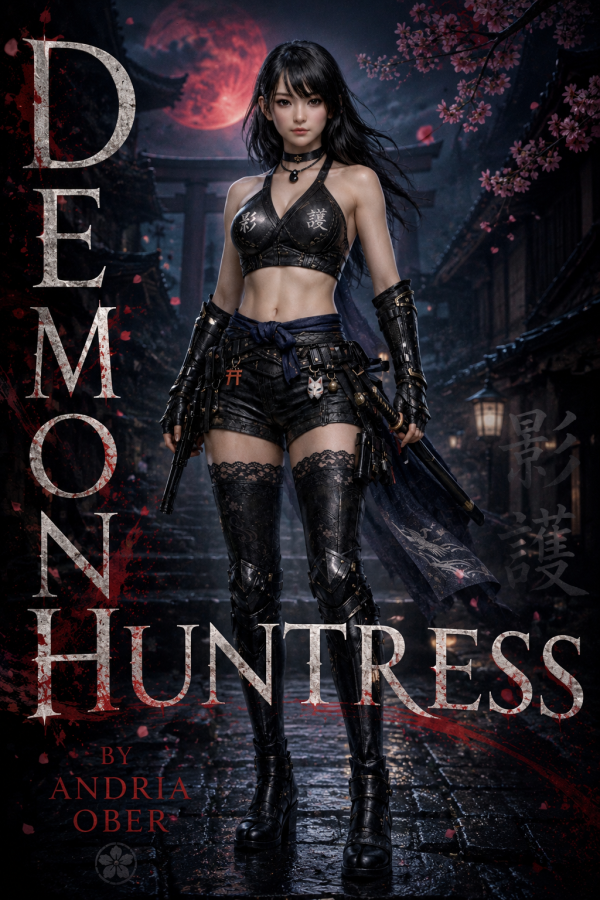
Chapter 6
The warning came halfway through the fifth period.
At first, it was subtle—a pressure at the base of my spine, a low, wrong hum that didn’t belong in a classroom full of scratched desks and flickering lights. At first, I tried to ignore it, but the sense of intrusion only grew. My Hunter Core tightened, awareness sharpening as if the world itself had leaned closer to listen. There was an electric prickling beneath my skin, a crawling dread that set every nerve on edge, as if gravity itself had shifted and the air thickened with something ancient and hostile. I felt my breath catch, heart hammering in my chest—not out of fear, but anticipation, as if some part of me recognized the shape of the threat before my mind caught up. Across the room, Su stiffened at the exact same moment, her eyes snapping up. One by one, the other hunters reacted, their faces tightening as the portal's presence pressed against us—alien, cold, and hungry, like a storm about to break. We all felt it, that moment between the world we knew and the one clawing its way through.
A demon circle was opening.
There was no announcement. No panic button. The hunters didn’t need one.
All twenty of us, scattered across different classrooms, felt the call at once—an instinctive, synchronized movement. Chairs scraped back in perfect unison as we rose, our bodies responding not just to training, but to the primal certainty that our world was about to be breached. No words were needed; we all knew what was coming.
Gasps tore through each classroom as hunter forms erupted in flashes of shadow, swirling sigils, and the clatter of armor assembling itself in midair. In every corner of the school, desks skidded and toppled as startled students recoiled from the sudden transformation—some pressing themselves against walls, others frozen in awe or terror. The air crackled with released power as the twenty of us called forth our true selves, the ritual of transformation echoing through corridors and behind closed doors. My own armor flowed into place like a second skin, shadow folding around me with a familiar, steady warmth, but I could feel the other hunters too—a pulse in the collective Core, each one a beacon lighting up the school in the instant before battle.
Vanessa was in the room.
For a split second, she looked bored, half-scrolling through her phone, then the shift began. Her smug composure shattered the instant she saw me change—her fingers froze mid-scroll, knuckles turning white as her grip tightened.
She recoiled visibly, knocking her chair back with a sharp scrape, all the color draining from her face. Her eyes widened, her mouth falling open as she stared—not at a rumor, not at speculation, but at reality. Confusion darted across her features, quickly replaced by disbelief, and then something like fear. I didn’t look like the weak boy she remembered. I didn’t even look like a civilian. I looked like a hunter—dark leather, controlled posture, blade already in my hand. In that moment, I saw her façade collapse completely, leaving only raw shock and the realization that the world she controlled had changed forever.
And then I vanished—slipping into the cool, liquid dark that pooled along the wall. Shadow welcomed me, soft and absolute, muffling every sound and sensation except for the pounding of my own heart. For an instant, there was nothing but cold silence and the faint, electric pull of the portal ahead, guiding me through the darkness like a current.
I stepped backward into the shadow along the wall, and the world swallowed me whole.
The classroom erupted in screams.
They had never seen anything like that.
I emerged beneath the athletic field bleachers, the world snapping back into focus around me. Cool metal and dust pressed against my palms as I crouched low in the deepest shade, the shadow still clinging to my skin like a half-remembered dream. My lungs filled with the scent of cut grass and old sweat, a jarring contrast to the chill I'd just passed through. Beyond the latticework of steel, the demon circle finished forming on the grass. The air warped around it, thick with blood and corruption, symbols burning into existence with a wet, grinding sound that made my teeth ache.
The summoning circle ruptured with a crack like splitting stone, and a gout of red-black mist burst skyward, swirling and coiling as something massive pressed at the threshold. Clawed hands—too many fingers, each jointed backward—punched through first, gouging furrows in the blood-soaked grass. The air stank of iron and rot as the demon's head followed, horns scraping the air, a mouth full of needle teeth opening in a howl that made the ground vibrate. Its flesh was slick and pulsing, cords of muscle writhing beneath bone plating that cracked and oozed as it forced itself into our world one agonizing inch at a time. Blood seeped from beneath the forming creature, pooling around runes that burned and smoked beneath its weight. I could see the other hunters converging from every direction—shield lines forming, spellcasters already chanting—but the demon was still vulnerable. Half-anchored. Struggling. Its eyes, not quite real yet, scanned the field, hate and hunger burning in sockets that bled shadow.
I didn’t wait for orders.
I moved.
I sprinted from shadow to shadow, my breath tight in my chest, each stride silent but charged with intent. The demon’s skin shimmered with arcane residue as I closed in, the air buzzing with its half-born malice. I leaped onto its back just as it finished pulling free, boots landing between ridges of bone, the heat of its body pulsing up through my armor. My blade was already moving, guided by the Core’s cold focus.
The first strike landed deep, plunging into the space between shifting plates of bone along the demon’s spine. I felt the impact vibrate up my arm—a crunch of resistance, then a wet give as cursed flesh split around steel. A spray of black blood hissed against my gauntlet, burning cold where it touched. The demon’s howl erupted, raw and guttural, shaking the air and making the bleachers rattle.
Flesh parted cleanly beneath my blade, resistance giving way as I cut hard across its spine. The blade found a gap between two vertebrae and bit deep, severing more than just muscle—something vital ruptured. Bone cracked with a sharp, splintering sound, shards flying in every direction. The demon’s back arched reflexively, limbs spasming as raw power bled out through the wound. Black blood sprayed across the grass in steaming jets, sizzling where it struck the earth, leaving scorched, smoking patches in its wake. The wound itself pulsed with a sickly, unnatural light, as if the magic anchoring the demon to our world was faltering. The demon roared, the sound shaking the bleachers and rattling my teeth. For a split second, its movements slowed, one leg buckling beneath it as the damage rippled through the half-anchored body.
I was gone before it could react.
Shadow folded around me again, cold and absolute, swallowing sound and sensation as I slipped away from the demon’s reach. I felt the rush of displaced air as one of its claws raked the space where I’d just been—a hair’s breadth from catching my leg. For a split second, the world narrowed to the icy press of shadow and the thunder of my own pulse. Then I reappeared twenty feet away, crouched low in the grass, heart hammering, armor slick with the demon’s black blood. Behind me, the demon thrashed in agony, tearing up the earth with blind fury. That single strike slowed it—unbalanced it—and bought the others precious time.
The others surged forward the moment my shadow fell away, a wave of hunters converging from every corner of the field. Shield bearers formed a half-circle to cut off the demon's retreat, their barriers locking into place with crackling energy. Su vaulted a toppled bench, twin katanas flashing in her grip as she led the first charge—the blades catching the sunlight, their edges shimmering with the faint glow of imbued magics. She moved like a storm, slashing at the demon’s exposed flank with a flurry of precise, arcing strikes, each one leaving deep, smoldering gouges in its corrupted flesh. Three spellcasters dropped into a tight formation nearby, hands glowing with sigils as they built up their next volley. Each movement was practiced—coordinated chaos honed by years of training. For an instant, I saw our clan's tactics come alive: blades harrying the demon’s legs, shields forcing it to stay exposed, spellcasters hanging back to direct their fire where the armor cracked.
Fire slammed into the demon’s flank as spellcasters unleashed controlled infernos, burning away massive swaths of corrupted flesh and filling the air with acrid smoke. Blades flashed in sequence—some glowing with runes, others crackling with elemental power—slicing deep into tendon and bone. Shields rang out as the demon’s claws met them, sparks and splinters flying at every impact, the force of each blow enough to drive shield bearers back a step but never break their line. Through it all, the hunters shouted warnings and signals, weaving between each other in a deadly dance. The demon lashed out, but for every attack, a hunter was already moving, slipping past or turning its own momentum against it. The ground itself shuddered under the onslaught—a battlefield claimed and defended by twenty hearts, moving as one.
The fight was brutal.
I didn’t charge in blindly.
I waited.
Shadow Assassin training wasn’t about constant motion—it was about timing. I watched the demon’s rhythm, the way its attention fractured under pressure. Each breath, each twitch telegraphed its next intention. When it turned toward the shield wall, I struck its exposed side—blade slipping between the bone plates under its arm, slicing into the vulnerable joint with surgical accuracy. When it lunged at a caster, I darted in low, severing tendons behind the knee with a single, practiced cut before melting into the shadows again. Every strike targeted a weak point: the base of the skull where armor thinned, the sinew at the back of an ankle, the gap between ribs. My attacks weren’t meant to kill outright—they were to wound, to bleed, to break the demon’s movements down piece by piece.
Each attack was brief. Precise.
Pain accumulated.
The demon slowed.
Then I saw it—the opening I’d been waiting for, carved by pain and desperation. The demon’s movements had slowed, every wound accumulating into hesitation, its attention flickering between Su’s relentless katanas and the spellcasters’ fire.
I pressed myself into the shadow at the demon’s flank, heart pounding, breath held. As it reared back to bellow—a final, furious roar, neck stretched and jaw wide—I let go of caution and let instinct take over. Shadow surged beneath my feet, launching me upward in a single, silent burst. Time slowed.
I landed above and behind the demon, balanced on a jut of bone. I could feel the heat radiating off its flesh, see the veins pulsing beneath the armored hide, smell the stench of burning blood and magic. My grip tightened on the hilt, every lesson and correction echoing in my mind.
One decisive strike—angled down and across, blade honed to a razor edge. The steel bit cleanly into the exposed neck, slicing through sinew and vertebrae. I felt the resistance vanish, the weight of the demon’s head separating in a single, fluid motion.
The severed head hit the ground with a heavy, wet thud. For a heartbeat, the demon’s body froze, black blood spraying in a final arc before everything collapsed inward, ash and silence swallowing the battlefield.
Then it collapsed inward, flesh turning to ash as the summoning circle beneath it sputtered and died. Within seconds, there was nothing left but scorched grass and drifting black residue.
Silence followed.
Then the cleaners arrived—clan specialists in crisp, rune-stitched uniforms, moving with swift, practiced efficiency. They swept the area with detection charms, sealing remnants, and scattering alchemical salts to neutralize any lingering corruption. A portable ritual circle was chalked onto the scorched grass, its light pulsing and dimming as it absorbed the last traces of demonic essence. Cleaners wielding specialized siphon wands dispersed the black residue, erasing every mark of the battle until not even a scorch remained. Others moved among the hunters, offering cloths and neutralizing sprays to dissolve the demon’s blood from armor and skin, their touch brisk but careful—checking for burns or contamination, murmuring reassurances with the familiarity of those who’d done this a hundred times. Only when the lead cleaner nodded, satisfied that the site was truly clean and the hunters safe, did the tension finally break.
As we regrouped, hunters clapped me on the shoulder, their faces split between exhausted relief and genuine excitement. Praise echoed through the group—some with boisterous shouts, others with quiet, proud nods. “That was flawless work!” someone called out. “You set up the opening for all of us.”
“Your first kill,” a senior hunter said, grinning at me with open approval. Another nudged my arm, voice low but sincere: “You moved like you’d done this a hundred times.”
Su laughed loudly and slung an arm around my shoulders. “Did you see her?” she crowed, making sure everyone heard. “Back strike, vanish, neck cut—absolutely textbook! You looked terrifying out there! The way you slipped through the shadows? I’ve never seen anyone move that fast on their first deployment.”
A few others chimed in, recounting the fight—“That tendon cut was perfect,” “You read that demon like a book,” “The way you drew its focus, then disappeared? Beautiful.” Even the shield bearers, usually reserved, nodded their respect. “You gave us the window we needed. That’s how a hunter should fight.”
Heat rushed to my face as the reality of it finally settled in—a flood of pride, disbelief, and relief tangled together. I tried to deflect the praise, shaking my head and insisting, "It wasn’t just me. We all fought that thing. Su, the shield line, the casters—everyone played a part."
But the hunters would have none of it. “Maybe so,” someone grinned, “but you finished it. That was your blade.” Even as I tried to share the credit, they kept piling on congratulations, voices rising in a stubborn chorus. Su just squeezed my shoulder tighter and laughed, “Let us brag about you for once, okay?”
I felt awkward under the spotlight, but a part of me warmed at the camaraderie—at the way their pride in me was real, loud, and a little overwhelming. For now, I let myself take it in, even if only for a moment.
It was my first kill.
Heat rushed to my face as adrenaline still buzzed through my limbs. “You’re exaggerating.”
She snorted. “I am absolutely not.”
We shifted back to civilian forms before returning inside, the weight of the fight still clinging to me as we walked the halls. Students pressed against classroom windows, eyes wide. They had seen everything—the transformation, the battle, the way the hunters moved together. A hush followed us down the corridor, charged with a mix of awe and fear.
When we entered the classroom, the reaction was immediate and electric. Conversation stopped mid-sentence. A few students actually flinched as I stepped through the door, their eyes flicking between my face and the seat I’d so recently abandoned. Some shrank back, uncertain, while others leaned forward hungrily, eager to be near someone who’d just crossed the line between rumor and legend.
Then the dam broke. Whispers turned into congratulations and excited exclamations. Students crowded around the returning hunters—some reaching out to touch a shoulder or sleeve, as if to confirm we were real. Voices overlapped, tumbling over each other in their excitement as they praised the hunters—and me—loudly and without reserve.
“Did you see how she moved?”
“That was insane.”
“She disappeared like smoke.”
“That hunter form was badass.”
Others hung back, eyes wide and unsure, clearly unsettled by what they’d witnessed. I caught snippets of nervous laughter and whispered bets on who would dare talk to me first. A few looked at me with something like envy, but more with new respect—or wary distance. My seat, once a place of forgettable anonymity, suddenly felt like the center of the room.
No one whispered about my body anymore—not the way I carried myself, not the clothes I wore, not whether I fit their expectations. Those old sideways glances, the snickers behind raised hands, all of it vanished beneath the new reality I’d forged on the field. Where there had once been gossip and speculation, there was only silence, thick with the memory of what we’d all seen.
Nobody questioned what I was now. I saw it in the set of their shoulders, the way their eyes slid away from mine if I looked too long, in the careful respect that replaced old skepticism. The hunters’ marks on my skin and the steel in my gaze were answer enough. Whatever doubts or rumors had haunted the edges of my days, they were gone—burned away by shadow and steel and the simple, inarguable truth of what I had become.
Across the room, Vanessa sat rigid, her spine ramrod straight and her knuckles white where she gripped the edge of her desk. The flush on her cheeks was not the delicate pink of embarrassment, but the deep, mottled red of humiliation and fury. It was as if she were physically holding herself together, refusing to let anyone see the cracks forming beneath her practiced composure. She stared fixedly at her notebook, jaw clenched so hard it seemed to ache, refusing to meet anyone’s eyes—least of all mine. The whispers and congratulations that washed over me seemed to pool around her and then break, leaving her isolated in a little island of silence. For years, she had thrived on being the center of attention, the queen of every rumor and pointed comment. Now, nobody looked to her for their cues. Her power was gone—a social empire toppled in a single afternoon. She didn’t look at me. She couldn’t.
Later, the tone of the whispers changed—lower, awkward, almost hesitant. A cluster of boys lingered near the back of the classroom, voices pitched just above a whisper but still loud enough to reach my ears. I caught the words: “Would you ask her out?” and “Do you think she’d say yes?” The question hung in the air, their curiosity newly emboldened by whatever strange allure comes with danger and notoriety.
A rush of discomfort prickled up my spine. There was something deeply unnerving about the way the conversation shifted from awe and respect to speculation about my dating life, as if everything I had just done could be reduced to this—another rumor, another dare. I folded my arms tightly across my chest, trying to make myself smaller, wishing I could slip back into shadow and out of sight. The idea of being approached, of someone thinking they could win me over with a few clumsy lines after watching me kill a demon, was as absurd as it was unsettling.
I shuddered at the thought—an involuntary, bone-deep recoil from a kind of attention I had never wanted and certainly hadn’t earned.
Absolutely not.
Before anyone could fully settle back into their seats, the intercom crackled to life, the familiar tone sharp enough to cut through the lingering adrenaline still humming in the air. The principal’s voice was cool and unyielding: “Attention, all students and faculty. This is not a drill. The school is now entering post-incident lockdown. Remain in your classrooms until further notice.”
A collective shiver passed through the room. The doors sealed with a heavy, mechanical thunk—locks bolting into place, reinforced panels sliding down over glass. I watched as teachers moved with brisk efficiency, ushering students back to their seats after they had been at the windows. Blinds were drawn tight, and each window was double-checked, as if a second demon might claw its way through the glass. The room dimmed as emergency lighting flickered on, bathing everything in a muted, amber glow that seemed to press the world inwards. Outside in the hall, footsteps echoed—administrators, security, and, unmistakably, the heavy tread of Hunter Investigation Department agents.
Mr. Hoshino cleared his throat, trying to project calm even as his knuckles whitened around a sheaf of attendance slips. “Everyone, remain calm,” he said. “The hunters have neutralized the threat. This is procedure.”
But the procedure didn’t stop at locked doors. Minutes later, the corridor outside filled with the measured voices and clipped footsteps of the hunter investigation team. They began going classroom by classroom, asking questions of anyone who’d witnessed the summoning, taking statements from still-shaken students and faculty. When their turn came, the hunters were questioned separately—our names checked off on a tablet, our accounts cross-referenced and recorded with a precision that brooked no argument. No one was allowed to leave until every detail had been gathered, every sequence of events confirmed.
The rest of us waited, adrenaline draining away, leaving behind a hollow, wary silence. The word “procedure” did a lot of work. It was supposed to make us feel safe. Instead, it only reminded us how close we’d come to disaster—and how quickly the world could change.
Minutes later, the administration arrived—not rushing, not panicking, but moving with the kind of efficiency that came from too much experience. The principal entered with two representatives from the Hunter Oversight Office, their badges visible, their expressions unreadable. Their coats bore the silver sigil of the Office, and they carried themselves with the crisp assurance of people accustomed to walking into aftermaths and demanding order. Their footsteps seemed to mute the existing tension, a hush falling as they crossed the room.
They didn’t look at the civilians first. They looked at us—the hunters—scanning faces, measuring, already cataloging details for their inevitable reports. One officer held a slim, rune-lit tablet, her eyes flicking from student to student as if memorizing each of us for later review. The other set down a stack of spell-sealed folders and clipped a badge to the edge of the teacher’s desk, marking their authority as absolute.
“All hunters,” the principal said, voice firm but respectful, “remain seated. You will be debriefed shortly.”
The Oversight officers moved briskly to set up a temporary interview area at the front of the classroom. Clipboards, enchanted recorders, and spell-sealed envelopes appeared, ready to collect every account of what had happened in a way that would satisfy both bureaucracy and magic. The air felt taut, everyone hyper-aware that every word and recollection mattered now in a way it never had before.
A few civilians shifted uncomfortably. Some stared at us with awe. Others with fear. A handful with resentment. No one spoke as the officers began calling us up one by one, their questions precise and unyielding—about sequence, tactics, the moment the portal opened, the first sign of demonic energy. It was less interrogation than the slow, methodical piecing together of a puzzle that would be scrutinized by people far above our heads.
One of the Oversight officers glanced down at a tablet. “Blood demon,” she said quietly. “Summoning circle confirmed on school grounds. Response time acceptable. Casualties?”
“None,” Mr. Hoshino replied immediately. “No civilian injuries.”
The Oversight officer looked up, her gaze sweeping over the classroom’s small cluster of hunters. We answered her questions in turn—each of us recounting what we’d sensed, how we’d moved, what we’d seen the moment the portal began to form. Su’s voice was steady and clear as she described the formation of the shield line and the teamwork that kept the demon contained. Another hunter explained how spellcasters coordinated their timing, and another how the evacuation of the other students was triggered.
When my turn came, I kept my answers precise—what I felt in the Core, why I moved when I did, what I saw during the demon’s partial manifestation. The officer’s questions were sharp and methodical, but not unkind. She pressed for detail on my shadow-step, the timing of my first strike, and my assessment of the demon’s vulnerabilities. My classmates filled in gaps with their own observations, sometimes correcting or supplementing my account with their perspectives. There was no sense of competition—only the quiet, collective determination to get the story exactly right.
Finally, the officer nodded once, then her gaze settled on me. “Shadow-class Hunter,” she said, tone neutral. “First deployment?”
“Yes,” I answered, my voice steady despite the sudden weight of attention.
She studied me for a moment longer than necessary, then marked something on her tablet. “Your intervention prevented full manifestation,” she said. “That reduced risk to the school significantly.”
With that, the debriefing drew to a close. The Oversight officers gathered their notes and spell-sealed folders, exchanging a few quiet words with the principal before giving the smallest of nods to the classroom as a whole. The tension in the air shifted—not completely gone, but loosening, as if some invisible cord had finally slackened. My fellow hunters let out collective sighs, some rubbing their faces, others slumping back into their seats in exhaustion. Su nudged me, a small, tired grin on her face, and I realized just how drained we all were—adrenaline replaced by the heavy ache of aftermath.
A final round of instructions followed: remain available for follow-up if needed, report any lingering symptoms, and support each other. The officers’ formality never wavered, but there was a subtle undercurrent of respect in the way they looked at us as they left. Not approval, exactly—but an awareness that we had faced something real and survived.
“However,” the principal added, folding his hands together, his voice slower and heavier now, “we will be enforcing a full lockdown for the remainder of the period. Counseling staff will be available for any civilian students who witnessed the event. If you are struggling, if you are shaken, you will have support. No one is expected to process this alone.”
He paused, letting the words settle, then looked from student to student, his gaze steady. “What happened today was extraordinary—and frightening. But it was met with extraordinary courage. I want to thank the hunters in this room for their discipline and composure, and I want to thank the rest of you for following instructions and supporting one another.”
Vanessa shifted sharply in her seat.
I noticed.
So did everyone else.
“This school exists at the intersection of two worlds,” the principal continued, his voice gaining strength. “Today was a reminder of why we have protocols. Hunters are not here to intimidate or impress. They are here to protect, and to stand between our community and the darkness beyond.”
His gaze swept the room, lingering briefly on the civilians. “Speculation, harassment, or rumor-spreading related to this incident will not be tolerated. We will not let fear become cruelty. We will face this as a community—together.”
Vanessa’s jaw tightened.
After the administrators left, the room fell into an uneasy quiet. The adrenaline drained away, leaving behind the strange hollowness that always followed violence. My hands felt steady, but distant, like they belonged to someone else.
Su leaned closer, her voice low—a rare note of gentleness replacing her usual bravado. “You okay?” she asked, searching my face for any sign I might crumble now that the adrenaline had faded. Her hand hovered over mine, then settled with a warm, reassuring squeeze, grounding me in the moment.
I nodded slowly. “I think so.”
She studied me a moment longer, eyes narrowed in concern. “You’re sure? No shakes? No aftershocks? If you need air, I’ll run interference.”
I managed a faint smile. “I’m okay. Really.”
She squeezed my arm again, more firmly this time. “You did exactly what you were trained to do—and you did it well.” Her voice dropped even lower. “If you need to talk, or if it hits you later, I’m here. And if anyone gives you trouble about it, they deal with me.”
That helped. A little.
The bell eventually rang, its sound oddly muted beneath the weight of the day. No one sprang from their seats; everyone waited for instructions. We were dismissed in staggered groups—hunters first, followed by the rest of the students, each group escorted by staff and security. The corridors, usually chaotic with end-of-day noise, were subdued and carefully managed. Some doors were kept closed until the halls ahead were clear, preventing the usual bottlenecks and chatter. Even the teachers’ voices were hushed, as if unwilling to disturb the fragile calm.
As I stepped into the hallway with the other hunters, the world outside the classroom felt strange and distant. We moved in a small, tight knot, watched by glassy-eyed students and staff pressed against the walls. Every footstep echoed too loudly. Behind us, the civilians emerged in their own waves, their eyes flickering between us and the places where magic had left invisible scars.
As we walked, I caught snippets of conversation—some spoken in awe, some in disbelief.
“That was real, right?”
“She killed it.”
“I didn’t know they were that fast.”
No one laughed. No one joked. The usual gossip and laughter were nowhere to be found, replaced by a heavy silence that clung to the walls and the air itself.
And as the lockdown lifted and the gates reopened, the world outside felt oddly distant—colors a little too bright, sounds muffled as if someone had wrapped the whole city in gauze. Students drifted out in small groups, their movements tentative and uncertain, as if the ground beneath their feet might shift again at any moment. For all the careful order of dismissal, there was a sense of unreality clinging to us: the afternoon sun looked wrong, too ordinary for a day when blood and shadow had spilled so close to home.
Conversations were hushed, eyes darting from faces to doorways to the sky, everyone half-expecting another siren or the shimmer of a spell. Some students walked in silence, clutching bags or phones with white-knuckled hands. Others kept glancing back at the school, as if they’d left something vital behind. Even the laughter that occasionally bubbled up sounded out of place—too brittle, tinged with disbelief.
Home felt different that night.
The old house greeted me with its quiet strength—wooden steps creaking underfoot, the scent of tatami and incense lingering in the air, shoji doors casting soft grids of golden lantern light across polished floors. The garden beyond the veranda was hushed, stones damp from the evening dew, and the faint trickle of the koi pond’s water seemed impossibly gentle after the chaos of the day. Wind rattled the bamboo in the corner of the yard, a sound I’d heard every night of my life, but tonight it felt distant, as if the world outside the walls could no longer touch me.
As I slipped off my shoes and stepped over the threshold, the weight of everything that had happened settled over the house, clinging to beams and floorboards, pressed into the air between each breath. Not colder. Not warmer. Just… heavier. The memories of battle and fear lingered in the quiet, making the old house feel both sheltering and solemn, as though even its walls understood what had changed. Home was still home, but the way it held me was different now—a place that promised safety, yes, but also remembered every shadow I carried inside.
The moment we stepped back into the clan compound, the tension I’d been carrying all day finally loosened its grip. The stone halls, the low lantern light, the familiar hum of layered wards—all of it wrapped around me like something solid and dependable. Only then did I realize how tightly I’d been holding myself together, how every muscle had locked down since the first warning at school. Because the last time I’d faced a demon, I hadn’t come home at all. That memory—sharp and cold, always lurking beneath the surface—had haunted every step, every strike, every decision I made on the field. Now, standing in the safety of home, I could finally breathe again. Relief was tangled with disbelief and something like gratitude: I had survived. This time, I had come back.
My family was already waiting.
Mom reached me first, her relief so fierce it nearly bowled me over. She didn’t say a word at first, just pulled me into a hug so tight I could barely breathe—arms locked around my shoulders, hands pressed into my back, trembling ever so slightly. It was as if she needed to convince herself, through touch alone, that I was whole and alive and standing in front of her. I felt her breath hitch and then leave her in a long, shaky exhale, the fear she’d been carrying all day finally slipping away. She cradled the back of my head for a moment, holding on as if she might never get another chance.
When she finally found her voice, it was thick with emotion. “I’m proud of you,” she whispered. “You came back. You’re safe.”
I hugged her tighter, feeling the truth of it settle deep in my bones—that this, more than praise or accolades, was what it meant to come home.
Dad waited until she stepped aside before approaching. His posture was composed, commander-first as always, but his eyes were softer than usual. For a heartbeat, the mask of stoic discipline slipped—just enough for me to catch the glimmer of relief beneath. His hand came up, hovering awkwardly as if torn between a formal pat on the shoulder and a real embrace. In the end, he chose neither, but the gesture itself was enough: he was glad I was safe.
“Good work,” he said quietly, just for me. “You acted decisively. You recognized an incomplete manifestation and exploited it.” He nodded once, more to himself than to me. “That prevented civilian casualties. That alone justifies your decision to engage.”
Relief flickered through me—not just for his approval, but for the unspoken feeling behind it. He was proud, and more than that, he was grateful.
Then his expression shifted—not harshly, but deliberately, slipping back into the familiar role of mentor and commander.
“However,” he continued, “you initiated contact before full confirmation of support positioning.”
Tanji, leaning against the wall with his arms crossed, nodded with a mixture of approval and caution. “You assumed the shield line would hold. They did—but if the demon had surged instead of anchoring, you’d have been isolated and cut off from backup.” His tone was practical, not chastising, but he didn’t let the point slide. “You have to trust your team, but you also have to verify their positions. Never assume a demon will do what you expect.”
I nodded, absorbing the lesson even as the sting of the close call lingered. “I know,” I said quietly. “I realized it after the strike.”
Dad inclined his head, but his gaze was direct, weighing every word. “Good. That means you’re learning. Every fight is different, and even the smallest miscalculation can cost lives. You read the situation well, but next time, be sure your escape is covered before you commit.”
Before Su could jump in with her usual unfiltered enthusiasm, Miko stepped forward.
She hadn’t spoken yet, and that alone made my stomach tighten.
Miko was different from the rest of us. Where Su burned bright and loud, Miko was precise—every word chosen carefully, every correction exact. She studied me now the same way she studied battlefield footage, her gaze sharp but not unkind. I could almost see the pattern recognition working behind her eyes, dissecting my choices, my angles, my timing.
“You were efficient,” she said at last, her tone even and analytical. “Your movement through shadow was clean. Your entry angle was excellent—it minimized your exposure and leveraged the demon’s blind spot.” She paused, index finger tapping her elbow. “But you telegraphed your final reposition. I saw your weight shift about half a second before you committed.”
I blinked. “I did?”
“Yes,” she said immediately, not missing a beat. “Just before the neck strike. A demon that had retained full situational awareness could have countered, or at the very least, made you pay for it. You got away with it because the others had already broken its focus and destabilized its awareness.” She crossed her arms with a decisive snap. “Don’t rely on chaos to cover your tells. Next time, either mask your intent entirely or move faster.”
That stung.
Then she reached out and adjusted my posture slightly—just a small shift of my shoulders, my center of balance moving half an inch.
“Next time,” Miko continued, “commit fully or don’t commit at all. Hesitation is the only thing shadows don’t forgive.”
I nodded, absorbing it. “Thank you.”
Her expression softened, just barely. “That being said,” she added, “your restraint was good. You waited for the opening. You didn’t force the kill.”
That was when the critiques became something else—no longer just training, but a kind of familial affection. Su finally burst in, flopping onto the bench beside me with a dramatic sigh. “Okay, but can we acknowledge how cool it looked?” she said, grinning widely. “Back strike, vanish, neck cut—textbook Shadow Assassin. I thought the bleachers were going to collapse from the roar.”
Tanji snorted despite himself, a smile tugging at the corner of his mouth. “She’s not wrong. Your timing was excellent. Made the rest of us look slow.”
“But,” Su added immediately, jabbing a finger at me, “you stayed in the danger zone half a second too long after the initial cut. That was almost a disaster.”
I thought I was clear,” I muttered, a little sheepish.
“You were lucky,” Su said, not unkindly. “Fast and lucky. Don’t confuse the two.”
Mom rested a hand on my shoulder, her touch warm and steady amid the playful ribbing. “Luck is a resource,” she said gently. “But it runs out.”
The room fell quiet for a moment, the weight of her words settling over us. But there was no judgment in their eyes—only love, pride, and the fierce desire to see me live through the next fight. Their assessments, even the sharpest ones, felt like a welcome home.
Dad broke the silence, his voice gentler than I expected. “Your final strike was decisive,” he said. “You waited. You didn’t let emotion rush you.” His gaze held mine, pride shining through his usual restraint. “Many hunters never learn that kind of control. You did well.”
Miko nodded in agreement, her approval clear for once. “And you disengaged immediately afterward. That’s discipline. You didn’t chase glory or let adrenaline cloud your judgment.”
Mom squeezed my hand, her eyes warm and shining. “You protected people. You came home. That’s all we ever wanted.”
Tanji offered a rare, genuine smile. “You’ve earned your place at the table—and you did it the right way. That’s what matters.”
For a moment, the weight of the day was replaced by something lighter—pride, belonging, and the sense of having truly done right by my family.
Mom searched my face. “You took a life today,” she said softly. “Even if it was a demon. Even if it was necessary.” Her voice lowered. “How are you holding up?”
I thought about the resistance of bone, the sound of the roar, the way the body had turned to ash.
“I don’t regret it,” I said. “But I don’t feel proud of it either.”
Dad nodded. “Good.”
That surprised me.
“Hunters who enjoy killing don’t last,” he said. “And hunters who feel nothing become dangerous.”
That was the truth of it—the weight that would always come with the blade. Even a demon, for all its malice and alien hunger, was a living thing, brought into existence by the choices and mistakes of others. Taking a life, even a monstrous one, should never feel easy. If it did, something essential would be lost—a piece of the conscience that separated us from what we fought.
Miko met my eyes, something like approval there. “You’re reacting exactly how you should.”
Su leaned her head against my shoulder. “First kill, no casualties, and you’re still you,” she murmured. “I’d say that’s a win.”
Tanji smiled faintly. “You’re one of us now,” he said. “Which means we’ll keep correcting you until you’re better.”
I let out a soft laugh.
As the conversation drifted toward food, reports, and tomorrow’s training schedule, a new feeling settled in—a sense of acceptance as real and grounding as any embrace. For the first time, I felt what it meant to truly belong: not just as a student, a hunter, or a survivor, but as someone recognized by those who mattered most. Their respect wasn’t showy; it was woven into every word of honest critique, every gentle correction, every hand steady on my shoulder.
My family wasn’t really celebrating a victory. They were inducting me into responsibility—and survival. The pride in their eyes was never about the kill itself, but about the choices I’d made, the lives I’d protected, and the fact that I’d come home alive. Every correction, every warning, was proof that I was one of them now, trusted with the same burdens and expectations.
Because in this family, love wasn’t loud. It was the quiet strength that promised I would never face the darkness alone—and the certainty that, together, we would survive whatever came next.
Demon Huntress Chapter 7
Author:
Audience Rating:
Publication:
Genre:
Character Age:
TG Themes:
TG Elements:
Permission:
Chapter 7
Vanessa didn’t speak on the ride home. The low hum of the electric engine was the only sound, a quiet shield against the tension coiling in the car’s interior. She sat pressed against the leather seat, every muscle tight, refusing to meet her own eyes in the faint reflection on the darkened window.
Her driver knew better than to ask questions when she sat rigid in the back seat, hands clenched in her lap, jaw tight enough to ache. The city slid past the tinted windows, familiar streets blurred by rain and neon, but to Vanessa, everything felt far away—her school, her classmates, her own sense of certainty. Now, all she could see was the image burned into her mind—the moment Haruka vanished into shadow, and the powerlessness that had settled over Vanessa like a second skin. The family crest glimmered on the back of the seat in front of her, a reminder of all the expectations she was supposed to live up to, and for the first time, it felt less like armor and more like a chain.
The moment the school changed.
By the time the car pulled through the gates of her family’s estate, Vanessa was vibrating with restrained fury. The wards shimmered briefly as they recognized the vehicle, intricate sigils flaring blue along the iron gates—an invisible barrier that could incinerate anything not keyed to the family’s blood. The security grid parted to let them pass, and the high walls were lined with silver and obsidian inlays, each rune calibrated to disrupt demonic energies. Private patrol drones swept the perimeter in silent, overlapping patterns, their sensors tuned to the smallest fluctuation in the air. Motion-activated turrets tracked the car until it reached the courtyard, then retracted smoothly into hidden recesses. Layered defenses—spellwork, technology, tradition—woven together so tightly that even the boldest demon wouldn’t dare approach. Yet as Vanessa sat rigid in the back seat, none of it soothed her. Tonight, the fortress felt less like a sanctuary and more like a vault for her anger, trapping her fury as surely as it kept monsters out.
Strong enough that she’d never needed hunters.
The car stopped at the entrance, and Vanessa was out before the door had fully opened. She all but launched herself onto the gravel drive, the sharp scent of ozone from the wards prickling at her skin as she slammed the car door behind her. Her fists were balled tight at her sides, and the night air seemed to hum with the force of her anger.
She stormed up the front steps, barely registering the flicker of defensive sigils along the threshold as the wards scanned her presence. The ornate doors parted at her touch, and she marched through the entryway, heels striking marble hard enough to echo down the hall. Every portrait and antique vase blurred in her periphery—she moved with single-minded purpose, ignoring the staff who stiffened at her passing, some glancing nervously at the way the lights flickered in her wake. Her fury seemed to charge the very air, and she didn’t slow until she reached her father’s study, shoving the door open without knocking.
“Why wasn’t I told?” she demanded.
Her father looked up from his desk slowly, irritation flickering across his face before being carefully smoothed away. He was a tall man, immaculately dressed, the kind of person who radiated authority without ever raising his voice. His fingers tightened imperceptibly around the pen he held, the only outward sign of his annoyance as Vanessa’s footsteps thundered into the room. The study, lined with ancient tomes and flickering with magical wards, seemed to brace itself for the confrontation.
“Told what, Vanessa?” he asked calmly.
“That the hunters were allowed to turn schools into battlefields,” she snapped, voice rising with every syllable. “That they can just let monsters crawl out of the ground in front of civilians like it’s nothing. Do you have any idea what it was like? I had to stand there and watch—and you let it happen!” Her eyes flashed with accusation, and her hands shook as she gestured, unable to contain her anger any longer.
He leaned back in his chair, jaw tensing just slightly, willing his voice to remain level. “That wasn’t negligence. That was containment.”
She laughed harshly, almost a snarl. “Containment? Everyone saw it. Everyone saw her. You think that’s control? It’s chaos.”
That got his attention, and for a heartbeat, the irritation broke through his controlled mask. His eyes narrowed, but he forced his features smooth again, refusing to let her see how much she was getting to him.
“Her?” he repeated.
Vanessa’s hands curled into fists. “Haruka Masaru. She was nothing before. A nobody. A weak kid hiding behind her sister.” Her voice sharpened with contempt and disbelief. “She barely spoke to anyone, and now she just—shows up, acting like all the rules are for everyone else. She walks into school like she owns the place, disappears into shadows, kills a demon in front of everyone, and suddenly she’s a hero. Everyone is talking about how brave she is, how she saved lives. But what about all the chaos she caused?” She spat the words, her anger edged with jealousy and fear she refused to name. “It’s like none of the rules matter for her. She gets a free pass for everything just because she’s a hunter now?”
Her father was quiet for a long moment, his gaze drifting toward the window as if Vanessa’s tirade were little more than background noise. He drummed his fingers once on the arm of the chair, an old habit betraying impatience. When he finally spoke, his tone was measured, just slightly dismissive—like a teacher indulging a student’s outburst. “And this is what concerns you most? That she’s gained attention?”
“You were at the incident?” he asked.
“Yes,” Vanessa shot back. “And do you know what people are saying now? They’re not talking about rankings anymore. They’re not talking about me.” Her voice cracked, anger bleeding into panic. “They’re talking about her.”
He studied her carefully, fingers steepled. “And what is it you want me to do?”
Vanessa slammed her hands on the desk. “Make it stop. Call someone. File a complaint. Hunters aren’t supposed to operate like that in civilian spaces. They have battle zones, quarantined sectors, whole districts set aside for this sort of thing—why are they turning my school into an arena?” She glared at him, voice trembling with outrage. “There are rules for a reason.”
“They operated where the threat appeared,” he replied evenly, irritation flickering under his calm tone. “Hunters do not choose the battlefield—demons do. Their mandate is to protect civilians from demons wherever they arise. You can’t quarantine the entire city. If hunters waited for the perfect conditions, there would be far more casualties.” He fixed her with a stern look. “The Oversight Office has already released a statement. The response was clean. No civilian casualties. The protocols were followed.”
“I don’t care about civilians,” Vanessa snapped. “I care about control.” Her voice trembled with frustration as she tried to put words to something that felt bigger than just envy. “Haruka—she disrupts everything. She doesn’t care about the order we’ve built. She walks in, does whatever she wants, and people bend the rules for her like she’s some exception to every law. It’s not just that she’s powerful. It’s that she gets to be unpredictable, and everyone forgives her for it.”
The word hung in the air between them.
Her father’s expression hardened—not angry, but cold. “Control,” he repeated. “It's not something you are entitled to, Vanessa.”
She recoiled slightly, then doubled down. “That girl embarrassed me. She undermined everything. People are afraid of her now.” Her hands gestured helplessly, as if searching for a way to make her father understand. “I try to follow the rules—I keep people in line. There are expectations, and she just ignores them. She makes it look easy. And now, no one even remembers what I did before. They only talk about her.”
“No,” he corrected. “They respect her.”
Vanessa shook her head furiously. “She doesn’t deserve it. She cheated. Hunters get special treatment. Her family runs the clan.”
“And you,” her father said quietly, “have lived your entire life behind walls paid for by people who do deserve that respect. You know who put those spells in the walls that protect you? Hunters, that’s who. Every layer of protection you take for granted—the wards, the runes, the very foundation of this house—exists because hunters risked their lives to make it so. They designed the whole defense around this home and hundreds of others like it. You resent the attention she’s getting, but you wouldn’t last a night without what she and her kind have done.”
Silence fell.
Vanessa stared at him, stunned.
“You think this is about popularity,” he continued, his tone turning even colder. “But it isn’t. This is about survival. You watched someone put themselves between a demon and a crowd of civilians—something you’ve never had to do because others have always stood in front of you. You watched her take responsibility, risk everything, and you still see it as a slight against your status. That’s not strength, Vanessa. That’s short-sightedness.” His gaze sharpened, voice soft but steely. “Instead of learning from that, you’re angry she outshone you. If you want respect, earn it by doing something worth remembering.”
“That’s not—”
“Enough,” he said, voice slicing through her protest with a finality that brooked no argument. “You will listen.”
Vanessa flinched, caught off guard by the force behind his words.
Her father’s eyes pinned her, his authority absolute. “You are not to interfere with the hunters,” he said, each word deliberate. “Not publicly. Not privately. Any attempt to undermine them will reflect on this family—and that will not be tolerated. You are part of something larger than your pride, Vanessa. I will not let your impulses put our name, or our protections, at risk.”
Her nails dug into her palms, frustration threatening to spill over. “So you’re just going to let her win?” she shot back, her voice brittle.
Her father stood, straightening to his full height and looming over the desk now, a living embodiment of the walls that had always contained her. “She didn’t win, Vanessa. She survived. There is a difference. The world is not your stage, and you are not the only player.”
She swallowed, rage and humiliation twisting together in her chest, but her father didn’t soften.
“You want control?” he added coolly. “Then learn restraint. Because the world does not bend just because you are uncomfortable. That is the last I will say on the matter.”
He waited a beat, making sure she understood. Then he turned back to his desk, already dismissing her from his thoughts—knowing, as always, that she would never truly listen.
Vanessa turned away sharply, blinking hard, her throat tight. Never before had her father rebuked her so completely, his words landing with the weight of stone. Humiliation burned hot beneath her skin, mingling with a fury she could barely contain. She stormed out of the study, footsteps echoing down the marble hall, breathing ragged as she pushed past startled staff and slammed her bedroom door behind her. For a moment, she just stood there, fists clenched, chest heaving, feeling the walls close in. The house had always belonged to her family, but in that instant, it felt like her father’s alone.
This wasn’t over.
She could feel it—a restless, electric certainty coiling just beneath her skin. Humiliation burned longer than ever before, each fresh wave sharpening her hunger for payback. Vanessa paced her bedroom, replaying the day over and over: every slight, every rule Haruka had broken without consequence. With each pass, her resolve only hardened until revenge felt inevitable.
Haruka Masaru had taken something from her today—attention, fear, relevance—and Vanessa had no intention of letting that stand. She would not let her father’s words box her in; she would not be erased.
If she couldn’t challenge a hunter with power, she would strike where power meant less. Vanessa sat at her desk and began drafting lists: names of students who’d been frightened, parents who worried about school safety, teachers who disliked disruptions. She mapped connections, tracing lines of influence and opportunity. Revenge would not be loud or direct. It would be strategic—a slow, careful unraveling of Haruka’s newfound status.…
She would find another way, and next time, she wouldn’t underestimate the shadows. Vanessa’s eyes narrowed as she wrote her first message, the beginnings of a plan that would make Haruka wish she’d never stepped into the spotlight.
That night, Vanessa didn’t sleep.
She lay awake in her room, staring up at the ceiling while the house remained perfectly quiet around her. The wards hummed softly beyond the walls, constant and reassuring—protections she had never questioned before, protections that had always offered her a sense of invincibility and certainty. They used to be a comfort, a reminder that nothing could touch her here, that the world’s chaos would always be kept at bay.
Tonight, though, the same protections pressed in on her, thick and suffocating. Instead of feeling safe, Vanessa felt boxed in, every layer of magic and steel a reminder that she was trapped—kept in as much as kept safe. For the first time, she wondered if the fortress was built to keep threats out, or to keep her contained, powerless to change anything that mattered.
Her father’s words replayed over and over in her mind, each one scraping raw nerves she didn’t want to examine. Restraint. Respect. Survival. He had spoken as if the matter was settled, as she should simply accept that the hunters had taken something from her and move on.
Vanessa didn’t move on.
She sat up slowly and reached for her tablet, the screen lighting her face in the darkness. Control had always come from information—who talked to whom, who wanted what, who could be pressured quietly, and who needed a public push. The school had been her domain because she understood its currents better than anyone else.
But now, all of that felt threatened. Vanessa seethed as she tapped through her files, every swipe a fresh reminder of how quickly Haruka had upended the order she’d so carefully maintained. Haruka Masaru was at the center of everything—an interloper, a wild card, the new axis around which the entire school revolved.
Images of the day replayed, relentless and sharp. Vanessa clenched her jaw as the memory returned unbidden: Haruka’s transformation, the way everyone had gone silent, the way attention had snapped toward her like gravity had shifted. Not just the outfit, not just the power—Haruka’s calm, her unshakable confidence, the fact that she had owned the space without saying a word.
The worst part was knowing that Haruka hadn’t even wanted the spotlight. She hadn’t asked for admiration or control, and somehow, that made it all the more infuriating. Vanessa stewed in the knowledge that for the first time, she was no longer the person who set the terms. She was reacting, not leading. And she would not let that stand.
Vanessa hated that most of all.
She turned the situation over and over in her mind, trying to find some flaw, some crack in Haruka’s armor that would make it easier to write her off. But there was none. Haruka hadn’t cared about appearances or popularity, and that made her impossible to undermine through the usual tricks. She hadn’t asked for attention, hadn’t schemed her way into the spotlight—she simply acted, and people noticed. That sincerity, more than anything, unsettled Vanessa. It meant Haruka’s influence was real, not manufactured by rumors or alliances. It meant Vanessa’s own power—so carefully curated, so dependent on perception—suddenly felt fragile by comparison.
Not because of how Haruka looked—but because she hadn’t been trying to impress anyone. She hadn’t asked for attention. And that made it worse. It meant Vanessa couldn’t dismiss it as desperation or performance.
Haruka hadn’t paid for attention.
She had earned it.
Vanessa’s fingers tightened around the tablet. That kind of authority was dangerous. Hunters already existed outside normal social rules—now one of them was becoming untouchable in the eyes of civilians. Admired. Defended. Immune to the same scrutiny and consequences that bound everyone else.
That could not stand. Not if Vanessa had any say in it.
As she stared at the scrolling blue-white glow of her screen, the beginnings of a master plan crystallized in her mind. For the first time all night, something like calm settled over her anger—a cold, focused clarity. If Haruka’s strength made her untouchable, then Vanessa would make “untouchable” look dangerous. She would turn respect into suspicion, admiration into anxiety.
“If I can’t challenge them directly,” Vanessa murmured to the empty room, “then I change the rules.”
Her thoughts sharpened as she began sketching out possibilities—not attacks, not confrontations, but pressure. Civilians who felt unsafe around hunters. Parents who didn’t like demons appearing near their children. Administrators who valued calm more than heroics. If fear could be redirected, it didn’t matter who had won the fight. It mattered who controlled the aftermath, who shaped the conversation, who defined what safety meant.
Fear always listened.
Haruka would be the key—not as a hunter, but as a symbol. Vanessa’s real target wasn’t just Haruka’s reputation, but the aura of safety and trust the hunters had built around themselves. She started to flesh out the specifics: she would frame her questions in ways that sounded like responsible concern rather than a personal vendetta. Why were hunters allowed on campus? Had anyone considered the psychological effects on students? How could parents be sure their children were safe if monsters could break through at any moment—even with hunters present?
She would drop these questions with teachers, administrators, and the most anxious parents, always in the guise of wanting to help. She’d encourage rumors that the hunters were unpredictable, that their presence attracted danger rather than prevented it. If she could get people to doubt—just a little—the hunters’ place at school, everything else would follow. The more people talked, the more the administration would feel pressure to act. Vanessa would never need to say Haruka’s name directly. All she had to do was let the right seeds of mistrust take root and watch them grow.
Vanessa smiled thinly as the idea took shape. She didn’t need to accuse Haruka of anything overt. All she had to do was ask the right questions in the right places. Let people wonder whether hunters belonged in schools at all. Let concern masquerade as reason. Let admiration sour into unease.
Her father had warned her not to interfere with the hunters.
But Vanessa understood something her father didn’t: true power didn’t require direct confrontation. It was about moving the pieces behind the scenes, making others believe her hand wasn’t even on the board. If she touched the hunters openly, she’d lose—but if she let the school itself turn against them, no one could trace it back to her.
She reasoned out her plan with a kind of ruthless logic. Hunters thrived on public approval and trust. If that trust wavered, if fear spread just enough, then even heroes could be seen as threats. Vanessa would never attack them outright; she’d simply amplify the questions and anxieties already lingering in the community. Let the system do what it could not—ostracize Haruka and the hunters. Let others carry out the consequences.
As she finally lay back down, eyes bright with restless calculation, one thought burned louder than the rest:
Haruka Masaru didn’t just embarrass me.
She reminded everyone that I can be replaced.
And Vanessa would make sure that the lesson came at a cost.
Vanessa began the next morning with restraint.
That, more than anything, made her effective.
She didn’t storm the halls or glare at hunters. She didn’t whisper directly about Haruka or repeat anything that could be traced back to her. Instead, Vanessa moved with careful intent, wearing a mask of composure and concern. Her voice was never loud, but always perfectly pitched to be overheard at the right moment. She made sure her questions seemed motivated by worry for everyone’s safety, not by personal agenda, framing herself as a responsible, level-headed student just looking out for her peers.
First period, she sat near the front and raised her hand—not to challenge the lesson, but to ask about safety protocols. Her tone was calm, almost studious, but there was a deliberate tremor of worry in her voice. "I just want to make sure we’re all prepared," she added, glancing meaningfully at classmates who still looked shaken. "Are there updated evacuation procedures if… something like yesterday happens again?”
The teacher hesitated.
That was all Vanessa needed—a small pause, a seed of uncertainty that she could water throughout the day. She knew the trick was not to push, but to let others arrive at doubt on their own.
By the second period, she wasn’t asking teachers. She was asking students—quietly, sympathetically. She leaned in close, lowered her voice, and let worry do the work. Between classes, she’d murmur, “Did you feel safe yesterday?” to a friend in earshot of others. She’d mention, as if offhand, “My little brother was terrified,” and let the words hang, inviting others to chime in. In group conversations, she’d drop a line like, “My parents were asking why hunters are stationed at a civilian school,” her tone thoughtful, never accusatory.
Every word was calculated, subtle, and plausible. Vanessa let silence do as much work as her questions, reading faces, cataloging which students leaned in, which ones looked away. She never accused.
She listened, offering empathy, but always making sure that uncertainty was the last thing left in the air.
At lunch, she didn’t sit with her usual group. Instead, she joined a table of students who had been visibly shaken by the attack. She offered reassurance with one hand and planted uncertainty with the other.
“I’m grateful the demon was stopped,” she said softly. “I just… wish it hadn’t happened here. Schools are supposed to be neutral ground, right?”
Heads nodded.
By the afternoon, the narrative had shifted—and Vanessa could feel it, a subtle current winding its way through the halls and conversations. Where the morning’s whispers had been about gratitude and awe, by lunch, doubts had crept in like a chill: "Should this have happened here? Are schools still safe if hunters and demons can clash in the hallways?"
It wasn’t hunters who saved us anymore—it was, "Why did we need saving in the first place? Who let danger in? Should we really trust anyone who brings that kind of chaos to our doorstep?"
Vanessa listened, quietly satisfied, as her classmates repeated the questions she’d seeded hours earlier. Teachers looked uneasy. The school’s sense of order, once so firm, now felt brittle and uncertain. Vanessa had done what she did best: she’d changed the conversation. She’d changed the narrative.
Vanessa’s next move wasn’t social.
It was administrative.
She drafted a message to the parent advisory council using language her father would have recognized immediately—measured, polite, impossible to dismiss without looking negligent. She disguised her writing with just enough awkward phrasing and earnestness to sound like a genuine, nervous teenager instead of a calculating mastermind.
Subject: Safety Concerns After Recent Incident (Anonymous)
Dear Parent Advisory Council,
I hope you don’t mind me reaching out anonymously. I know everyone is grateful for how quickly the situation was handled yesterday, but some of us are still really scared. A lot of students saw what happened up close, and it’s been hard to focus on classes. I was wondering if there are any plans to review when and how hunters are allowed on campus? My parents are worried too, and I just want to feel safe at school again.
Thank you for listening.
—A Concerned Student
She didn’t send it from her account.
She forwarded it to parents she knew were already anxious, handpicking the most vocal and influential to amplify her anonymous concerns. Within hours, the message began to ripple outward—shared in parent group chats, whispered about at pick-up, quietly forwarded to teachers with the subject line: Please address urgently.
By the end of the last period, the school was buzzing. Teachers glanced at their inboxes, faces drawn and tense. Counselors’ offices filled with students who couldn’t concentrate, parents left voicemails demanding explanations, and administrators were fielding questions they hadn’t anticipated answering. Every authority figure seemed just a little more uncertain, a little less in control.
With the groundwork laid, Vanessa turned her attention—carefully, deliberately—toward Haruka. She didn’t confront her. She let the unrest do its work for her, orchestrating from the background as the tide shifted.
She let others do it: a casual comment near the lockers that grew pointed, a question asked just loud enough for Haruka to overhear, a group falling silent as Haruka passed by. Vanessa tracked it all, her gaze cool, never lingering too long but always present enough to measure the effect. She was everywhere and nowhere at once, the hidden hand guiding every conversation and every sideways glance.
By midweek, the air at school had turned dense with speculation. It started innocuously enough—a parent dropping a question in the group chat about the school’s crisis plan, a teacher pausing before class to mention new safety protocols, a guidance counselor quietly asking if anyone felt anxious about “recent events.” But the questions multiplied, carried from hallway to hallway, whispered at lockers and in the lunchroom: “Why are hunters stationed here at all?” “Shouldn’t that fight have happened somewhere else?” “Do you think school is really safe with demons showing up and hunters fighting them in the open?”
Vanessa noticed how a single raised eyebrow or uncertain shrug could keep a rumor alive for hours. She watched as a group of sophomores clustered around their phones, rereading a message sent by an “anonymous student” to the parent council—her own words coming back to her in someone else’s voice. The more the adults tried to reassure them, the more students picked up on the nervousness in their tone. Doubt grew, subtle but persistent, gnawing at the certainty that had once made the school feel untouchable.
In the library, she overheard two juniors debating whether hunters actually protected students, or if their presence invited the very dangers they claimed to fight. At practice, a coach cautioned the team to stay alert for “unusual activity,” his voice tight with the strain of fielding questions from nervous parents. Even teachers seemed less sure of themselves, their lessons interrupted by anxious hands and pointed inquiries about safety.
Vanessa moved through it all like a conductor, never raising her voice, never giving her involvement away. She nudged a conversation here, dropped a worried frown there, asked a leading question—“Do you think the administration will do anything about it?”—then let the silence fill with uncertainty. By the end of the week, almost everyone had picked up the tune. The narrative was no longer about heroics or gratitude. It had become a chorus of doubt, every question echoing Vanessa’s unseen influence.
The effect of the questions was both immediate and insidious. In classrooms, teachers found themselves repeating the same reassurances, their voices growing thinner with each request for clarity. Lesson plans gave way to impromptu discussions about safety and responsibility, and more than one instructor caught themselves glancing toward the windows, as if expecting trouble to return at any moment.
Students who had once boasted about witnessing a demon’s defeat began to downplay their excitement, glancing around before speaking, unsure if their awe would now be met with judgment. Hallways that had buzzed with stories of heroism grew quieter, conversation shifting from amazed retellings to nervous speculation. “What if the hunters can’t keep us safe?” a freshman whispered, her words quickly picked up and carried off by a friend to another group.
Parents grew restless, flooding the administration with emails and calls. Some demanded stricter protocols, others questioned whether their children should even return to school until guarantees could be made. The principal’s office, usually a place of order, became a scene of barely contained chaos: staff members huddled over printouts of parent complaints, the phone ringing ceaselessly, calendars filling with emergency meetings.
Counselors reported a spike in students seeking appointments, not just for anxiety, but for confusion—unsure who to trust, uncertain how to feel about the protectors in their midst. Even the hunters themselves seemed to sense the shift, their confident movements in the halls now tinged with wariness, as if they could feel the stares and hear the murmurs chasing them from every corner.
And through it all, Vanessa watched—her questions having done their work. The school’s atmosphere, once orderly and certain, now thrummed with unease and suspicion. The doubts she’d sown spread like roots beneath the surface, destabilizing the very foundation of trust and safety that had once seemed unshakeable.
Each evening, Vanessa retreated to her room and reviewed the landscape she’d shaped. She scrolled through group chats, scanned parent forums, and listened in on student message boards, measuring the reach of her narrative. It was astonishing how quickly uncertainty had spread—how questions she’d seeded just days earlier had blossomed into full-blown distrust.
She took notes with clinical precision. Which teachers seemed most rattled? Which parents were mobilizing others? Which students echoed her phrasing, and which ones resisted? Vanessa tracked patterns, plotting out the next moves as if she were playing chess against the entire school.
It became clear that the administration was scrambling for control, and that a few parents—emboldened by the anonymous letter—were organizing a petition for stricter policies on hunter access. Sensing opportunity, Vanessa updated her plan, deciding to escalate her efforts from whispers to organized pressure.
She drafted new talking points for her most influential allies, arming them with statistics about “incidents at other schools,” carefully cherry-picked and taken out of context. She encouraged the most anxious parents to request a formal meeting with the principal, even suggesting in veiled terms that the local press might be interested in campus safety. For students, she circulated rumors of “near-misses” and “cover-ups,” never citing sources, always letting fear do the work.
Vanessa also began crafting a second anonymous letter—this one addressed to the school board—proposing a temporary moratorium on hunter presence during school hours, just until a “full review” could be conducted. She sprinkled it with the same blend of concern and reasonableness that had worked so well before, making sure that no line could be traced back to her.
As she fine-tuned her plan, Vanessa felt a thrill of satisfaction. The unrest was no longer just background noise—it was a movement. She had set the school in motion, and with each carefully chosen word, she tightened her grip on the outcome.
Demon Huntress Chapter 8
Author:
Audience Rating:
Publication:
Genre:
Character Age:
TG Themes:
TG Elements:
Permission:
Chapter 8
By the following morning, the questions swirling through the city had finally reached the clan’s doorstep, their urgency amplified by rumor, fear, and the relentless churn of public debate. Chief among them was one that threatened to divide the community more sharply than any other: Should hunters be allowed to attend school alongside normal children?
They always did. This time, however, the questions refused to fade quietly into the background. Instead, they grew louder—echoing through news reports, parent forums, and whispered conversations in the hallways. At the heart of it was a single dilemma: whether the presence of hunters in ordinary classrooms was a risk too great to bear, or an act of trust and integration essential to the fabric of society.
The Hunter Public Relations Office occupied a quiet wing of the Argon City compound, far removed from training halls and armories. The days leading up to the briefing saw the office transformed into a nerve center, as staff coordinated with city liaisons and drafted statements late into the night. There were no banners on the walls, no trophies, no reminders of battle—only clean lines, neutral colors, and soundproofed rooms designed for one purpose: clarity. Whiteboards filled with talking points, stacks of folders labeled with government departments, and a constantly ringing phone marked the shift from routine operations to crisis response. The air was thick with anticipation as the team prepared to address not just the local press, but the city’s most influential officials and community leaders.
Director Hana Ito stood at the head of the briefing table as secure channels opened one by one. The room, usually reserved for internal coordination, now bristled with external observers—local government aides, legal advisors, and representatives from the mayor’s office. The PR staff had arranged digital displays and ensured access lines to every relevant public agency, aware that a single misstep could set policy for years to come. Local news outlets. Parent associations. School board representatives. City officials. The incident had touched too many fault lines to remain contained.
She surveyed the room, her gaze steady as she took in the array of city officials, school board members, and anxious parent representatives. The tension was thick, and every eye was fixed on her, waiting for the official response. Director Ito did not waste time with pleasantries or preamble.
“Let’s address the central misunderstanding first,” she began, her voice calm but carrying easily over the hush. “Hunters are not stationed in schools.”
A reporter thrust forward, unable to wait for the question period. “Then how were so many hunters present when the demon emerged?”
Ito met the challenge with practiced composure. “Because they are students,” she replied without hesitation. “Children and teenagers attend school like anyone else. They are not posted there as guards. They are there to learn.”
The answer struck the room with a palpable weight—more persuasive than any chart or statistic could have been. She saw the ripple of realization, saw how the narrative shifted from militarization to integration.
She continued, “The Hunter Clans do not deploy forces to educational institutions. We do not garrison schools. The students involved yesterday were attending class, not standing guard.” Her words were deliberate, measured, designed to dismantle the specter of weaponized children haunting the public imagination.
She paused to let the implications settle, her gaze lingering on the school board president and the city councilwoman whose signatures would shape future policy.
“They are required by law to receive a civilian education,” Ito explained, her tone firm but not unkind. “Hunters do not exist outside society. They live in cities. They hold jobs. They raise families. School is not optional for them—it is essential. Integration is not an experiment. It is a necessity.”
A parent council representative, knuckles white against the edge of her notepad, spoke next. “Then why were they able to respond so quickly?”
Ito nodded at her, acknowledging the underlying fear. “Because they were already present as civilians,” she said. “And because when a demon manifests, seconds matter. Their training allows them to act in those crucial moments, but it does not make them less a part of the school community than any other student.”
She brought up a simplified visual—no tactical diagrams, no classified overlays—just a map of the city with a thin red line tracing the underlying ley network. Her finger hovered above the projection, steady and unhurried as she addressed the room.
“The summoning did not occur because hunters were present,” she explained, her tone even. “It occurred because a civilian group—acting in secret—performed an illegal ritual elsewhere in the city. The breach was not targeted at the school. The emergence point was determined by ley-line convergence, a phenomenon that cannot be predicted with absolute certainty. The school was simply where the breach surfaced.”
She let her words linger, giving the officials and parents time to realize the randomness and unpredictability of such events. "If the ley lines had intersected elsewhere, the emergence could have happened in a hospital, a train station, or a crowded marketplace. The presence of hunters did not cause the incident. Their only role was to respond."
Another reporter pressed, “Some parents are asking whether hunters should be removed from schools to prevent future incidents.”
Ito inclined her head slightly, acknowledging the fear without validating it.
“Removing hunters from schools would not remove demons from cities,” she said. “It would remove children from education.”
Silence.
“These students are not weapons,” she continued evenly. “They are young people learning how to function in society—how to work alongside civilians, how to make ethical decisions, how to live normal lives when they are not fighting.”
Someone asked the question carefully this time. “Was it appropriate for a minor to engage the demon?”
“Yes,” Ito said. “Because the alternative was allowing a blood demon to fully manifest in a crowded area.”
She didn’t raise her voice. She didn’t dramatize it.
“Hunters are trained from a young age because demons do not wait until adulthood,” she said, her voice unwavering. “But it’s important to understand: hunters do not begin their duties based on age. They become active when their Hunter Core awakens—a process that is unique to each individual and depends entirely on their internal power, not their birthday or grade level.”
She glanced around the table, meeting the eyes of several officials as she continued, “A child’s Core might awaken at twelve, or sixteen, or sometimes not until adulthood. The process is unpredictable, tied to innate potential and sometimes to moments of great stress or need. Once a Core manifests, the individual gains access to abilities—and with that, the responsibility to use them properly. Training intensifies at that point, but no one is forced into duty before they are ready. Integration in schools means that the transition is monitored, supported, and never left to chance or secrecy.”
She paused to let the information settle. “This is why some hunters seem so young and others so much older. It is not a matter of rushing children into danger, but of responding to the reality that their power—and their responsibility—emerges on its own timetable.”
Another voice came in, more pointed than before. “Was the student who struck first acting under orders, or was this a case of a minor taking matters into her own hands?”
Director Ito’s expression remained composed, but there was a subtle steel in her reply. “She acted under standing emergency authorization—a protocol designed for precisely these situations, when seconds decide the outcome. There was no command issued in the moment, no adult whispering directions through an earpiece. She assessed the threat as it unfolded and responded according to her training. She did not seek glory or take unnecessary risk; she sought containment, prioritizing the safety of every student and teacher present.”
Ito paused, letting the gravity of the response linger. "It is not unusual for a hunter to act first. Their training prepares them to recognize demonic manifestations before others even grasp the danger. But that does not mean they act recklessly. In fact, restraint is the foundation of every action they take. The student in question responded because the alternative was catastrophe."
She deliberately avoided naming Haruka, respecting her privacy in a climate already swirling with rumor.
“This is not a story about hunters being placed in schools as combatants,” Ito concluded, her voice gentle but firm. “It is a story about students—hunters and civilians—who were already there, making a choice in the face of danger to protect others. That choice is not born of aggression or bravado, but of responsibility.”
When the briefing ended, the channels closed one by one, the digital displays fading to black as the last officials signed off. The silence that followed was heavy, threaded with exhaustion and the low hum of tension that lingered in the aftermath of crisis management. Analysts gathered around their screens, poring over real-time response metrics and compiling data for the next round of internal reports. In a conference room down the hall, senior staff began debriefing in hushed tones, dissecting every question, every answer, every flicker of public sentiment on social media and news feeds.
Outside the briefing suite, aides and junior PR officers fielded a steady stream of calls—some from parents seeking reassurance, others from local journalists angling for clarifications or off-the-record commentary. Legal advisors conferred quietly in the adjoining office, updating contingency plans as new statements from city officials rolled in. In the heart of the compound, Director Ito met briefly with her core team, her calm demeanor never slipping as she outlined next steps: targeted communications for the most anxious parent groups, a follow-up with the school board, and quiet outreach to key community leaders whose voices could help shape the narrative in the days ahead.
Even as the initial surge of panic receded, it was clear that the work had only just begun. Behind the scenes, every member of the Hunter PR Office moved with a sense of urgency and purpose. They knew that fear did not disappear overnight—it had to be answered, again and again, with facts, empathy, and the promise of vigilance. In those tense hours after the briefing, the real campaign was underway—not in the spotlight, but in the careful, relentless work of rebuilding trust, one conversation at a time.
Outside the closed doors of the briefing room, the corridor was thick with the muffled sounds of ringing phones and hurried footsteps. An aide, young but already marked by the tired eyes of long hours, caught up to Director Ito as she exited. He kept his voice low, glancing over his shoulder as if worried the conversations might leak through the walls.
“There’s still pressure building,” he said, his tone urgent but respectful. “Some people—officials, parent groups—they want a clear line. Hunters here, civilians there. They say it would make everyone feel safer, even if it isn’t true.”
Ito paused in the hallway, her posture still impeccable despite the fatigue that lined her features. She looked at the aide, not as a subordinate, but as a partner in the moment. “And that’s exactly why we don’t draw it,” she replied, her voice quiet but resolute. “Division is easy, but it solves nothing. The world isn’t safer when we separate those who can help from those who need help. It only makes us weaker.”
The aide hesitated, then pressed on. “What about the student at the center of the incident?” His voice softened, uncertainty flickering across his face. “She’s becoming a symbol. The media started using her as a shorthand—sometimes for hope, sometimes for fear.”
Ito’s expression softened just a fraction, the steel in her demeanor giving way to something more human. “Then it’s our job to make sure she’s seen as what she is,” she said. “Not a weapon, not a threat, not a pawn. Just a student who happened to be in the right place at the right time.”
The aide nodded, understanding the gravity of that responsibility. “A child who protected others.”
“A student,” Ito corrected gently, her words deliberate. “Who happens to be a hunter.”
They stood there for a moment, the significance of the distinction settling between them like an unspoken vow. Beyond the immediate crisis, both knew that the way they framed Haruka’s story now would shape not only public perception but also the very fabric of trust between hunters and civilians in the days to come.
Because that distinction mattered.
And if the clan had learned anything over generations, it was this:
Demons thrived on division. They fed on suspicion, mistrust, and the cracks that formed when communities turned against themselves. Whenever fear took root and neighbor eyed neighbor with suspicion, demons found it easier to slip through the gaps—not just between worlds, but between people. Every quarrel, every whisper of "us versus them," made the world just a little more vulnerable to their influence.
The hunters would not help them by creating it. The elders had taught this lesson again and again: unity was not just a virtue, it was a shield. The clan understood that the true goal was not to separate hunters from civilians, but to find a way to coexist so that no demon could exploit the lines drawn in fear. Even now, as the city wrestled with anxiety and debate, the clan reminded itself that its greatest battles were not only with monsters from beyond but with the division that made those monsters possible.
Clarifying that hunters were students did not end the fear. In some ways, it made it worse. But it was a necessary risk. Integration meant discomfort, but it also meant resilience—because a united community, even one struggling with uncertainty, was far harder for demons to unravel than one already divided by suspicion.
By midday, the tone of the questions shifted. The calls coming into the Hunter PR Office were no longer about demons or summoning circles. They were about weapons.
The debate reached a fever pitch when the subject of weapons was raised. A parent’s voice came through the channel, tight and shaking despite her attempt at composure. “You’re telling us that children are allowed to bring swords and guns into schools?” The question, echoing in the room and over the livestream, had haunted every parent’s thoughts since the day of the incident.
Director Hana Ito didn’t flinch. She met the concern head-on, her words carefully chosen but uncompromising. “No,” she said calmly. “We’re telling you that hunters carry weapons because they cannot be separated from them safely. Hunters, when in their activated state, are never truly apart from their weapons. Their arms are extensions of their Hunter Core—summoned at will, bound to their power, and often invisible until the moment they are needed. For hunter students, this means that even when they appear unarmed, their weapons are always with them, latent and ready, whether in the classroom, the lunchroom, or the hallways.”
That answer triggered an immediate response. The anxiety in the room sharpened as another parent demanded, “So our kids are just supposed to accept that? That there are armed students sitting next to them in class?”
Ito folded her hands on the table, her posture reassuring but her words frank. “I understand why that frightens you,” she said. “If I were not familiar with hunter culture, it would frighten me too. But this is not the same as allowing conventional weapons on campus. Hunter weapons are not objects that can be left at home or locked away in a safe. They are part of the hunter’s very being—bound equipment, inseparable from their wielders as long as their Core is active.”
She let that land, watching the realization ripple through the officials, parents, and reporters present. The nature of the discussion shifted: it was not about physical weapons concealed in bags or lockers, but about an inherent potential, always present and invisible until called upon.
“Hunter weapons are not accessories,” Ito continued. “They are bound equipment. Most are keyed to their owner’s Hunter Core and inert without it. Others are sealed, disassembled, or magically dampened while on school grounds. The protocols are strict. Students are monitored, and any misuse is dealt with swiftly and transparently.”
A reporter interrupted, sharper now. “But they’re still weapons.”
“Yes,” Ito agreed immediately. “They are.”
The room went still, the truth settling in with uncomfortable clarity. The debate was not about rules or concealment, but about the reality that some students—hunter students—carried the burden and potential of violence with them wherever they went. It was a fact that could not be hidden, only managed.
“We are not going to pretend otherwise,” she said. “Hunters are dangerous. They are trained to be. That is the reality of a world where demons exist. But with that danger comes discipline, oversight, and the understanding that for every risk, there is also protection.”
A pause followed, the room bristling with the weight of uncomfortable truths. This debate was no longer abstract—it was about the visceral fear of proximity to power, about the fact that hunter students, despite their youth, walked the halls with a dangerous potential always at hand. For many, the distinction between having a weapon and being a weapon seemed to blur.
“But danger does not equal recklessness.” Ito’s voice was calm but unyielding. "Hunters are held to the highest standards because of this burden. Their lives are a constant negotiation between power and restraint."
She brought up another visual—this one simpler still, just a list of training modules and oversight protocols projected behind her.
“Hunters undergo more background screening, behavioral monitoring, and restraint training than any other group of students in the city,” Ito said. “They are taught—constantly—that their first duty in civilian spaces is not to draw their weapons. Their training is not just about fighting demons; it is about learning when not to fight at all.”
The school board member spoke up next, voice tight. “Then why weren’t the weapons confiscated yesterday? Why should any student have access to lethal force at a moment’s notice?”
Ito met the question head-on. “Because confiscating a hunter’s weapon does not make a demon less lethal,” she replied. “It makes the hunter slower. These weapons are not hidden blades or smuggled firearms—they are extensions of the hunter’s Core, inseparable and often invisible until the moment they are needed. To strip a hunter of their weapon is to ask them to face a threat unprepared, and in our world, that is not a risk we can afford.”
Her words sparked visible discomfort, but also a grudging understanding. It was a reality few wanted to face: that safety came not from the absence of power, but from the discipline to hold it in check.
“We are not asking parents to like this reality,” Ito said, her voice steady. “We are asking them to understand it. Hunters are not allowed to bring weapons to school for intimidation or convenience. They carry them because, when something goes wrong, there is no time to retrieve them. The risk is real, but so is the protection they provide.”
The debate took on a new urgency as a parent’s voice cracked through the channel, raw with worry. “My daughter saw a girl pull a sword out of thin air in her classroom. How do you expect her to feel safe after that? Are we supposed to teach our children to ignore it when a classmate summons a weapon out of nowhere?”
For a moment, the question hung in the air, echoing the fear that so many felt but few could articulate. The idea of violence manifesting suddenly, without warning or visible cause, unsettled even the most rational adults. The room held its breath as Director Ito considered her response.
Ito didn’t rush her reply. She met the camera’s lens as if making eye contact with every parent watching from home. “I expect her to feel frightened,” she said softly, her words gentle but unwavering. “And I expect that fear to be acknowledged—not dismissed or belittled. This is not something any child should be expected to ignore, nor any parent to pretend doesn’t matter.”
She straightened slightly, her tone shifting from empathy to resolve as she continued. “But I also expect that fear to be balanced against this truth: that same girl who pulled a sword from thin air stood between a demon and your child without hesitation. The ability to manifest a weapon is terrifying—but so is the threat it was meant to counter. Hunters do not summon their arms as a show of power or intimidation. They do it because, in that moment, it is the only thing standing between chaos and safety.”
A hush fell over the room, the magnitude of her words settling in. The reality was uncomfortable: hunter students would always carry this potential, and it would always be visible in moments of crisis.
Ito’s voice softened again, threading compassion through her authority. “This is not about turning schools into armories,” she said. “It is about allowing hunter students to exist in society without pretending they are something they are not. We do not ask you or your children to ignore your fear. We ask you to recognize the reason for it—and the reason for hope as well.”
In that moment, the debate shifted from denial and suppression to a call for honest coexistence, even when it meant living with the visible reminders of danger—and the courage that answered it.
A city official tried a different angle, his voice edged with urgency. “What if a hunter loses control? What if that power turns on another student?” The question carried the weight of every parent’s nightmare, the possibility that the very force meant to protect could become the threat.
Ito’s answer was immediate, but she did not minimize the fear or brush aside the risk. She leaned forward, hands folded, her gaze unwavering. “If a hunter loses control, we respond. Immediately and decisively. Just as we would if a civilian brought harm into a school. Hunters are not exempt from consequences. In fact, they are held to higher standards, not lower ones.”
She let that land, her voice gaining a steely edge. “Every hunter is subject to oversight—not just by civilian authorities, but by their own clan. Restraint is not just a lesson; it is a constant expectation. Any breach—any misuse of power—is met with immediate intervention, investigation, and, when necessary, removal from school and active duty.”
That point was emphasized deliberately, her tone leaving no room for doubt.
“When a hunter fails, the clan answers for it,” Ito said. “Publicly. Legally. And permanently. We do not hide behind closed doors or secret councils. The safety of all students—hunter and civilian alike—comes first. That is our duty, and we uphold it without exception.”
She paused, looking around the room, ensuring that the gravity of her words settled over every listener. “Trust is not automatic, nor is it blind. It is earned and safeguarded. We expect to be judged by our actions, and we are ready to accept the consequences if we ever fall short.”
The channels went quiet again. The video conference blinked out, leaving a hush that lingered in homes, offices, and classrooms across the city. But the silence was deceptive—beneath it, the digital landscape was already shifting. Within minutes, social feeds and parent forums erupted not with outrage, but with debate. Trending hashtags that had once called for bans and expulsions were replaced by more nuanced discussions: #SharedBurden, #HunterResponsibility, #CourageInCrisis.
Fear remained. That was inevitable. But now it was threaded with new questions: What does real safety look like? Who do we trust with power? Clips of Director Ito’s calm explanations and the clan’s promises of accountability circulated widely, spliced alongside video fragments of evacuation drills and snapshots of ordinary students sitting beside hunters in class. The narrative no longer fit neatly into outrage or panic. Instead, it became a mosaic—messy, complicated, but undeniably more honest.
But the narrative had shifted.
This was no longer about reckless children playing soldier. It was about whether society was willing to accept that safety sometimes came from uncomfortable places—and whether it trusted those raised to bear that burden.
After the briefing ended, the Hunter PR team gathered in a conference room still thick with the residue of adrenaline and tension. The digital screens mapped shifting social sentiment, and the air buzzed with the quiet urgency of analysts discussing what had just unfolded. One aide exhaled slowly, breaking the silence. “Parents are still scared.”
Ito nodded, glancing at the scrolling data feeds—approval ratings stabilizing, panic flattening into debate. “They should be,” she replied. “Fear isn’t the enemy. Ignorance is.” Around her, communications strategists began to note recurring questions and concerns: weapons, accountability, and the boundaries of hunter power. The team traded observations about how the conference had brought some topics to light—how the conversation had moved past rumors and forced the city to confront uncomfortable truths head-on.
A media consultant pointed out that while fear remained, the outrage had lost its edge. “The questions are sharper now, but they’re real. People want to know about protocol, not just to vent.”
Another staffer added, “We saw a spike in searches for ‘hunter training standards’ and ‘emergency school protocols.’ That’s never happened before.”
“And the weapons?” someone else asked, not just as a prompt, but as a reality they all understood would not fade soon.
“They’ll argue about weapons,” Ito said, her tone resigned but unsurprised. “They always do. But now they’re also talking about responsibility. About what it means to be ready—and what it costs to ask someone to always be ready.”
She looked up, meeting the eyes of her team. “What matters is the memory that lingers. When the panic fades, they’ll remember who stood up when the demon appeared. And that memory is what we build on next.”
Because at the end of the day, no parent wanted to explain to their child that the person who could have saved them had been disarmed for the sake of comfort. The briefing had opened wounds, but it had also started a more honest conversation—and the PR firm knew that was the first step toward trust, even if the road ahead would be difficult.
And that was a truth no amount of fear could fully erase.
Victoria adapted immediately, sensing the undercurrents of anxiety that lingered even after the administration’s efforts to reassure the public. Rather than dismiss the new security measures, she decided to use them to her advantage, carefully pivoting her approach to instill deeper, more insidious fear in the community.
When the administration announced increased bag checks and found nothing—no blades, no guns, no hidden armaments—some of the fear began to dissipate. But Victoria saw this as an opportunity. She didn’t criticize the checks or expose their limitations outright; instead, she let her words linger in the air, planting uncertainty with a calculated softness.
“See?” she remarked in the hallway one afternoon, her voice pitched just loud enough to be overheard by a group of nervous students and parents. “That’s the real problem. You can’t even tell if they’re armed.”
Her comment echoed long after she walked away. The relief people felt at empty backpacks was quickly replaced by a new anxiety: the fear of the unseen, the unpredictable.
Victoria’s next move was subtle but effective. Rather than focusing on what hunters might carry, she shifted the conversation to when and how those powers could emerge. In a parent forum, she raised her hand with practiced poise, her tone perfectly reasonable. “If hunter weapons don’t exist physically until activation,” she asked, “does that mean a student could manifest a weapon anywhere, at any time?”
The question sent a ripple through the room. The administrator’s hesitation—a mere heartbeat—was all Victoria needed.
She pressed gently, layering curiosity with concern. “So… during class? During lunch? In a hallway?”
She let the silence grow, then calmly added, “And what if a hunter panics? Or gets angry? Or makes a mistake?”
A parent inhaled sharply, and Victoria nodded sympathetically. “I’m not saying hunters are violent. I’m just saying—they’re human. And humans make mistakes.”
It was the opening she needed: a way to turn every moment, every ordinary interaction, into a cause for second-guessing and suspicion. By pivoting the narrative from tangible threats to invisible possibilities, Victoria ensured that fear lingered—not as a reaction to what had already happened, but as unease about what might happen at any moment.
The conversations changed again, and this time the shift was unmistakable. Vanessa had subtly, but decisively, changed the scope of the entire discussion. Where once the question had been about physical weapons—who carried them, what could be found in a bag or locker—now it was about possibility and uncertainty. It wasn’t that a hunter had a sword; it was that a hunter could have a sword at any time, in any place, without warning. The fear became abstract, harder to soothe, and infinitely harder to dispel.
At any moment.
Parents began asking different questions in emails and meetings. Instead of fixating on metal detectors or locker searches, they wanted to know about manifestation speeds and psychic triggers. "How fast does manifestation take?" "Is there a delay?" "Can a teacher stop it?" "Is there a failsafe if a hunter loses control?" The old reassurances no longer sufficed—Vanessa’s conversations had made them obsolete.
She fueled this shift with a calculated stream of information. Vanessa shared articles about latent weapons, emergency powers, and accountability. She would highlight certain phrases, add thoughtful comments, and frame every discussion with open-minded curiosity: "This is fascinating but also terrifying." Who decides when activation is justified?
She never needed to accuse Haruka of recklessness or cast direct blame. Instead, Vanessa’s approach was far more subtle and effective. In her comments, her questions, and the articles she shared, she painted a picture of unpredictability and latent danger—always circling the person everyone was already watching without ever saying her name. When she spoke in meetings or online forums, she would use phrases like “certain individuals” or “students who displayed extraordinary abilities.” She would recall the day of the incident with just enough detail for everyone to know who she meant, mentioning "the student who intervened first" or "the girl at the center of the breach."
There was never an accusation, never a direct reference, but the implication was clear. Vanessa’s words stuck in people’s minds, and soon, every time Haruka entered a classroom, a hush would fall for a split second. Teachers would hesitate before calling on her. Students would shift in their seats, casting sidelong glances. Was she watching them? Was she thinking about what she could do if something happened?
The effect was insidious: Haruka’s presence became a living question mark. Is she armed right now? Is she thinking about using her powers? Would we know before it was too late? Vanessa never needed to say her name because, by then, everyone was already thinking it. The fear she stoked was never about blame—it was about uncertainty, about the possibility that the next incident could come from someone sitting quietly in their midst, someone they all recognized but no longer truly knew.
The changes started small—so small that at first, no one could quite say when they began. Teachers, citing new guidelines or “evacuation efficiency,” began quietly rearranging seating charts so that hunters were always positioned near the classroom doors. The explanation was always the same: in case of emergency, those best equipped to respond should be able to move first. But it was understood by everyone that this also meant the rest of the class was farther away.
Group projects, once chosen freely, became fraught with silent calculations. When a teacher announced assignments, a subtle pause would follow, and classmates would glance at one another before filling up groups that didn’t include a hunter. Sometimes a single space would linger, left open until a teacher’s gentle nudge forced someone to take it. Study partners hesitated, making excuses about conflicting schedules or already having a group, their voices polite but their eyes uneasy.
The lunchroom reflected the change just as clearly. Hunters found themselves clustered together at tables that gradually grew isolated, the buffer of empty chairs widening around them. Conversations at neighboring tables would falter when a hunter approached, whispers picking up again as soon as they walked away. Invitations to parties, clubs, and after-school activities grew less frequent, replaced by a careful, courteous distance.
None of it was official policy. No one ever said the word segregation. But the effect was unmistakable—a slow, relentless drift toward isolation, enforced by fear and reinforced by silence. Even teachers, who ought to have known better, contributed in small ways. They called on hunters less often in discussions, their questions more guarded and less challenging, as if afraid of provoking something volatile.
And through it all, Vanessa watched with quiet satisfaction. She had shifted the fear from objects to possibility, from something tangible that could be searched or secured to something invisible—an anxiety that could not be seen, stopped, or predicted. That made people far more uncomfortable, and the consequences rippled outward, shaping the school community in ways that were subtle but deeply felt by those on the margins.
That night, Vanessa sat at her desk long after midnight, the faint glow of her monitor casting sharp shadows across her wall. Her notebook lay open, pages dense with tidy, coded handwriting. She reread her observations—how fear had moved from concrete objects to invisible possibilities, how isolation was seeping quietly into the school’s social structure. She tracked hashtags, watched forum posts shift, and re-read the day’s overheard hallway conversations. Every detail mattered.
Phase Two: Pressure.
Stabilized.
She underlined the next heading twice, her pen moving with deliberate confidence:
Phase Three: Isolation.
Vanessa mapped out her next steps, cross-referencing lists of influential parents, attentive teachers, and students most likely to echo her concerns. She drafted new questions to slip into online discussions—subtle variations on themes of unpredictability, self-control, and trust. She identified moments to raise “what-ifs” in study groups and planned which after-school events would be most effective for steering conversations. Her notes included reminders to highlight minor incidents, to amplify moments of awkwardness or hesitation as proof that the social divide was growing.
Hunters didn’t need to be disarmed, she noted. They just needed to be treated as if they were always one heartbeat away from becoming dangerous. That was enough.
And Haruka Masaru—new, powerful, visible—was the perfect focus for that fear, whether or not her name was ever spoken aloud. Vanessa’s campaign was careful, methodical, and relentless, each step calculated to deepen the sense of unease until isolation became the new normal.
It hit me all at once—not with a dramatic revelation, but with the cold, creeping clarity that comes from watching a pattern repeat until you can no longer ignore it. Vanessa wasn’t just stirring up trouble for the sake of it. She was orchestrating a campaign, methodical and precise, with every rumor, every loaded question, every awkward pause in a conversation. She was shifting the entire conversation away from actual dangers and toward the idea that hunters themselves were the threat, no matter what we did or how carefully we tried to fit in.
She wasn’t attacking us directly. She didn’t need to. She never lied outright; instead, she thrived in the gray spaces where suggestion and implication did all the work. She was doing something far more effective—twisting the narrative just enough that the nation began to fear hunters existing in public spaces at all. Not demons. Not summoning circles. Us.
The worst part was that I couldn’t say anything—not really. Every instinct told me to defend myself, to defend my friends, to argue that we were more than the weapons or the powers we carried. But anything I said would only prove her point. A hunter defending hunters would always look like propaganda, like damage control, like someone trying to spin the truth to protect their own. Even if I spoke calmly, even if I spoke honestly, it wouldn’t matter. In their eyes, I wasn’t a student anymore—I was a variable. An exception to be managed, not a person to be understood.
We couldn’t fight back against Vanessa because she hadn’t crossed a line. She hadn’t threatened anyone. She hadn’t made accusations. She was just asking questions, planting fears, letting other people reach the conclusions she wanted them to reach. The genius of it was that she stayed just close enough to the truth that nobody could call her a liar, but far enough from it that the truth itself became suspect. It was a kind of power, subtle and corrosive, and I finally understood how dangerous it could be.
I kept thinking the same thoughts over and over, like they were pounding against the inside of my skull, echoing the questions that had started to infect every conversation around me.
What if there were no hunters in the school?
What if another demon came through a circle in a classroom or the cafeteria? What if response time stretched from seconds to minutes? What if that delay was enough for someone to be hurt—or killed—before hunters could arrive?
And the newest, most insidious question: What if we just didn’t respond? What if, one day, the hunters hesitated? What if we decided to keep our heads down and let fear win, let suspicion fester, let the burden pass to someone else? Would that make anyone feel safer, or would it just make the cost of inaction that much clearer?
That was the reality we lived with. The "What ifs" cut both ways, and the world seemed to forget that every decision not to act carried its own kind of danger.
But that wasn’t the debate anymore.
Everyone already knew hunters were dangerous. That had never been a secret. Danger came with the job. The difference was that once, danger had been tolerated because it came with protection. Now, danger was the only thing anyone wanted to talk about. We could feel the shift in every conversation, every sidelong glance; it was as if the entire school had been trained to see us only as potential threats, never as classmates or friends.
The argument had slipped completely out of our hands. No matter how calmly we explained or how quietly we tried to reassure people, speculation always outpaced truth. Rumors moved faster than facts, and fear was contagious. If we got defensive, it only confirmed their suspicions. If we tried to reason, it sounded like denial. If we lashed out, it was proof of what they feared most.
We still had supporters—students, parents, even a few teachers—but they were quieter now. Being seen supporting hunters meant being seen as reckless, or uncaring, or naïve. And fear always spoke louder than gratitude. It was easier for people to keep their distance than to risk being painted with the same brush.
So my fellow hunter kids and I did the only thing we could. We watched, listened, and adapted. We learned when to speak and when to stay silent, when to hold our ground and when to let comments pass. We leaned on each other during the hardest days, swapping stories in whispers in the hallway, trading tired smiles at lunch. We kept each other afloat even as the tide of suspicion threatened to sweep us away.
We stayed quiet—not out of shame, but out of survival. Every word was measured. Every action was deliberate. We went to our classes. We took notes. We answered questions when called on and kept our heads down when we weren’t. We didn’t talk about demons. We didn’t talk about the attack. We didn’t talk about anything that might remind people of what we were capable of. It was a strange sort of discipline, a new kind of restraint—one that had nothing to do with our powers and everything to do with how we carried ourselves in the eyes of a world that had suddenly forgotten how much it needed us.
I focused on my classes because that was the only normal thing left. I poured myself into equations and essays, getting lost in reading assignments that had nothing to do with clans, demons, or politics. I reminded myself with every page and every problem set that I was still a student—no matter how many headlines tried to reshape my identity into something else. The structure of schoolwork became my anchor, the routine a shield against the noise.
But keeping my wits about me didn’t just mean hiding in routine. It meant staying alert without looking defensive. I practiced calm, measured breathing when I felt the weight of a stare. I answered questions with just enough detail—never too much, never too little—to avoid drawing attention. I made myself approachable to the friends who still wanted to talk, and politely distant when conversations drifted toward topics I knew would only put me on trial.
Every so often, I’d catch someone watching me—really watching me—and I could see the question behind their eyes. Could she? Could I disappear into the shadows right now? Could I manifest a blade? Could I hurt someone if I wanted to?
I never let my guard slip, never gave anyone a reason to say I was unstable or unpredictable. I smiled when I needed to. I kept my head high, my posture relaxed. The discipline that came from hunter training extended to every gesture, every word. I reminded myself that I knew who I was, even if everyone else seemed to question it.
They never asked it out loud. They didn’t need to. Because once fear took root, silence did the rest. But I kept my wits about me, refusing to let suspicion or isolation warp my sense of self—or my sense of purpose.
The summons came three days later, and its arrival felt like the temperature in the house dropped by ten degrees. My father was called to testify before the state assembly—a summons that carried weight far beyond any single family or even our clan. The message came in the early morning, delivered in the formal, almost clinical language that signaled it was not a request but a demand from the highest levels of government. The moment the notice was read aloud, the entire clan felt the shift; conversations slowed, footsteps grew quieter, and the air itself seemed heavier, pressed down by the knowledge that everything we’d worked to build was now under scrutiny.
There was no shouting, no frantic scrambling—nothing so overt as panic. The tension settled in like a low-pressure system, quiet and oppressive, with everyone instinctively falling into roles honed by years of discipline and tradition. My father gathered the clan council in his study, conferring with legal advisors and senior staff, his expression grave but controlled. Every word he would speak on the public record was weighed, rehearsed, and vetted—not because he lacked conviction, but because he knew the stakes. A single misstep could become headline fodder, twisted into justification for sweeping new restrictions that would affect not just us, but every hunter clan in the country. He was not naïve. He knew that in that chamber, it was not just his reputation or that of our family on the line—it was the future of all hunters, and who would be allowed to define what we were.
We watched the hearing live, and for a moment, the entire city seemed to hold its breath. It wasn’t just our house—every classroom, every staff breakroom, every public square with a screen was tuned in. The school never announced it as mandatory viewing, but it might as well have been: every classroom had the broadcast playing at the front, the volume just high enough that nobody could pretend not to listen. Teachers tried to act as though it was background noise, shuffling papers or glancing at lesson plans, but their eyes kept drifting back to the screen. Students stared openly, faces tense, notebooks abandoned on their desks. People in the hallways clustered near open doors, straining to catch every word.
No one was pretending not to care. This wasn’t just news—it was about us, about who we were allowed to be. It was about the future of every hunter and every civilian who might one day need one.
I sat at my desk with my notebook open, the pen untouched between my fingers. On the screen, my father sat at a long table beneath harsh white lights, his posture straight, his hands folded neatly in front of him. He wore a dark suit instead of his command uniform—a deliberate choice to show that he was there as a citizen and a parent, not as a symbol of force. He wasn’t there to represent power. He was there to represent responsibility.
When my father began his opening remarks, the hush in the assembly chamber deepened, as if even the air was waiting to see how he would begin. He took a measured breath, his hands folded on the table, and when he spoke, his voice was calm and even—steady in a way that made me both proud and terrified at the same time. Each word was chosen with care, every sentence deliberate, projecting neither arrogance nor defensiveness, only the weight of responsibility.
He did not launch into arguments or justifications. Instead, he introduced himself with disarming simplicity, grounding the conversation in his dual roles. “My name is Masaru Kaito,” he said. “I am the acting commander of the Argon City Demon Hunter Clan. I am also the father of four children, two of whom attend public school.”
That alone caused a stir in the chamber. I saw several assembly members exchange glances, their attention sharpening now that the issue was no longer abstract. My father let the silence linger, allowing the room to absorb the human reality behind the title—the fact that this was not just about policy or protocol, but about families and futures. Only then did he continue, ready to carry the burden of both his office and his parenthood into the conversation that would follow.
Dad continued his opening remarks with a calm confidence that drew the attention of everyone in the room—and on every screen. He spoke about education and integration, explaining that hunters were required by law to attend civilian schools not to keep them under watch, but to ensure that they grew up as part of the society they were sworn to protect. He described how, from a young age, hunter children were taught not just tactics but empathy and restraint; that their training focused as much on understanding others as on harnessing their own power.
He emphasized that accountability was the bedrock of their training—hunters were held to higher standards than any other students, monitored by both civilian authorities and their own clan councils. "Hunters are not raised to dominate public spaces or to live apart from their peers," he said, looking directly at the assembly. "Our purpose is not separation, but coexistence. We want our children to know what it means to be part of a community, to share in its burdens and its hopes."
He paused, letting the weight of his words settle.
“My children are not soldiers stationed in classrooms,” he said evenly. “They are students learning mathematics, literature, and history—just like everyone else.”
One of the assembly members leaned forward, interrupting my father before he could continue. His voice was sharp, each word designed to pierce through the calm of prepared remarks. “Commander Masaru,” the politician said, “your daughter neutralized a demon on school grounds. Would you consider that appropriate behavior for a minor?”
The room went quiet, and even through the screen, I could feel the weight of that question pressing down on him—a question loaded not just with concern, but with accusation, as if my father’s judgment as both a leader and a parent was on trial.
Dad paused, not out of hesitation, but because he understood exactly what was being asked beneath the surface: Was he willing to stand by a world where children bore responsibility for life and death? Was he proud, or simply resigned?
When he finally spoke, his answer was measured and unwavering. "I would consider it tragic," he said calmly, "if she had not." The words rang out with quiet force, not defiance but conviction. He didn’t flinch from the implication that the alternative—inaction—would have been far worse. His answer reframed the question, shifting the focus from blame to necessity, from the discomfort of violence to the greater tragedy of failing to act when it mattered most.
The reaction was immediate—murmurs rippling through the chamber, some shocked, some unsettled. Still, Dad continued to answer each new question with the same calm, deliberate tone, never letting frustration show. He explained emergency authorization: that all hunters, regardless of age, were trained to act only when there was no other choice, and that the protocols in place existed precisely to prevent recklessness. He spoke about response timing, about how in situations where seconds determined the difference between disaster and safety, hesitation was a luxury no one could afford. He didn’t glorify what I had done, refusing to paint my actions as heroic or exceptional. Instead, he contextualized it—framing the decision as a matter of necessity, not ambition or pride.
Another representative cut in, sharper this time, voice tinged with accusation. “But your daughter carried the capacity for lethal force into a school.”
Dad didn’t flinch or try to sidestep the question. Instead, he met the assembly member’s gaze with the same patient, unyielding calm he’d shown all morning. His answer was neither defensive nor apologetic. It was simply honest, spoken with the authority of someone who understood exactly what was at stake.
“Yes,” he said plainly. "Because demons do not respect school zones."
He went on, his voice steady and measured, "We would all prefer a world where no student ever faced such a choice. But that is not our world—not yet. Until the day comes when children are never threatened by the things we hunt, we will not ask them to leave their protection at the door."
As he spoke, the chamber was silent, the tension shifting from suspicion to something closer to understanding. My father didn’t try to win the room with passion or rhetoric. He answered every question in turn—about training, about oversight, about the burden of readiness—with the same quiet dignity. He did not promise perfection, only vigilance, and he made it clear that the price of safety was borne by those willing to stand between danger and the rest of the world.
That line echoed through the room, and I felt it land just as heavily in our classroom. No one looked at me, but I could feel the shift all the same. My father’s answers didn’t just defend me—they reframed the entire conversation. Where others saw danger, he insisted on seeing discipline, context, and the reality that safety sometimes comes from the very people we have been taught to fear.
The questions kept coming—about emotional stability, about activation control, about whether hunters like me should even be allowed to sit beside civilian students. When the topic of safety protocols arose, Dad answered carefully, outlining the multi-layered safeguards in place with the same calm composure as before.
He explained that every hunter was required to undergo regular psychological screening and behavioral evaluations, both by the clan and by independent civilian authorities. Their training included not just combat and response drills, but also modules on restraint, de-escalation, and the ethics of intervention. He described a tiered oversight system: teachers and administrators were briefed on warning signs and empowered to report any concerns, while the Hunter Oversight Office maintained real-time monitoring of hunter students’ Core activity on school grounds.
“There are safeguards,” he said, his voice steady. “Every action is logged. Every incident is reviewed by a joint board of civilian and hunter representatives. If a hunter shows signs of losing control, protocols are activated immediately—removal from class, counseling, and if necessary, suspension of Core privileges. We take these responsibilities seriously because the consequences of failure are unacceptable.”
He never asked them to trust us blindly. He never promised that nothing could go wrong. Instead, he asked them to judge us fairly—by the systems in place, by the transparency of our actions, and by the vigilance with which every mistake is addressed.
Dad let the silence stretch for a moment before continuing, his gaze steady as it moved across the assembly. Then he addressed one of the most persistent fears directly—the idea that hunters were somehow everywhere, a hidden majority. "Across nine hundred students," he said again, reinforcing the scale, "twenty are hunters."
He let that number settle in the air, making sure everyone understood what it meant. "That is just over two percent of the student body," he continued, his tone factual but gentle. "They are not a secret army. They are not the shadow lurking in every classroom. They are a small group, spread across grades and friend groups, most of them trying to live as quietly as possible."
He paused, then added carefully, "And that day, all twenty of them carried that burden. Some engaged directly. Some secured civilians. Some monitored secondary breach points. Some stood ready and never drew a weapon at all."
A few heads lifted at that. Dad’s words reframed the reality: hunters weren’t everywhere, but they were always ready—each one a volunteer for a risk most people could hardly imagine.
He folded his hands together again, pausing to make sure every ear in the chamber was tuned to his next words. "Training is essential," he said, "not only because the dangers we face are real, but because responding to them well is never the work of just one person. No hunter acts alone. What happened that day was not the result of a single student's heroism, but of a coordinated response—every trained hunter in the building knew their role. We drill not just for combat, but for evacuation, communication, and support. We teach restraint and judgment as much as we teach readiness."
He looked around the room, letting the faces of the assembly—some skeptical, some thoughtful—register his conviction. "Protection is not a single strike or a single name. It is coordination, discipline, and the willingness to act—or not act—when required."
Someone tried to interject, but Dad pressed on, his voice unwavering. "Every one of those twenty students made a choice that day—to prioritize the safety of others while sitting in a place meant for learning. That is the burden hunters carry, whether they are seen doing it or not."
He let the silence hold, then continued, "If those twenty hunters had not been there—if we had chosen, out of fear or frustration, to keep our heads down and do nothing—the outcome would have been catastrophic. The demon would have manifested fully before help could arrive. The cost of inaction, I assure you, would have been measured not in fear or debate, but in lives."
The room was quiet again, this time in a different way.
“This is not about one student,” Dad said firmly. “It is about whether we acknowledge that responsibility exists even when it makes us uncomfortable.” He straightened slightly. “And whether we punish those who shoulder it simply because we would rather not think about what happens if they weren’t there.”
The effect of my father’s words was almost tangible, a subtle but undeniable shift in the atmosphere in both the assembly chamber and every classroom where the hearing was held. Until that moment, the questions had circled around blame and risk—around whether hunters belonged, whether we could be trusted, whether it was right to let us sit beside civilians at all. But as he spoke of collective discipline, of choices made not by one, but by many, the conversation changed.
The room, which had been tense with skepticism and accusation, grew contemplative. Some assembly members who had previously pressed the hardest for restriction now sat back, brows furrowed in thought. Even those who remained unconvinced seemed to weigh the cost of inaction in a new light. Silence settled, not with hostility, but with a kind of somber respect for the realities my father had illuminated.
In the school, the effect rippled outward. Students who had watched with folded arms now glanced at each other, uncertainty mingling with a quiet realization that the presence of hunters was never about glory or power—it was about choosing, again and again, to put others first, even when it meant carrying fear and suspicion as the price. Teachers, who had grown used to seeing us as liabilities, now seemed to see the weight we bore, the discipline it demanded, and the consequences of a world where that responsibility was absent.
My father’s words reframed everything: this was not about punishing those who acted, but about acknowledging the debt owed to those who were willing to act at all. For the first time in weeks, it felt as if the story had shifted—not toward comfort or easy resolution, but toward honesty, and maybe, just maybe, the beginning of understanding.
That was the strange part. The hearings, the panels, the endless commentary on the news never singled me out. Every report emphasized the same thing my father had: twenty hunters, spread across the school, acting in coordination. The footage showed flashes of movement at the edge of frames—students evacuating classmates, others locking down hallways, a few engaging directly when the circle stabilized. Analysts talked about response timing, about discipline, about how rare it was to see that many trained hunters act without panic in a civilian environment.
Through all the shifting rhetoric and heated debate, Vanessa remained strangely unmoved. The hearing, the arguments about policy and responsibility, the earnest attempts at understanding from both sides—none of it seemed to register as anything more than background noise to her. She watched the assembly’s livestream with the same detached curiosity she might have reserved for a weather report, her expression never betraying the slightest hint of anxiety or doubt.
The truth was, Vanessa didn’t care about the outcome of the debate, not really. She wasn’t invested in the legal language or the future of hunter integration. The speeches, the statistics, the appeals to empathy—all of that was just theater as far as she was concerned, a spectacle to be observed but never participated in. For her, politics were a means to an end, and that end had always been far more personal.
What Vanessa wanted was simple: to see me alone. She thrived not on policy victories but on the slow, methodical work of isolation. Every uneasy glance, every empty seat at the lunch table, every group project where partners hesitated before saying my name—those were the real trophies she collected. The debates in the assembly, the shifting approval ratings, the promises of oversight and reform—none of it mattered if I still felt the cold edge of exclusion, if I woke each morning knowing that, somehow, I was always on the outside looking in.
While the adults argued about safety and ethics, Vanessa engineered silences and side glances. She let the others do the talking, content to watch as the walls closed in, as my circle of friends shrank, as even teachers became guarded in their smiles and careful in their praise. No matter what was decided in the halls of power, she understood that true isolation didn’t require new rules or official policies. All it needed was for suspicion to take root, and for everyone else to quietly step away.
In the end, it was never about the debate for her. It was about making sure that, whatever the world decided, I would walk the corridors of that school utterly alone.
I continued through the rest of the day with my head held high and a smile on my face, even when I could still feel the undercurrent of unease around us. The fear hadn’t vanished—not entirely—but it had shifted. It was no longer a sharp, accusing thing aimed at one person or one moment. It had been reframed as something broader and more honest: students who happened to be hunters, responding to a demon incursion because they were already there.
That distinction mattered.
People still watched us, of course. I could sometimes feel their eyes on me when I walked into a classroom or passed through the halls. But the looks weren’t the same as before. There was less suspicion now, less of that flinching uncertainty. Instead, there was something closer to wary respect, mixed with the kind of discomfort that comes from realizing the world is more dangerous than you want it to be.
At lunch, Su and I sat with the other hunters like we always had. The distance around our table remained—empty chairs, a wider buffer of space than anyone else—but it no longer felt like rejection. It felt like caution, and I could live with that. Su cracked jokes between bites of food, exaggerating my movements during the fight until everyone was laughing, and for a little while, it felt almost normal. Not before normal—nothing would ever be that again—but a new version of it, one we were still learning how to occupy.
We talked about classes, upcoming exams, training schedules, and who had nearly tripped over evacuation barriers during the lockdown. No one mentioned politics. No one mentioned hearings, assemblies, or parents’ fears. We didn’t need to. Those things existed whether we spoke about them or not.
We were still segregated, yes—but it wasn’t something that cut the way it had before. We knew who we were. We knew what we had done. Our actions had been justified, and so was our existence. We weren’t monsters hiding in classrooms, waiting to become dangerous. We were students who carried a responsibility most people never had to consider, and we carried it whether the world was comfortable with it or not.
Demon Huntress Chapter 9
Author:
Audience Rating:
Publication:
Genre:
Character Age:
TG Themes:
TG Elements:
Permission:
Chapter 9
It started quietly, almost imperceptibly at first, as if the air itself was holding its breath. There was no declaration, no sharp turn that signaled a new era. Instead, the shift began in the subtle ways people spoke and listened, the words they chose, and the silences they let linger. The conversations in the school, once filled with certainty and routine, began to change tone—softening at the edges, growing more tentative, more curious, as if everyone was suddenly aware that something fundamental had been left unsaid.
Not with an announcement or a sudden change in attitude, but with confusion—soft, genuine confusion that followed us through the halls like a low murmur. It curled around corners and drifted between classes, surfacing in snatches of conversation that were more hesitant than before. There was a new kind of awareness, a sense that the familiar rhythms of school—the gossip, the complaints, the alliances—were being gently disrupted. I heard it as I passed lockers, as I waited outside classrooms, as I moved through spaces I’d walked a hundred times before. Friends who once spoke with certainty now paused to question old assumptions; gossip shifted from sharp-edged to searching. People were listening to one another differently, trying to piece together a story they hadn't realized they were missing.
“I don’t remember ever seeing them in PE.”
“Yeah… now that you mention it, they’re never on the field.”
“What do they even do during that period?”
I didn’t stop. I didn’t answer. I just walked by and listened.
The realization seemed to be spreading on its own, piece by piece. It started as a flicker of doubt, a question surfacing at the back of someone’s mind and then spreading through the crowd with a life of its own. Students began replaying their memories, mentally scanning over the hundreds of ordinary days that had blurred together, and noticing details they had always overlooked. They remembered seeing us in class, taking notes, raising our hands, and groaning about exams. But the memories stopped there. Suddenly, it was clear: no one could recall ever seeing us in gym shorts or jerseys, never once catching us on the field during a soccer game or even lingering by the bleachers. The more they thought about it, the stranger it seemed. They remembered us sitting out during assemblies when teams were recognized, never lining up in gym uniforms, never competing for trophies or rankings. The absence was so complete, so quietly consistent, it was as though we’d been written out of that part of school life altogether.
Some of them looked unsettled by that.
Others just looked puzzled.
“They don’t play sports at all?” someone whispered near the stairwell.
“Nope. I swear they’re not even enrolled in PE.”
That part was true. We were exempt—not as a reward, not as a loophole, but because putting hunters into civilian athletic competition was dangerous for everyone involved. Our training took place elsewhere, under supervision and with safeguards. We didn’t sprint across gym floors or tackle classmates on fields. We didn’t show off. We didn’t compete.
We never had.
And yet, until now, no one had really noticed.
As the day went on, I found myself drawn into the current of conversation, listening more closely to the voices swirling around me. At first, there was an edge of disbelief—an undercurrent of suspicion that maybe it was some kind of oversight or mistake. But as more students shared their memories, that skepticism faded, replaced by a growing sense of wonder. The questions changed shape. They weren’t accusatory anymore. They weren’t sharp. They were almost… curious. I caught snippets drifting through the air as I passed groups gathered by lockers or huddled on benches: "Why didn’t we ever notice before?" "Did they really never play, not even once?" The realization was settling over everyone, and I could feel its weight as I listened. People weren’t angry—they were fascinated, even unsettled by how something so obvious had gone unseen for so long. In that moment, I realized I wasn’t just overhearing a rumor; I was witnessing a collective awakening, the school coming to terms with a truth that had always been there, quietly waiting to be discovered.
“So if they’re not in sports, what’s the point of them being here?”
“They take the same classes we do, don’t they?”
“Yeah, I’ve sat next to one in chemistry. She’s terrible at labs.”
That one made me smile.
Because that was the truth of it. We didn’t fight anyone at school. We didn’t flex our strength, speed, or reflexes. We didn’t use our training to win debates, dominate group projects, or intimidate people who annoyed us. Inside those walls, we followed the same rules as everyone else.
We just existed.
As classmates. As students. As people who complained about homework, deadlines, and teachers who talked too fast. We carried something extra with us, something invisible and heavy, but we didn’t force anyone else to carry it.
Walking through the halls, I felt lighter than I had in days. Not because everything was fixed—far from it—but because the narrative was no longer entirely controlled by fear. As I listened to the conversations echoing around me, I couldn’t help replaying the truth everyone had just discovered. The realization that we had never played sports or joined PE wasn’t just a missing detail—it was a window into everything we were trying to be at school, and everything we were choosing not to be. For years, the absence had been invisible, so seamless that nobody questioned it. Now, with the truth out in the open, it was as if a veil had been lifted. I wondered how strange it must have sounded to them, how unsettling it must have been to realize that a whole group of classmates had been living by different rules all along, but not out of arrogance or secrecy—out of necessity. There was relief in the air, but also uncertainty. The conversations were softer, more careful, as if everyone was recalibrating what they thought they knew. People were starting to see the quiet parts they had overlooked before. The absence of spectacle. The lack of competition. The deliberate restraint.
We had never tried to be more than what we were in that space.
And maybe, finally, people were starting to understand that.
By the end of the day, I caught my reflection in a darkened window as I passed. The glass was tinted by the late afternoon, turning my image into something softer, almost ghostly, floating between the world inside and out. For a moment, I just stood there and really looked at myself—my eyes, tired but clear; the way my mouth tilted, uncertain but unafraid. I searched for traces of the stories everyone was telling, the weight of the truths they had just uncovered. But all I saw was a student, ordinary in posture and dress, someone who could have blended into any crowd. No shadows clung to me. No weapons waited to manifest. All the things that made me different were hidden beneath the surface, invisible to anyone who didn’t already know. I wondered if that was what everyone else saw now, too, or if they were still searching for something extraordinary in my reflection—some sign that I was more or less than what I appeared. Instead, I met my own gaze and let myself just be for a moment: not a rumor, not a threat, not a miracle. Just a girl walking to her next class, carrying the knowledge of what had changed, and what hadn’t.
It happened near the end of the day, when most people were already half-focused on getting home.
I was closing my locker, the clang of the metal door echoing briefly in the nearly empty hallway, when a girl I vaguely recognized from history class slowed to a stop nearby. I glanced up, expecting her to keep walking, but she lingered, her backpack slipping from one shoulder as she shifted her weight from foot to foot. There was a nervous energy to the way she tucked a strand of hair behind her ear, but her eyes were steady, searching my face with a kind of open, hesitant curiosity. She wasn’t part of Vanessa’s orbit—no entourage, no careful glances for approval. She didn’t look afraid, either. Instead, her expression was thoughtful, almost gentle, as if she was trying to get something right rather than just satisfy idle gossip. For a second, it felt like the rest of the hallway faded away. It was just the two of us, standing there in the brief hush before the final bell, uncertain but willing to try a real conversation.
“Hey,” she said carefully. “Can I ask you something?”
I nodded, letting the locker door fall shut with a soft click, the metal echoing in the nearly empty hall. She stepped a little closer, her hands fidgeting with the straps of her backpack, and for a moment it felt like we were suspended outside the usual swirl of school noise.
Her gaze was steady and searching—curiosity without judgment. “I remember you from last year,” she finally said. “You were… well, no offense, but you were really skinny. You always looked sick. And now…” She trailed off, looking me over with genuine wonder. “You don’t. You look… strong.”
I almost smiled, feeling the awkwardness and honesty of her words. She was trying to understand, not gossip. I could see the question building behind her careful expression.
“What triggered the change?” she asked, voice low so only I could hear. “I mean—how did it happen? Because I used to worry about you sometimes. You looked like you could barely carry your books.”
I hesitated, feeling the weight of the truth I carried. I could have shrugged her off, made a joke, or offered something vague about getting better. But there was something in her tone—quiet, sincere, the way she waited without pressing—that made me want to answer her honestly, for once.
So I did. I told her the truth, plain and simple, with no embellishment or bravado.
“I died,” I said simply.
Her eyes widened, but I kept going before she could interrupt. “There was a demon attack. I was caught alone. I was killed, and my body was… gone for two days.”
She stared at me, silent, and I could see the disbelief and fear flicker across her face. The echo of it ran through the hallway too, other students pausing just within earshot, their expressions a mixture of shock and fascination.
Her breath caught audibly. “Two days?”
“Yes,” I said, nodding once. “On the second day, my hunter core activated. When I came back, my body changed. That’s when I became a hunter.” I hesitated, but found myself wanting to be understood, to offer the truth without hiding behind silence. “It’s not like in the stories. There’s no light, no voices, no sense of peace. Just… nothing. Then pain, and then waking up in a body that felt alien and familiar all at once. I remembered everything. The fear, the darkness, my last thoughts before it all went black. I remembered what it felt like not to exist, and then suddenly to be back, changed and whole, but never quite the same.”
For a second, she just stared at me like she was waiting for the punchline. Her jaw dropped, and she took a step back, clutching the strap of her backpack so tightly her knuckles went white. I watched as her lips parted, then pressed together, as if she was struggling to find words that would make sense of what I’d just told her. The color drained from her face, but she didn’t look away.
“There isn’t one,” I added quietly. “This is what I look like now. It’s not a miracle or a reward. It’s just what happened.”
She blinked rapidly, as if fighting back tears or shock, and let out a shaky breath. “Wait,” she said slowly, her voice thin and trembling, “you actually died? Like… you were dead?”
“Yes.”
She pressed her hand to her mouth, shaking her head in disbelief. I saw her shoulders tense, the weight of my story settling over her. Her eyes shimmered, wide and uncertain, and for a moment I thought she might cry. Instead, she just stood there, breathing hard, the effort of holding herself together plain on her face. It was as if she was re-learning how to see me—how to see all of us—now that the truth was real and raw and right in front of her.
I hadn’t realized how many people had drifted closer until the hallway went quiet. The air felt charged, heavy with a mix of awe and unease. Faces that had been turned toward their lockers or phones now watched openly, their expressions a strange blend of fear, curiosity, and something like respect. A few students had their mouths slightly open, eyes wide, as if seeing me for the first time.
Someone behind her whispered, “Did she just say she died?” The words hung in the air, sharp and almost disbelieving.
Another voice murmured, “She’s the clan commander’s kid…” This time, there was a note of wonder, as though the connection made the story even more impossible.
A few others exchanged glances, some shrinking back a step, others leaning forward as if hoping for more. I saw one girl hug her books to her chest, her knuckles white, while a boy nearby looked at me as if trying to remember every detail of my face. Even those who had always kept their distance seemed caught, unable to look away now that the truth was out in the open.
The silence was thick, not just with discomfort but with the weight of something new—an understanding that the stories about hunters weren’t just rumors, that the line between the ordinary and the extraordinary had blurred in front of them. I could feel the ripple of my words moving through the group, stirring up old fears but also a kind of fragile empathy.
The girl in front of me looked shaken now, but not horrified. More like she was trying to reconcile two impossible things at once. Her hand, still pressed to her mouth, trembled as she finally lowered it. “So… you were killed by a demon,” she said softly, “and you’re standing here now.”
“Yes.”
The silence spread outward, rolling through the hallway like a wave. Phones were slowly lowered. Conversations stopped mid-sentence. The story didn’t stay contained—it couldn’t. It jumped from person to person in hushed voices, each retelling adding weight rather than exaggeration. In a matter of minutes, what had happened at the lockers became the thread of a dozen different conversations, carried on the current of text messages, whispered at water fountains, and passed in notes between classes. By the time I reached the next hallway, I could already hear my words returning to me, repeated by people who had only just learned them.
A hunter commander’s child.
Killed by a demon.
Dead for two days.
Came back.
I hadn’t meant to make a statement. I hadn’t meant to change anything. But truth has a way of doing that on its own.
As the crowd began to drift away, the girl who had approached me lingered for a moment longer. Her expression had changed—softer now, the uncertainty gone, replaced by something simple and real.
“I’m glad you’re alive,” she said, her voice low but steady. There was no trace of pity, only relief and a kind of quiet respect.
“So am I,” I replied, meeting her eyes for a heartbeat that felt strangely weightless.
She gave a quick, genuine nod, as if some question she’d carried all year had finally been answered. Then she turned and disappeared into the shifting tide of students, leaving me standing in a school that suddenly felt both smaller and vaster than it had that morning.
She walked away slowly, and the hallway gradually resumed its noise, but it wasn’t the same as before. Something fundamental had shifted. The buzz of low voices felt charged; students glanced over their shoulders, as if on the verge of understanding something even deeper. For a moment, there was a ripple—a hush, a pause in the current of movement—before ordinary life tried to reassert itself.
But the realization didn’t stop at my story. I saw it dawn on faces as I passed: this could happen to anyone. The boundaries between hunter and civilian, strength and vulnerability, privilege and risk—none of them were as solid as everyone had believed. If a clan commander’s child could die and return changed, then security was not a birthright, and misfortune was not a punishment. The truth was starker: danger didn’t care about status, and survival wasn’t a guarantee for anyone.
I wasn’t just a hunter student anymore. I wasn’t just someone who had fought back during an attack. I was proof.
Proof that demons didn’t discriminate.
Proof that hunters didn’t choose their burdens.
Proof that even the strongest families could lose their children.
Proof that the line dividing us was thinner than anyone wanted to admit.
And as I shouldered my bag and headed for my next class, I could feel it clearly for the first time. The fear hadn’t vanished. But it had changed shape. Now, mixed in with it, was something else entirely—a fragile, dawning empathy, and a sense of humility that made even the loudest voices sound a little quieter.
Each retelling gathered speed, like a storm front rolling down the corridors. Faces I barely recognized turned in my direction, some wide-eyed, others trying to look casual while they listened for more. Teachers glanced up from their desks, sensing the shift in atmosphere but not yet understanding its cause. For the rest of the day, I felt the story moving ahead of me, opening doors and closing others, changing the air in every classroom I entered.
Vanessa heard about it before the final bell rang.
That alone told her how far the story had traveled. The story was everywhere now—in hallways, in bathrooms, in the quiet corners where secrets usually went to die. But this secret was alive, pulsing, impossible to contain. Vanessa, who prided herself on being the first to know, the one who could control the narrative, realized with a chill that she had been the last to catch wind of it.
She was halfway through her notes when her phone vibrated softly against the desk—once, then twice, then again in rapid succession. She didn’t look down right away. Vanessa never rushed. Rushing made things obvious. Instead, she finished her sentence, capped her pen, and only then glanced at the screen beneath the cover of her bag. The urge to appear composed warred with a sense of urgency she hadn’t felt in a long time.
The messages stacked quickly, one after another, as if the whole school had decided to break the news to her at once.
Did you hear what Haruka said in the hall?
She was actually dead.
Like—dead dead.
Two days.
Vanessa’s jaw tightened, her composure slipping for just a moment as she realized the story had outpaced her, and there would be no easy way to take it back.
She read the messages again, slower this time, parsing the words as if they might rearrange themselves into something less dangerous. But they didn’t. The story was already moving, already mutating as it passed from mouth to mouth, gaining weight instead of distortion. It wasn’t just whispers anymore. Social media was lighting up—group chats flooded, feeds refreshed with blurry hallway videos, and short clips replayed the core of Haruka’s story in shaky, breathless voices. Someone had recorded part of the encounter at the lockers, and now Vanessa watched as her classmates’ faces flashed across her screen, the disbelief and awe unmistakable even through the grainy lens.
On every platform, the same phrase was repeated: "Dead for two days." Killed by a demon. The clan commander’s child. Hashtag chains trended in local circles, and Vanessa realized with a sinking feeling that this was no longer a rumor to be managed. It was an event—a phenomenon. Each video, each repost, only cemented the story further, making it impossible for her to contain or spin.
Vanessa felt a flicker of something sharp and unwelcome twist in her chest—not fear, not exactly, but the sudden awareness that the terrain had shifted again. This wasn’t the kind of narrative she could easily redirect. This wasn’t about weapons or policy or abstract danger.
This was personal.
Vanessa leaned back in her chair, trying to steady herself as a dozen thoughts spun through her mind. She hadn’t always thought this way. In fact, her argument—that hunters chose this life and brought its consequences on themselves—had only taken root after the attack at the school. Before then, she’d been uneasy around hunters, wary of the difference, but she hadn’t needed to put words to it. It was fear that hardened into theory after the chaos and panic of that day. The school needed an explanation, and so did she. So Vanessa found one, and clung to it: hunters chose to take up weapons and training, chose to separate themselves from everyone else, and chose to make people uneasy with their presence and their power. She repeated it in student government debates, whispered it behind her hands at lunch tables, and posted about it online. It was the foundation of every argument she’d made since the attack—hunters weren’t victims, they were volunteers, and if their lives made others uncomfortable, well, that was part of the bargain they accepted. It made an order out of fear. It gave her something to blame.
But now, as whispers shifted all around her, that foundation cracked. She heard it in the way students questioned whether I had chosen my fate, and in the stunned voices that admitted they’d never realized hunters couldn’t be made at all—they were always born. Everyone knew that: a hunter was born with a core, a spark that set them apart from birth. The only thing different about me was that my core had been undetectable—silent, dormant—until the trauma of my death forced it to awaken. Vanessa gripped the edge of her desk, remembering every time she’d rolled her eyes at warnings about hunter trauma or dismissed complaints about isolation. It had always been easier to believe we brought it on ourselves—that hunters, and especially I, had chosen to live apart, to be difficult, to make ordinary life harder for everyone else. But the truth was more complicated: I had been a hunter all along, I just hadn’t known it. And my story was proof that fate could hide, waiting for the worst moment to reveal itself.
But this?
This was different. This was a story that didn’t fit her script. I hadn’t chosen to be attacked. I hadn’t chosen to die. My transformation hadn’t been ambition, bravado, or some calculated risk. It had been survival—raw, involuntary, and final. Suddenly, Vanessa’s whole argument felt hollow, exposed for everyone to see. The line she’d drawn between them, and us, was blurring right before her eyes, and there was no way to untangle it without admitting she’d been wrong about the very thing she’d been most certain of.
This complicated things.
Vanessa didn’t like that.
She stared at her notes, eyes unfocused, mind racing through possibilities. This new information had upended her usual tactics—she couldn’t lean on the old arguments about choice or blame anymore. But Vanessa was never one to give up ground easily. Instead, she started sifting for new angles, hunting for a way to turn the narrative back to her advantage.
If hunters were born, not made, then Haruka’s story became something else: a warning that even those who seemed harmless could become unpredictable at any moment. Vanessa considered how she could emphasize the idea of hidden danger, the unease that came from not knowing who among them might awaken as a hunter under the right—or wrong—circumstances. She thought about how to plant seeds of doubt, to suggest that if hunter cores could lie dormant for years, then no one was truly safe from sudden change.
And yet, as she watched the way students glanced at Haruka, she saw sympathy and respect mixing with caution. The old fear was still there, but it was softer, complicated by empathy. Vanessa realized she would need to be subtle—no open attacks, no obvious attempts to stir up panic. Instead, she would let questions linger: What else might be hidden in plain sight? How many more were out there, waiting to change?
By the time class ended, she had already adjusted her internal map. The weapon angle still worked—fear always did—but now there was a second current running beneath it, one she hadn’t planned for. Sympathy. Uneasy admiration. The kind of quiet respect that didn’t announce itself but changed how people spoke.
She saw it in the way students looked at Haruka now—not flinching, not wary, but careful. As if they were suddenly aware that she wasn’t just dangerous.
She was scared.
Vanessa followed at a distance as the halls filled, watching Haruka move through the crowd with that same calm smile, head high, as if she hadn’t just dropped a truth that would ripple through the entire school by morning. The hunters clustered around her as usual, but there was something different now. Less isolation. Less avoidance. Even the students who’d never spoken to her before looked over, some with tentative smiles, others with a kind of uncertain wariness.
Vanessa stopped near a row of lockers and pretended to check her phone as two girls passed by. Their voices were just above a whisper, but Vanessa caught every word.
“I mean… she was a kid,” one said, her tone a blend of disbelief and something like sympathy.
“And still came back,” the other replied. “That’s kind of—”
They trailed off, but Vanessa didn’t need to hear the rest. All around her, the atmosphere felt charged and unsettled. She could hear students trading stories in low, urgent voices; a boy in the corner shaking his head and muttering, “It could have been anyone”; a group of athletes pausing mid-conversation to stare openly at Haruka, their usual bravado replaced by something quieter, almost respectful. Even the teachers seemed more subdued—glancing at their students with a new kind of concern.
Other fragments floated to Vanessa’s ears as she lingered:
“Did you hear? She was really dead.”
“Her family must have been terrified.”
“I can’t believe she’s just… here, like nothing happened.”
“Maybe that’s what being a hunter means.”
The whispers had changed character. Suspicion had faded, replaced by awe and a kind of uneasy admiration. Vanessa realized, with a pang, that the story was morphing into something she couldn’t predict or control. The narrative she’d crafted was slipping from her grasp, reshaped by the voices of people who were finally seeing Haruka as something more than a rumor.
She straightened slowly, smoothing her expression back into something pleasant and composed. Panic wouldn’t help her. Outrage wouldn’t either. This wasn’t a setback—it was a complication.
And complications, Vanessa told herself, could always be managed.
Haruka’s story didn’t weaken the fear narrative. It reframed it. Now the danger wasn’t just that hunters existed—it was that even the most protected among them could fall, could die, could come back changed. Vulnerability was contagious; it could belong to anyone, at any time.
Vanessa exhaled quietly, her mind working through possibilities with deliberate care. She would not let herself be swept away by the tide of sympathy or the awe that now seemed to cling to Haruka’s name. Instead, she mapped out her next move, step by careful step. The narrative had shifted, but so could she.
She would let the story of survival circulate, but she would emphasize the unpredictability beneath it. She would pose questions in the right ear: If a hunter core could awaken without warning, what else might be hidden in plain sight? What did it mean for the rest of them, knowing anyone—even someone as unremarkable as Haruka had once seemed—could suddenly become something else?
Vanessa would avoid outright confrontation; she’d learned from the backlash that followed her last campaign. Instead, she’d plant seeds of uncertainty, sowing just enough doubt that people would hesitate before embracing too much comfort. She would watch which teachers and students gravitated toward Haruka, and which ones kept their distance, ready to use either shift to her advantage. She would suggest, in subtle ways, that the school needed new policies, new precautions—nothing drastic, just enough to keep people alert.
By the time Vanessa reached the school gates, she already knew her next move. She would become the voice of “reasonable concern”—not fearmongering, not paranoia, but vigilance. The kind of vigilance that could turn even the most inspiring story into a warning, and keep her at the center of the conversation, no matter how much the story changed.
I caught fragments everywhere. Not only were students talking about it, but teachers were as well. Those who had ignored what I looked like before started to realize I had changed a lot.
The whispers followed me like a cold draft through the hallways—not loud enough to catch full sentences, but persistent enough that I felt them prickling against the back of my neck. My skin had grown more sensitive since I came back, or maybe I was just more aware of being watched. Either way, I could feel eyes on me even when I couldn’t see them, a physical weight that made my shoulders want to curl inward.
“She was dead for two days.”
The words drifted from a cluster of third-years near the lockers. I didn’t turn to look, but my fingers tightened around the strap of my bag until the canvas bit into my palm. The pressure helped. It reminded me I was solid, real, here.
“Her dad’s the clan commander.”
That one came from behind me, softer, almost reverent. I kept walking, my footsteps echoing too loudly against the polished floor. The fluorescent lights overhead buzzed faintly, a sound I’d never noticed before but now seemed deafening in the spaces between conversations.
“So she didn’t just wake up like that… she came back.”
My breath caught for just a second—barely noticeable, I hoped—but my chest felt tight anyway. The air in the hallway tasted stale, recycled through too many lungs, carrying the faint metallic tang of anxiety that seemed to permeate everything lately. Or maybe that was just me. Maybe I was the one bringing the taste of fear into every room I entered.
The tone was different from before. Less speculation, more disbelief. Less fear mixed with suspicion, more fear mixed with something heavier—something that felt like the moment before thunder, when the air pressure drops and you know the storm is coming, but you can’t see it yet. I could tell people were trying to fit the pieces together—my old body, my new one, the demon attack, the hearing—and realizing that none of it was as simple as they wanted it to be.
I passed a window and caught my reflection in the glass. For a moment, I didn’t recognize myself. The girl looking back had sharper features than I remembered, eyes that seemed to catch the light differently, as if there were something luminous just beneath the surface. My hair fell straighter now, darker, the ends no longer catching in that familiar wave. Even my posture had changed—straighter, more balanced, as if my center of gravity had shifted while I was gone.
Gone.
Dead.
The words still felt foreign in my mouth, like trying to speak a language I’d only read in books.
Vanessa found out the same way everyone else did.
I knew because she started watching me again.
Not openly. Not with the smug confidence she’d worn before, when she’d looked at me like I was a problem she’d already solved. This time it was measured, careful, like she was reassessing a board she thought she already understood. I caught her eyes on me across the cafeteria once—just a flicker of movement in my peripheral vision, but enough to make my pulse quicken. The cafeteria smelled like overcooked vegetables and industrial cleaner, scents that usually faded into background noise but now seemed overwhelming, too sharp, too present.
Then again, near the stairwell.
That time, I’d been heading down to the training facilities, my hand trailing along the cool metal railing. The stairwell was always colder than the rest of the building, the concrete walls holding on to the chill as if trying to preserve it. My fingertips went numb against the railing, but I didn’t let go. The cold was grounding, real, something I could focus on instead of the prickling awareness of being observed.
When I glanced up, Vanessa was three flights above me, leaning against the railing with her phone in her hand. But she wasn’t looking at her phone. She was looking at me. Our eyes met for just a second—long enough for me to see the calculation in her gaze, the way her expression had gone carefully neutral—and then she looked away, her attention dropping to her screen with practiced casualness.
But it was a second too late.
That told me more than any confrontation could have.
My heart was beating faster now, a steady thrum against my ribs that I could feel in my throat, my wrists, the hollow of my chest. I continued down the stairs, forcing my pace to stay even, refusing to rush even though every instinct screamed at me to move faster, to get away from that calculating stare. The sound of my footsteps echoed in the stairwell, each one a small declaration: I’m here. I’m real. I’m not going anywhere.
The story complicated her narrative.
I understood that much, even if I didn’t want to think about it too deeply. Vanessa had built her argument on fear—fear of weapons, fear of unpredictability, fear of hunters existing too close to civilian life. She’d painted us as threats, as variables that couldn’t be controlled, as dangers lurking in the spaces where normal students should feel safe.
But now there was something else mixed in that she hadn’t planned for.
Sympathy. Shock. The uncomfortable realization that even the strongest families could lose a child to a demon.
I heard it in other students’ voices, caught fragments of it in the conversations that stuttered to silence when I walked past.
“I didn’t know she was killed.”
The words came from a girl in my literature class, someone I’d never spoken to directly. Her voice was quiet, almost awed, and it made something twist uncomfortably in my stomach. I didn’t want awe. I didn’t want to be a story people told each other in hushed tones.
“That’s messed up.”
A boy near the vending machines was talking to his friend while they waited for their drinks. The machine hummed and clunked, dispensing a can with a metallic rattle that seemed too loud in the sudden quiet. Neither of them looked at me, but I felt their awareness like static electricity, raising the fine hairs on my arms.
“She didn’t choose that.”
That one hit differently. It came from someone I couldn’t see, a voice drifting through an open classroom door as I passed. The words settled into my chest like stones, heavy and undeniable. No, I hadn’t chosen it. I hadn’t chosen to die. I hadn’t chosen to come back. I hadn’t chosen any of this.
But I was living with it anyway.
Those words mattered.
They mattered because they shifted something fundamental in how people saw me. I wasn’t just the hunter student anymore, the one who’d brought weapons to school, the one who’d made people nervous with my presence. Now I was also the girl who’d been killed. The girl who’d been mourned. The girl who’d come back from something that shouldn’t be survivable.
Vanessa couldn’t attack the story outright. It was true. And truth has weight, even when people don’t know what to do with it. I could feel that weight in every conversation, every sidelong glance, every moment of hesitation before someone decided whether to speak to me or look away.
But she also couldn’t let it soften people toward me too much.
I could practically feel her recalibrating, deciding how to turn this revelation into something useful for her. It was like watching someone solve a puzzle in real-time, rearranging pieces until they formed a picture she could use. And I knew—with a certainty that made my skin feel too tight, too exposed—that the picture she was forming had me at its center.
Not against hunters as a whole.
Against me.
I didn’t need to hear her say anything to know that. Vanessa always needed a focal point, someone she could frame as the exception, the risk, the variable that proved her concerns were justified. She needed a face to put on the fear she was selling, and mine was suddenly far more compelling than it had been before.
And now I wasn’t just a hunter student.
I was a hunter who had died.
That made me uneasy in a new way, a feeling that settled into my bones like cold water, seeping deeper with every passing hour. It wasn’t the sharp fear of immediate danger—I’d felt that before, in the moments before the demon’s claws had torn through me—but something slower, more insidious. The fear of being turned into a symbol, a cautionary tale, a reason for people to be afraid.
As I walked out of the building at the end of the day, surrounded by my fellow hunters, I felt eyes on my back again—not hostile, not admiring, just wary. The afternoon sun was too bright after the dim hallways, making me squint as we descended the front steps. The air outside tasted different, cleaner, carrying the faint scent of cut grass and distant rain. But even that couldn’t quite wash away the feeling of being watched, assessed, measured against some invisible standard I hadn’t agreed to.
My fellow hunters walked close, their presence a familiar comfort. I could hear Su’s steady breathing beside me, feel the subtle shift of her shoulder occasionally brushing mine. The others formed a loose circle around us, not obviously protective but present in a way that mattered. We didn’t talk much. We didn’t need to. They understood what it felt like to be looked at as if they were something other than human.
Neither did Vanessa.
And that uncertainty was dangerous.
I could feel it in the air, in the way conversations shifted when I entered a room, in the careful distance people maintained even when they were trying to be friendly. Uncertainty bred fear, and fear bred reactions—sometimes violent ones, sometimes just cruel. I’d seen it before, in the way people treated things they didn’t understand.
Because while everyone else was still trying to process what my story meant, I knew one thing for certain:
Vanessa wouldn’t let it sit unanswered.
She never did.
The certainty of it sat in my chest like a stone, cold and immovable. I’d watched her work before, seen how she shaped narratives and guided conversations until people believed they’d come to their own conclusions. She was good at it. Patient. Methodical. And now she had new material to work with—material that was far more emotionally charged than anything she’d had before.
My death. My resurrection. My family’s grief.
All of it was ammunition if she knew how to use it.
And I had no doubt she would figure it out.
The story didn’t stay inside the school for long.
By the next morning, it had slipped its leash completely.
I knew before I even saw the news alerts because of the vans. When Su and I arrived at the edge of the clan grounds after school, there were already two of them parked just beyond the ward line—satellite dishes raised like strange mechanical flowers, cameras pointed toward the gates like they expected something dramatic to happen if they stared long enough. The sight made my stomach drop, a physical sensation of falling even though my feet were firmly on the ground.
The wards shimmered faintly in the afternoon light, visible only if you knew what to look for—a slight distortion in the air, like heat waves rising from summer pavement. They hummed at a frequency just below hearing, something I felt more than heard, a vibration in my teeth and bones that told me we were protected. Safe.
But the cameras were still there.
More followed as the afternoon wore on, each one adding to the quiet pressure that settled over the compound like a physical weight. By evening, there were five vans. By nightfall, seven. They lined the street beyond the wards, their lights creating an artificial daylight that bled through my bedroom window and painted strange shadows on my walls.
I stood at that window for a long time, watching them. My reflection stared back at me from the glass, ghostly and translucent, superimposed over the scene outside. Behind me, my room was dark and quiet, familiar in a way that should have been comforting but somehow wasn’t. The bed where I’d woken up screaming. The desk where I’d tried to do homework and found my hands shaking too badly to hold a pen. The mirror I’d avoided looking into for the first three days because I couldn’t reconcile the face looking back with the one I remembered.
The news had finally connected all the dots.
A student hunter.
Child of a clan commander.
Killed in a demon attack.
Dead for two days.
And then I came back.
The words looked stark and simple when I saw them on my phone screen, scrolling through the news alerts that had started flooding in around noon. But they didn’t capture the reality of it—the way my body had felt cold and empty, the way my family had washed me and dressed me and said goodbye. The way I’d woken up screaming, my throat raw, my lungs burning as they remembered how to breathe.
They wanted a statement. They always did.
The requests came through every channel imaginable—official emails to the clan, messages to my father’s work contacts, even attempts to reach my mother through her professional network. Some were polite, carefully worded requests for comment. Others were more aggressive, demanding answers as if they had a right to my story, to my death, to the private grief of my family.
They wanted emotion, clarity, something quotable that could be cut into a thirty-second segment and replayed until it lost all meaning. I could imagine it already—my face on screen, my words stripped of context, turned into soundbites that would be analyzed and debated by people who’d never met me, never known me, never had to wake up in a body that felt both familiar and foreign.
Reporters sent messages through official channels, through intermediaries, through people who thought they were being helpful by “just checking in.” Each notification made my phone buzz, a small vibration against my palm that felt like an accusation. Look at me. Answer me. Explain yourself.
My family didn’t respond.
Not right away.
The silence felt deliberate, heavy with intention. We moved through the compound like we were underwater, every action slowed by the weight of unsaid things. The air itself seemed thicker, harder to breathe, as if the pressure from outside the wards was seeping through despite the protections.
Dad came home late that evening, his expression tight in the way that meant he’d spent the day talking to lawyers and Oversight officials instead of training or patrols. I heard him before I saw him—the sound of the front door opening, his footsteps in the hallway, the particular rhythm of his walk that I’d known my entire life. But there was something different in it now, a heaviness that hadn’t been there before.
Mom met him in the hall, and I didn’t hear everything they said, but I didn’t need to. I was in the kitchen, supposedly making tea, but really just standing there with my hands wrapped around a mug that had gone cold. The ceramic was smooth against my palms, slightly rough where the glaze had worn thin from years of use. I focused on that texture, on the small imperfection my thumb had found, while I listened to my parents’ voices drift through the doorway.
“They’re not going to stop,” Mom said. Her voice was quiet but sharp, like a blade wrapped in silk.
“I know.” Dad’s response was heavier, weighed down by exhaustion.
“They want us to perform for them. To grieve on camera so they can—”
“I know.”
A pause. I heard fabric rustling, imagined Mom reaching for Dad’s hand or his shoulder, some gesture of solidarity in the face of this invasion.
“What do we tell her?” Mom asked.
My chest tightened. I set the mug down carefully, afraid the tremor in my hands would make it rattle against the counter.
“The truth,” Dad said. “That it’s her choice. But whatever we do, we do it together.”
I knew that look without seeing it. It was the look of someone weighing whether speaking would protect people—or put them in danger. The look of a commander making tactical decisions, except this time, the battlefield was public opinion, and the casualty could be his daughter.
At dinner, the conversation stayed careful.
We gathered around the table like we always did, but everything felt slightly off-kilter, like a photograph that had been hung just a few degrees crooked. The food smelled good—Mom had made curry, rich and fragrant with spices that should have made my mouth water—but I could barely taste it. Everything seemed muted, distant, as if there were a thin layer of glass between me and the rest of the world.
No one mentioned the cameras outright, but they didn’t have to. They were there in every pause, every careful choice of words, every glance that lasted just a moment too long.
“They’re asking for comment,” Tanji said quietly, pushing his food around his plate. The scrape of his fork against ceramic was too loud in the careful silence.
“I know,” Dad replied. His voice was steady, but I could see the tension in his shoulders, the way his jaw was set just a little too tight.
“And if we say nothing?” Su asked. She was sitting across from me, her presence a steady anchor in the swirling uncertainty. Her eyes met mine briefly, a moment of silent communication that said I’m here. Whatever happens, I’m here.
Dad exhaled slowly, the sound carrying the weight of too many considerations, too many possible outcomes. “Then they’ll fill the silence with speculation.”
The words hung in the air like smoke, impossible to ignore. I knew what speculation looked like. I’d seen it at school, heard it in the whispers that followed me through hallways. Speculation turned into rumor, rumor turned into fear, and fear turned into something far more dangerous than any demon I’d ever faced.
I sat there listening, feeling strangely detached from it all. It was my story they wanted, my death they were dissecting, my body they were turning into a symbol—but I wasn’t the one being asked to speak. Not yet. They wanted my family. They wanted my father.
Because if he spoke, it would mean something.
A clan commander’s words carried weight in ways mine didn’t. He represented authority, tradition, and the established order of how hunters operated in the world. If he spoke about my death, about my resurrection, it would be seen as official confirmation, as truth rather than rumor.
But it would also make him vulnerable in ways commanders weren’t supposed to be.
Mom reached across the table and rested her hand over mine. Her palm was warm, slightly rough from training, and the contact sent a jolt through me—a reminder that I could still feel, still be touched, still be connected to the people I loved. “You don’t owe them anything,” she said softly.
Her eyes were fierce when I looked up, protective in a way that made my throat tight. This was the woman who’d washed my dead body, who’d dressed me for a funeral that never happened, who’d sat beside me for two days believing I was gone. And now she was telling me I didn’t have to explain myself to anyone.
“I know,” I replied. And I meant it.
But knowing didn’t stop the weight from settling in my chest, heavy and inescapable. Knowing didn’t change the fact that silence had consequences, that every moment we didn’t speak was a moment someone else could fill with their own narrative. Knowing didn’t make the cameras go away or stop the reporters from asking or prevent Vanessa from using my death as ammunition in whatever argument she was building.
Dad finally looked at me then, really looked at me. His gaze was steady, assessing, but not cold—never cold. This was the look he gave his hunters before a difficult mission, the one that said I trust you to make the right choice, but I’ll support whatever you decide.
“If we speak,” he said carefully, each word chosen with precision, “it will be controlled. Prepared. Nothing off the cuff.” His gaze held mine, unwavering. “And we won’t let them turn you into a spectacle.”
The promise in those words settled something in my chest, eased the tightness just enough that I could breathe a little deeper. I nodded, not trusting my voice yet, and saw the slight relaxation in his shoulders that meant he understood.
That mattered more to me than whether the news cycle moved on.
Later that night, as I stood by my bedroom window and watched the glow of camera lights flicker faintly against the wards, I realized how far things had gone. The lights pulsed like artificial stars, cold and distant, turning the street beyond our gates into a stage I’d never asked to perform on.
What had started as whispers in a hallway was now a national conversation, one that wanted faces, names, and stories sharp enough to provoke reactions. One that wanted to take the most painful moment of my life—of my family’s life—and turn it into content, into debate, into something that could be consumed and discussed and ultimately forgotten when the next tragedy came along.
They wanted fear.
They wanted inspiration.
They wanted something simple.
But my life—our lives—had never been simple.
I pressed my palm against the window, feeling the cool glass against my skin. Outside, I could see shadows moving between the vans, reporters and camera operators preparing for another day of waiting, watching, hoping for something dramatic to happen. They couldn’t cross the wards, couldn’t force their way onto our property, but they didn’t need to. Their presence alone was a kind of invasion, a constant reminder that privacy was a luxury we no longer had.
And as the cameras waited outside and the phones kept buzzing with requests for comment, one thing was painfully clear to me: whatever my family decided to say, it wouldn’t be enough to satisfy everyone.
Because the story they wanted wasn’t really about me.
It was about what I represented—and whether the world was ready to look that truth in the eye.
I stood there until the lights began to blur, my eyes burning with exhaustion, and I couldn’t quite give in. Sleep felt dangerous now, like surrendering control, like giving the world permission to reshape my story while I wasn’t watching. So I stayed awake, watching the watchers, feeling the hum of the wards in my bones and wondering what tomorrow would bring.
Whatever it was, I knew one thing for certain: I couldn’t hide from it forever.
And maybe—maybe—it was time to stop trying.
I didn’t come to the decision lightly.
That night, after the cameras had multiplied beyond the ward line like some kind of invasive species and the requests for comment had turned from persistent to desperate, I sat with my family in the quiet meeting room off the main hall. The room smelled like old wood and the faint, clean scent of the wards that were woven through its walls—thicker here than anywhere else in the compound, creating a space where even the most sensitive listening devices couldn’t penetrate.
The wards there were thicker, the air calmer, as if the space itself were meant for difficult conversations. I could feel them humming just beneath the surface of reality, a vibration that resonated in my chest, making my newly sensitive nerves tingle with awareness. It was like being wrapped in a blanket of static electricity, protective but slightly uncomfortable.
The table was large, dark wood worn smooth by decades of hands resting on its surface. I traced my fingers along a groove near the edge, feeling the slight depression where countless people before me had done the same thing—seeking comfort in texture, in the solid reality of wood grain beneath their fingertips.
Lawyers filled one side of the table, our PR team the other, tablets open, notes already prepared. The soft glow of their screens cast strange shadows across their faces, making them look almost ghostly in the dim light. Everyone looked at me before anyone spoke, and the weight of their attention made my skin prickle with awareness.
It was my story.
The thought sat heavy in my mind, undeniable. Not my family’s story, though they’d lived through it too. Not the clan’s story, though it affected them all. Mine. My death. My resurrection. My body that had changed, my life that had been interrupted and then somehow, impossibly, resumed.
I could have stayed silent. Let my father speak alone. Let statements be issued without faces, without names. That would have been safer in some ways—safer for me, at least. I could hide behind official language, behind carefully crafted press releases that said everything and nothing at once.
But silence had already proven dangerous.
I’d seen it at school, felt it in the way people looked at me with fear and uncertainty. Silence left too much room for fear to grow unchecked, for people like Vanessa to twist absence into guilt, to fill the empty spaces with their own narratives until the truth became irrelevant.
So I nodded.
The movement felt small, inadequate for the weight of what it meant. But it was enough. I saw the shift in the room immediately—the lawyers leaning forward slightly, the PR team’s fingers moving across their tablets, my father’s shoulders settling into a different kind of tension. Not the tension of waiting, but of preparing.
“I’ll do it,” I said. My voice sounded strange in the warded room, flatter than usual, as if the protections that kept sound from escaping also dampened it within. “But we tell the truth. All of it.”
There were no objections. Just careful adjustments.
The next hour passed in a blur of details that felt simultaneously crucial and meaningless. Ground rules. What could be said, what couldn’t. What belonged to the public record and what stayed private. The lawyers were there to protect us from traps disguised as sympathy, questions that seemed innocent but were designed to elicit responses that could be twisted, taken out of context, and used against us.
The PR team was there to make sure our words couldn’t be reshaped into something ugly once they left our mouths. They talked about framing, about controlling the narrative, about anticipating follow-up questions, and having responses prepared. Their voices blended together after a while, a steady stream of advice and caution that I tried to absorb but mostly just washed over me.
I was going to stand in front of the cameras and talk about dying.
The reality of it hit me in waves, each one making my chest tighter, my breathing shallower. I was going to describe the moment a demon’s claws tore through me, the way my body had felt as life drained out of it, the two days of nothing that followed. I was going to watch my parents talk about washing my corpse, about mourning me, about the grief that didn’t disappear just because I came back.
And millions of people would watch.
They would watch and judge and form opinions about whether I deserved sympathy or suspicion, whether my family deserved privacy or scrutiny, whether hunters like me should be allowed to exist in the spaces where normal people lived their normal lives.
My hands were shaking. I pressed them flat against the table, feeling the cool wood against my palms, trying to ground myself in something solid and real.
Su’s hand found mine under the table, her fingers threading through mine with familiar ease. The contact helped. It reminded me I wasn’t alone in this, that whatever happened tomorrow, I had people who would stand beside me.
By the next afternoon, the press conference was set.
I barely slept that night. Every time I closed my eyes, I saw camera lenses like dark, unblinking eyes, saw my own face reflected back at me in a thousand screens. I lay in bed watching shadows move across my ceiling, listening to the distant hum of the wards and the even more distant sound of generators running in the news vans beyond our gates.
Morning came too quickly and not quickly enough.
I dressed carefully, choosing clothes that felt like armor—simple, dark, nothing that would distract from what I needed to say. My hands were steadier than I expected as I pulled my hair back, as I looked at myself in the mirror, and tried to see what the cameras would see.
A girl who had died.
A girl who had come back.
A girl who was about to bear her family’s grief to the world.
We gathered in the front hall before heading out, a moment of quiet solidarity before the storm. Dad’s hand rested briefly on my shoulder, heavy and warm. Mom kissed my forehead, her lips soft against my skin. Su stood close enough that our arms brushed, a constant reminder of presence and support.
“Ready?” Dad asked.
I wasn’t. But I nodded anyway.
We stood together on the raised platform just inside the compound gates, the wards visible now as a faint shimmer in the air behind us. The afternoon sun was bright and harsh, making me squint as I looked out at the assembled press. Cameras lined the perimeter like soldiers at attention, microphones clustered like nervous insects, their foam covers bobbing slightly in the breeze.
The air smelled like hot asphalt and exhaust fumes from the idling vans, mixed with the cleaner scent of the compound’s gardens behind us. The contrast was jarring—the artificial and the natural, the invasive and the protected, all pressed up against each other with only the wards between them.
I stood between my parents, feeling small despite my new height, despite the strength that hummed beneath my skin. Su was close enough that our shoulders almost touched, her presence a steady anchor in the swirling chaos of my thoughts. Tanji and Miko stood just behind us, present without needing to speak, their solidarity a physical thing I could feel against my back.
The crowd beyond the wards was larger than I’d expected. Not just reporters, but curious onlookers, people who’d come to see the girl who’d died and come back. I could feel their attention like pressure against my skin, like standing too close to a fire.
When the conference began, Dad handled the opening remarks, his voice steady as he laid out the facts—who we were, why we were there, and the purpose of the conference. No dramatics. No rhetoric. Just context.
His voice carried across the space with the authority of someone used to being heard, used to being obeyed. But there was something else in it too, something I’d rarely heard before—a thread of vulnerability, of pain carefully controlled but not quite hidden. This wasn’t Commander Masaru speaking. This was a father preparing to talk about losing his child.
Then it was my turn.
My heart was hammering so hard I could feel it in my throat, in my wrists, behind my eyes. My mouth was dry, my palms damp with sweat despite the cool breeze. I stepped forward, hands clasped loosely in front of me to hide their trembling, and felt the weight of hundreds of eyes settle all at once.
For a moment, I understood why people hid from this. Why was it easier to let others speak for you, to stay behind walls and wards and carefully crafted statements? The exposure was physical, visceral, like standing naked in a spotlight while strangers examined every inch of you.
But I’d made my choice.
I drew in a breath, feeling my lungs expand, feeling the air move through me—a reminder that I could breathe, that I was alive, that I had a voice and a story and a right to tell it myself.
“I’m Haruka Masaru,” I said. My voice came out stronger than I’d expected, carrying across the space with surprising clarity. “I’m a student. I’m a hunter. And yes—I died.”
The murmurs rippled immediately, a wave of sound that washed over me like a physical force. I saw cameras adjusting, zooming in, capturing every micro-expression on my face. I kept my expression steady, refusing to flinch, refusing to look away.
“There was a demon attack. I was caught alone. I was killed and remained dead for two days. On the second day, my Hunter Core activated. When I woke up, my body had changed. That’s the truth. No ritual. No ambition. No experiment. I didn’t choose it.”
A reporter tried to interrupt, his voice cutting through the murmurs with practiced aggression. One of the lawyers raised a hand without even looking up, and the question died in the air, swallowed by the authority of that simple gesture.
“I’m not telling you this to be inspirational,” I continued, my voice gaining strength as I found my rhythm. “And I’m not telling you this to scare you. I’m telling you because pretending this doesn’t happen makes it worse. Demons don’t care who your parents are. They don’t care if you’re strong or weak or prepared. They don’t care if you’re a child.”
The words tasted bitter on my tongue, sharp with the memory of claws and pain and the terrible, final moment when I’d realized I wasn’t going to survive. My chest felt tight, my breathing shallow, but I pushed through it.
I glanced briefly at the cameras, seeing my own reflection in their dark lenses—small and exposed and somehow still standing. Then I looked back to the crowd beyond them, to the faces that were watching me with expressions ranging from sympathy to suspicion to morbid curiosity.
“Hunters aren’t in schools to watch over civilians. We’re there to learn how to live in the world we’re protecting. We don’t compete in sports. We don’t use our training against classmates. We don’t fight anyone at school.”
I thought of the cafeteria, of sitting with my fellow hunters at our separate table, of the careful distance we maintained from everyone else. Not because we thought we were better, but because we knew we were different—and that difference came with responsibilities we took seriously.
“We sit in class. We take tests. We stress about grades like everyone else.”
A pause. I let the silence stretch, let them sit with the ordinariness of it, the mundane reality that didn’t fit the narrative of dangerous weapons walking among innocent civilians.
“When the demon appeared, all twenty of us responded. Not because we wanted attention. Not because we wanted to be heroes. But because that’s what we’re trained to do when there’s no time to wait for someone else.”
The questions came after that, of course. They erupted like a dam breaking, voices overlapping, microphones thrust forward as if physical proximity would somehow guarantee an answer. About fear. About danger. About whether children like me should exist in public spaces at all.
My parents answered some, their voices steady and measured. The lawyers redirected others with practiced efficiency, turning aggressive questions into opportunities to clarify, to provide context, to refuse the false premises that some reporters tried to sneak past us. The PR team stepped in when lines blurred, when questions veered too close to areas we’d agreed were off-limits.
But we never lied.
We didn’t soften the reality or exaggerate the heroics. We acknowledged fear without apologizing for existing. We made it clear that what happened to me wasn’t a miracle or a promise—it was a reminder of how high the cost already was, how many children didn’t come back, how many families mourned without the impossible gift of resurrection.
As the questions continued, one of the reporters finally asked the one I had been waiting for. I’d known it was coming, had prepared for it, but my heart still stuttered when I heard the words.
“Haruka,” he said, leaning toward the microphone with the intensity of someone who thought he’d found the crucial question, the one that would crack the story open. “Were you already a hunter at the time of the attack that killed you?”
I shook my head slowly before answering, letting the gesture carry its own weight.
“No,” I said. The word fell into sudden silence, heavy as a stone. “I wasn’t.”
The room quieted in a way that told me people were actually listening now, that I’d said something that shifted their understanding. I could feel the change in the air, the way attention sharpened and focused, the way even the most aggressive reporters leaned forward slightly.
“At the time of the attack,” I continued, my voice steady despite the way my pulse was racing, “I had no Hunter Core. I had no strength, no abilities, no weapons. I wasn’t trained. I wasn’t protected by anything other than being a member of a hunter family.”
I felt my father shift slightly beside me, steady and solid, a pillar of support that I could lean on if I needed to. But he didn’t interrupt, didn’t try to take over. This was my story to tell.
“When the demon attacked me,” I said, keeping my voice level even as the memories threatened to overwhelm me, “I ran. I tried to escape as any civilian would. I sent an alert to my family as soon as I could, but by the time hunters arrived on the scene, I was already dead.”
There was an audible intake of breath from somewhere in the crowd, a collective gasp that rippled through the assembled reporters and onlookers. I saw shock on faces, saw the moment when their assumptions crumbled and reformed into something new.
“I didn’t die because hunters were present,” I went on, my voice gaining strength from the truth of it. “I died because demons don’t wait for backup. They don’t wait for protection. And they don’t care whether someone is trained or untrained.”
A reporter tried to interject, but one of the lawyers calmly raised a hand, signaling that I would finish my thought. The gesture was protective, giving me space to speak without interruption, and I was grateful for it.
“My Hunter Core activated two days later,” I said. “Not during the attack. Not before it. After.” I let that settle, watching comprehension dawn on face after face. “Everything I am now happened after I was already gone.”
Dad stepped forward then, his presence commanding attention without effort. His voice was calm but carrying weight, the voice of a commander who’d made difficult decisions and lived with their consequences.
“My daughter was not deployed. She was not acting as a hunter. She was a civilian child who happened to be born into a hunter family,” he said, each word precise and deliberate. “The response time did not fail her. The reality of demon attacks did.”
Another question came quickly, sharp with the kind of gotcha energy that reporters loved. “So you’re saying the presence of hunters didn’t increase risk?”
“No,” Dad replied evenly, his gaze steady on the reporter who’d asked. “I’m saying the absence of hunters would not have saved her.”
That silence felt different from the others. Heavier. Less argumentative. I could feel the shift in the crowd, the way the narrative they’d been building—hunters as threats, as dangers, as risks to be managed—suddenly didn’t fit the facts as cleanly as they’d thought.
Mom spoke next, her voice quieter but no less firm. She’d been silent until now, standing beside me with her hand resting lightly on my shoulder, but when she spoke, everyone listened.
“If my daughter had not come back,” she said, her words carrying the weight of a grief that still lived in her chest, “this would not be a debate about weapons or schools. It would be another name added to a list of children killed by demons who never had a chance.”
I swallowed hard, keeping myself steady even as emotion threatened to overwhelm me. My throat felt tight, my eyes burning, but I refused to cry. Not here. Not now. Not when so many people were watching, waiting to see if I would break.
“I’m standing here now,” I said softly, “because something rare happened. Not because something safe happened.”
I looked out at the cameras, at the people watching from behind them, at the millions who would see this later on their screens and in their feeds.
“Hunters didn’t make my death more likely,” I said, my voice carrying across the sudden quiet. “They were the ones who answered the call.”
No one shouted after that.
The questions that followed were quieter, more careful, stripped of the aggressive edge that had characterized the earlier ones. About emergency response timelines. About civilian protections. About how many other children didn’t come back, how many families mourned without the impossible miracle that had given me back to mine.
When the conference finally ended, the atmosphere had shifted again—not toward comfort, but toward clarity. Fear was still there. It probably always would be. The world was dangerous, demons were real, and no amount of preparation could guarantee safety.
But one false assumption had been stripped away.
I hadn’t been reckless.
I hadn’t been dangerous.
I had been a child who died before help could arrive—and who was standing here now because the world was more complicated than anyone wanted it to be.
As we turned away from the podium and headed back inside the compound, I felt Su’s shoulder brush mine, her presence a steady comfort in the aftermath of exposure.
“They heard you,” she whispered, her voice barely audible beneath the sound of reporters calling out final questions, cameras clicking, the general chaos of a press conference ending.
I nodded, not trusting my voice yet. My legs felt shaky, my hands trembling with the adrenaline that was finally catching up to me. But I’d done it. I’d stood in front of the world and told my story, and I hadn’t broken.
Whether they accepted it or not was out of my control.
But at least now, they knew the truth.
The questions didn’t stop after that, but the tone shifted.
I could feel it in the air, in the way the reporters’ voices changed from aggressive to something more careful, more respectful. They were still asking questions, still probing for details, but the edge of accusation had dulled.
Someone asked what those two days had been like for my family.
The question hung in the air like smoke, impossible to ignore. For a moment, no one spoke. Not because we hadn’t prepared for the question—we had, in the warded meeting room with lawyers and PR specialists mapping out every possible angle—but because some truths don’t come out cleanly, no matter how many times you rehearse them.
My mother was the one who stepped forward.
I felt her move beside me, felt the slight shift in the air as she took her place at the microphone. Her hand left my shoulder, and I immediately missed its warmth, its grounding presence. But I understood why she needed to speak. This part of the story was hers as much as mine.
“For two days,” she said quietly, her voice carrying across the sudden silence, “we believed our daughter was gone.”
Her voice didn’t waver, but I could hear the effort it took to keep it steady. I knew that effort intimately—the way you had to lock your throat, control your breathing, force each word out past the grief that wanted to choke you silent.
“We washed her body. We dressed her. We sat with her and said the things parents say when they think they will never have another chance.”
I watched her hands as she spoke, saw them clasped together so tightly her knuckles had gone pale, bloodless. The sight made my chest ache. These were the hands that had washed my dead body, that had combed my hair and dressed me in funeral clothes, that had touched my cold skin and tried to memorize the feel of me before I was gone forever.
“We mourned her. Fully.”
The press area was silent now. No murmurs. No shifting feet. Even the cameras seemed to be still, as if the operators behind them had forgotten to breathe.
Dad spoke next, his voice lower than it had been all afternoon, rougher around the edges.
“There is a difference between knowing demons exist and losing your child to one,” he said.
I’d never heard him sound like this—not weak, exactly, but stripped of the armor he usually wore. This wasn’t Commander Masaru speaking to his troops or addressing Oversight officials. This was just a father, standing in front of the world, admitting he’d failed.
“In those two days, I was not a commander. I was a father who had failed to protect his child.”
That hurt to hear.
It hurt in a way that was physical, visceral, like something sharp lodging in my chest. I wanted to tell him it wasn’t his fault, that he couldn’t have known, that he’d done everything right, and it still hadn’t been enough because sometimes the world was just cruel and random and unfair.
But this wasn’t the time. This was his grief to speak, his story to tell.
He paused, and I could see him gathering himself, the weight of those two days settling visibly across his shoulders.
“We prepared her body,” he said quietly. “We dressed her in the white of mourning. We held a hunter funeral because that’s what she deserved—not because she had ever been a hunter, but because she was ours. Our family. Our clan’s child.”
His voice wavered slightly, and he steadied it with visible effort.
“We grieved her completely. Not as a miracle-in-waiting. Not as something that might come back. We grieved her as someone we had already lost. As someone we would never see again.” He looked directly at the cameras then, and I saw the raw pain in his eyes. “I lost my daughter. I lost my baby. And in all of our histories, in all of our knowledge of what a hunter core can do, there was nothing—nothing—that suggested this was possible. That she could come back.”
He swallowed hard.
“When she screamed, when we heard her voice again after two days of silence… we didn’t know what we were hearing. We thought grief was playing tricks on us. But then we felt her warmth, and we realized…” He trailed off, his jaw tightening. “We realized we had to let ourselves hope again. And that terrified us more than anything else.”
I felt Su’s hand slip into mine then, her fingers threading through mine with familiar ease. The contact grounded me, reminded me to breathe, to stay present instead of drowning in the memory of waking up to my family’s shocked faces, their disbelief, their fear that I might disappear again if they looked away.
“When Haruka screamed,” Mom said, swallowing hard, her voice catching slightly on my name, “I thought I was imagining it. Grief does strange things to the mind. But when I reached her and felt warmth again… that wasn’t relief. It was a moment when I didn’t understand what was going on.”
She shook her head slowly, and I saw the shimmer of tears in her eyes that she refused to let fall. Not here. Not in front of cameras. But they were there, undeniable evidence of pain that couldn’t be fully contained.
“That was shocking.”
Someone in the crowd whispered something I couldn’t make out. A few cameras lowered slightly, as if the operators had suddenly remembered they were filming real people, real grief, not just a story to be packaged and sold.
“We didn’t celebrate,” Mom continued, her voice gaining strength from the truth of it. “We were afraid to hope. Afraid to touch her too much. Afraid that if we believed it too strongly, she would be taken from us again.”
I remembered that fear. I’d seen it in their eyes when I first woke up, in the way they’d approached me like I was made of glass, like I might shatter if they held on too tight. It had taken days before they’d hugged me normally, before they’d stopped looking at me like I was a ghost that might fade if they blinked.
I stepped forward before anyone could ask the next question, before some reporter could turn my family’s grief into a soundbite or a debate point.
“I wasn’t a hunter when they mourned me,” I said, my voice cutting through the heavy silence. “I wasn’t strong. I wasn’t special. I was just their child.”
The words felt inadequate, too small to contain the reality of what my family had endured. But they were true, and truth was all I had to offer.
I took a breath, feeling my lungs expand, feeling the air move through me—still strange, still slightly wrong, but undeniably real.
“They didn’t lose a weapon,” I said, meeting the eyes of reporters, of camera operators, of the curious onlookers beyond the press line. “They lost their daughter. And for two days, they lived with that loss.”
Dad nodded beside me, his hand coming to rest on my shoulder again—warm, solid, real. “That grief doesn’t disappear just because she came back,” he said, his voice carrying the weight of experience, of nights spent lying awake wondering if I would disappear again, if this resurrection was permanent or just a cruel delay of the inevitable. “It doesn’t get erased by power or ability or public debate.”
Mom reached out and rested her hand against my arm, her touch firm and real, her fingers pressing into my skin with enough pressure that I could feel it through my sleeve. The contact was grounding, a reminder that I was here, that I was solid, that I wasn’t going to fade away.
“We are grateful she’s here,” she said softly, her voice carrying across the sudden quiet. “But we will never forget the pain of believing she wasn’t.”
No one interrupted after that.
The silence stretched, heavy with the weight of grief acknowledged, of pain that couldn’t be dismissed or debated away. I could see it on faces in the crowd—the moment when this stopped being a story about hunters and civilians, about policy and fear, and became simply a story about a family that had lost a child and somehow, impossibly, gotten her back.
The questions that followed were quieter, more careful. Less about policy, more about process. Less about fear, more about understanding. About how the clan had supported them. About what resources existed for families who lost children to demons. About how many other families were living with grief that didn’t have the impossible ending ours did?
We didn’t offer comfort we couldn’t guarantee. We didn’t pretend this was a story with a happy ending. The world was still dangerous. Demons still killed. Children still died, and most of them didn’t come back.
We told them the truth.
And the truth was that my family had mourned me fully, completely, with the kind of grief that changes you permanently. The fact that I was standing here now didn’t erase that grief. It didn’t make it less real or less valid. It just made it more complicated, layered with relief and fear, and the constant awareness that what had once been lost could be lost again.
When the conference finally ended, and the microphones were lowered, I realized my hands were trembling—not from fear, but from the weight of being seen not as an idea, or a threat, or a symbol, but as someone who had been loved enough to be mourned.
The trembling spread through my arms, my shoulders, my entire body, suddenly shaking with the release of tension I’d been holding since we’d stepped onto the platform. My legs felt weak, barely able to support me, and I was grateful for Su’s presence beside me, for my father’s hand still resting on my shoulder, for my mother’s arm sliding around my waist to steady me.
As we turned back toward the compound, the cameras still followed us, but something essential had shifted in the way they watched.
They weren’t tracking hunters anymore—they weren’t cataloging us as weapons or threats or variables to be managed. They were witnessing a family. A real one. One that had washed a body and dressed it in white and sat in the suffocating silence of grief for two days. One that had screamed when I came back. One that lived every single day, knowing exactly what could be taken from them.
That was what the cameras had finally captured. Not the miracle. Not the spectacle. The fear.
And I realized, standing there with my family’s hands anchoring me, that this was what people needed to understand about hunters. We weren’t fearless. We were the opposite. We felt fear more acutely than anyone else because we knew—truly knew—what was waiting in the dark. We’d seen it. We’d fought it. We’d lost people to it.
My father knew the weight of that knowledge. It was written in the lines of his face, in the careful way he moved, in the fact that he’d spent two days believing his daughter was gone forever and would spend the rest of his life knowing it could happen again. My mother knew it too. Every hunter family did.
We protected because we understood the cost. Not in theory, not in abstract statistics about demon attacks and casualty rates. We understood it in our bones, in the way we held our children a little tighter, in the way we trained relentlessly, knowing it might not be enough. We lived with the constant awareness that loss was possible, that it was real, that it could happen to us.
And now the world was watching that fear play out in real time. They were seeing it in my trembling hands, in my father’s protective grip, in my mother’s fierce devotion. They were finally seeing that hunters weren’t heroes who transcended human vulnerability. We were people who chose to stand between the darkness and everyone else despite knowing exactly what that darkness could do.
Whatever the world decided about us after this—whether they feared us or pitied us or finally understood us—they would have to reckon with that truth. They would have to reckon with the fact that we were afraid. That our fear was justified. That it was the price of knowing what was really out there, and we paid it every single day.