Jenny with a G
Author:
Organizational:
Audience Rating:
Jenny with a G
Paper girl
Author:
Audience Rating:
Publication:
Genre:
Character Age:
TG Themes:
TG Elements:
Permission:
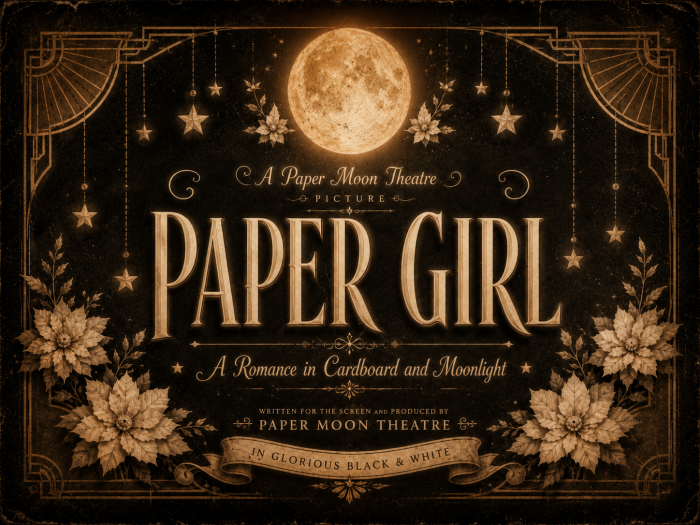
Paper Girl
The Paper Moon Theatre was famous for making impossible things out of cardboard.
Its swords were cardboard. Its crowns were cardboard. Its castles were cardboard, painted silver and gold and blue, folded flat after every show and stacked behind the curtain like sleeping kingdoms.
The wigs were paper. The flowers were paper.
Once, for a winter fairy tale, the entire cast had worn snowflakes made from cut-up coffee filters and glitter glue.
Nobody who worked there was embarrassed by any of it.
That was the rule of the Paper Moon.
If the audience could see the cardboard, good. If the strings showed, better. If the moon was obviously made from paper, hanging over a painted cardboard sea, then everyone in the room had to do the rest together.
That was where the magic lived.
Josh had loved the place since he was seventeen.
He was tall, handsome, broad-shouldered, and effortless on stage in the annoying way that made people forgive him for nearly anything. He could step into a scene cold and somehow know exactly what it needed.
A king. A cowboy. A duke. A detective. A pirate.
He became whatever the audience asked for, usually with a grin and a cardboard hat.
Christopher had loved the Paper Moon even longer.
He was smaller than Josh, slimmer, softer around the face, with bright eyes and careful hands. People called him delicate when they meant it kindly and pretty when they forgot themselves.
He had been Josh’s best friend forever.
That was what everyone knew.
What no one knew was that Christopher had known, from childhood, that he was not really a boy.
He had known it in mirrors. He had known it in dreams. He had known it every time the costume room door opened and the dresses rustled on their hangers like they were whispering to him.
He had never told anyone.
Not even Josh.
Especially not Josh.
Because Christopher had one secret hidden beneath another.
He was a girl.
And he had been desperately, hopelessly, breathlessly in love with Josh for so long that the feeling had become part of the furniture of his soul.
He carried it everywhere.
To rehearsals. To late-night diners. To movie theaters. To the park. To the beach. To every performance where Josh smiled at him and said, “Ready?”
And Christopher always said, “Always.”
The Paper Moon did regular plays, but what the crowds loved most were the Friday night improv shows.
Those nights were chaos with ticket stubs.
The stage would be bare except for racks of paper props and cardboard costume pieces. The audience shouted suggestions, and the actors had five minutes to create something instantly.
“Shakespeare in a laundromat!”
“Pirates at a birthday party!”
“Medieval cooking show!”
“Space opera divorce court!”
The cast would scramble. Someone would grab a crown. Someone would grab a fake beard. Someone would run onstage holding a cardboard turkey or a paper sword or a painted moon on a stick.
Then the timer would start.
Five minutes.
No script.
No mercy.
On one particular Friday night, the audience was louder than usual.
The theater smelled faintly of paint, popcorn, and old velvet.
Josh stood beside Christopher in the wings, stretching his shoulders.
“Big crowd,” Josh said.
Christopher glanced out through the curtain.
“Big mouths.”
Josh laughed.
“That’s why we love ’em.”
The host stepped onto the stage.
“All right, my lunatics of literature and cardboard catastrophe, what are we doing next?”
A voice from the balcony shouted, “Gatsby!”
Another voice screamed, “Roaring twenties!”
Then half the room joined in.
“Great Gatsby!”
“Great Gatsby!”
The host grinned.
“Gatsby it is.”
Backstage exploded.
Someone threw Josh a cardboard tuxedo jacket painted black with white lapels. Another actor grabbed a paper champagne bottle. Someone else found a cardboard saxophone.
Then Trixie, one of the stagehands, turned around with a paper flapper dress in her hands.
It was black and silver, made of layered strips of painted cardstock that fluttered when it moved. The headband had a paper feather tucked into one side.
“We need a flapper,” someone said.
Every eye landed on Christopher.
He froze.
“No.”
Josh laughed.
“Oh, come on.”
“No.”
“Chris, you’re the only one it’ll fit.”
“That is not a reason.”
The audience began clapping impatiently.
The timer had not started yet, but the host was stalling.
Trixie smiled, already moving toward him.
“Arms up, gorgeous.”
Christopher stared at her.
“Trixie.”
“Arms up.”
“This is ridiculous.”
“Most sacred things are, at first.”
He had no idea what to say to that.
So he lifted his arms.
The paper dress slipped over him.
It fit.
Too well.
Trixie adjusted the shoulders, tied the back, slipped the headband into place, and stepped away.
Josh looked at him.
For one strange second, Josh did not laugh.
Then he smiled.
“Wow.”
Christopher’s heart missed a step.
Josh’s grin returned.
“You look like trouble.”
Christopher swallowed.
“That’s because I am.”
The host shouted, “Players ready?”
Josh took Christopher’s hand.
The touch went through him like lightning.
Josh leaned in, already in character, his voice smooth with a playful 1920s drawl.
“May I have this dance?”
The timer began.
They stepped into the light.
The crowd roared.
For the first three minutes, it was comedy.
Josh played a smug millionaire who could not remember where he parked his mansion. Christopher played a glamorous flapper who may or may not have stolen everyone’s pearls.
The cast bounced around them with cardboard champagne, paper cigars, and increasingly terrible jazz.
Christopher was good.
More than good.
He was alive.
The dress moved when he moved. The paper fringe flickered against his knees. The headband tilted over one eye. The audience howled at every line he tossed back at Josh.
Then the scene shifted.
Someone in the crowd shouted, “Dance!”
Josh turned.
Christopher’s smile faltered.
Only for a second.
Josh offered his hand again.
“Shall we?”
Christopher placed his hand in Josh’s.
“Try to keep up.”
The music softened.
It was supposed to be funny.
At first, it was.
They spun too wide. Josh dipped him too dramatically. Christopher snapped open a paper fan and smacked him lightly on the shoulder.
The audience laughed.
Then Josh pulled him close.
Not too close.
Just close enough.
Christopher forgot the next joke.
Josh’s hand rested at his back.
Christopher could feel the warmth of him. Could smell him. Could breathe the same air.
The audience went quiet in that special way audiences do when they realize they are watching something change.
Christopher’s cheeks flushed crimson.
His eyes widened.
Josh was inches away.
Smiling.
Completely in character.
Completely unaware that Christopher’s heart had become a trapped bird.
Someone shouted, “Kiss her!”
The room exploded.
“Kiss her!”
“Kiss her!”
“Kiss her!”
Christopher stopped breathing.
Josh froze for a heartbeat, then leaned closer.
Their faces were so near Christopher could feel Josh’s breath.
The chant grew louder.
“Kiss her!”
Christopher closed his eyes.
The buzzer screamed.
The timer hit zero.
The room burst into applause.
Josh broke character instantly and laughed.
The cast rushed forward, bowing.
Christopher remained where he was.
His hand still held the shape of Josh’s hand.
The world moved around him.
He did not.
Eventually, someone guided him into the wings.
“Great job, Chris!”
“That killed!”
“Audience loved you!”
Christopher nodded at all of them as if from very far away.
He wandered backstage beneath the hanging paper moon.
Josh was still out there, laughing with the cast.
Christopher looked back at him.
A smile touched his mouth.
He did not know Trixie was watching.
She stood beside a rack of cardboard gowns, arms folded, eyes narrowed with gentle suspicion.
She looked at Christopher.
Then at Josh.
Then back at Christopher.
Then at Josh again.
When Christopher finally reached her, she began unfastening the paper dress.
The paper fringe rustled.
Trixie lifted the headband from his hair.
Christopher was still staring toward the stage.
Still flushed.
Still breathless.
Still somewhere else.
Trixie asked softly, “How long?”
Christopher blinked.
“What?”
“How long?”
“How long what?”
Trixie glanced toward Josh, then back at Christopher.
“How long have you been in love with Josh?”
The color fell out of Christopher’s face.
“I… I don’t…”
His hands shook.
One paper bracelet slipped off and landed on the floor.
“Trixie, please.”
She stepped forward and wrapped him in her arms.
“Easy.”
Christopher froze.
“It’s all right.”
He trembled.
Trixie held him tighter.
“It’s just a secret between us girls.”
For a moment, Christopher could not move.
Then the tears came.
Quiet at first.
Then not.
Someone knew.
And somehow, the world had not ended.
The next night, Trixie made certain Gatsby happened again.
She did not have to work hard.
Half the audience from the night before had returned, and they had brought friends.
When the host asked for suggestions, the chant began before he finished the sentence.
“Gatsby!”
“Gatsby!”
“The flapper!”
Backstage, another actor grabbed the paper dress.
The audience saw immediately.
“No!”
“Not that one!”
“The other one!”
“We want yesterday’s girl!”
Christopher turned bright red.
Trixie took the dress from the other actor.
“Audience has spoken.”
Christopher whispered, “This is your fault.”
“Probably.”
Trixie slipped the dress over him, adjusted the headband, and fussed with every paper fringe like she was dressing royalty.
Then she pulled a tiny bottle from her apron.
Christopher’s eyes widened.
“Trixie.”
One spray of perfume floated into the air.
“Trixie!”
“There.”
She smiled, her heart as big as the moon itself.
“Go out there, girl.”
Christopher stared at her.
The word landed softly inside him.
Girl.
He swallowed.
Then he stepped onto the stage.
Again, the scene began with laughter.
For three and a half minutes, Josh and Christopher were magnificent fools.
They stole imaginary jewels. They insulted imaginary millionaires. They drank from cardboard glasses and accused the cardboard saxophonist of emotional betrayal.
Then someone shouted, “Dance!”
The room cheered.
Josh offered his hand.
Christopher took it.
This time, the dance was playful.
Safe.
Not like the night before.
Christopher felt almost relieved.
Backstage, Trixie glanced at the timer.
One minute left.
She looked at Christopher.
Then Josh.
Then the audience.
With one quiet movement, she reset the clock.
Four more minutes appeared.
No one noticed.
The dance continued.
The laughter softened.
Josh and Christopher slowed.
Their steps grew smaller.
Closer.
Closer.
The crowd sensed it.
“Kiss!”
“Kiss!”
“Kiss!”
The timer still showed thirty seconds.
Josh looked into Christopher’s eyes and whispered, so only he could hear, “Is it okay?”
Christopher’s heart pounded so hard he thought it might crack his ribs.
He barely managed to breathe the word.
“Yes.”
Josh kissed him.
The audience erupted.
Christopher heard the first cheer, then nothing.
The kiss seemed to last both forever and no time at all.
When it ended, the buzzer had already sounded.
Christopher had missed it completely.
Josh smiled.
“You are amazing.”
Christopher blinked.
“Huh?”
“You’re the greatest actor I know.”
The words struck him strangely.
Not cruelly.
Josh meant them kindly.
That made them worse.
Christopher forced a smile.
“Thanks.”
Josh tilted his head.
“What’s wrong?”
“Nothing, Josh.”
Christopher slipped offstage before Josh could ask again.
For two nights after that, the improv was normal.
Normal sets.
Normal beats.
Normal everything.
Normal jazz.
Almost normal Christopher.
Almost.
Then Saturday came.
The crowd wanted Gatsby again.
They did not ask.
They chanted.
Trixie was ready.
The timer would count down from five minutes.
But every second would last two.
A secret ten minutes.
She flipped the hidden switch with the solemnity of a woman committing a holy crime.
The curtain opened.
The audience cheered.
This time, Christopher did not argue when the paper dress came down from its hook.
Trixie helped him into it silently.
She fixed the headband.
Smoothed the dress.
Touched his shoulder.
“You all right?”
Christopher nodded.
“No.”
Trixie smiled sadly.
“That counts as honest.”
The scene began.
For six minutes, it was glorious.
The whole cast seemed sharper, funnier, brighter. Josh and Christopher moved around each other with the easy rhythm of people who had been best friends long enough to know the shape of each other’s thoughts.
Then the chant began.
“Dance!”
Josh looked at Christopher.
Christopher smiled because the audience expected it.
Josh offered his hand.
They danced.
At first, the crowd laughed.
Then it quieted again.
The chemistry between them had become impossible to ignore. It filled the space between their bodies. It moved through the theater like music no instrument was playing.
“Kiss!”
“Kiss!”
“Kiss!”
Josh leaned close.
“Is it okay?”
Christopher closed his eyes.
“Yes.”
Josh kissed him.
This time, the kiss did not stop.
The crowd cheered.
Then the cheering softened.
Then it faded entirely.
People stared.
The cast stood frozen.
Even Trixie forgot to breathe.
The kiss went on and on, long past the point where it could be called a joke.
When the buzzer finally sounded, Josh and Christopher separated.
Christopher was completely undone.
Red-faced.
Sweating.
Breathless.
His heart racing so fast it hurt.
Josh looked flushed too.
For the first time, Josh seemed shaken.
He stepped back.
“You…”
He swallowed.
“You’re extraordinary.”
Christopher stared at him.
Josh gave a nervous laugh.
“You’re an extraordinary actor.”
The words broke something.
Christopher’s eyes filled.
“Yes, Josh.”
His voice cracked.
“I’m an extraordinary actor.”
He turned and ran offstage.
Josh moved to follow.
Trixie stepped into his path.
“Just leave her be.”
The words were out before she could stop them.
Her.
Josh froze.
Trixie froze too.
The stage noise faded behind him.
Josh stared at her.
“What did you say?”
Trixie said nothing.
Josh looked toward the wings.
Then up at the paper moon.
His face changed.
The picnic.
Christopher had insisted on it.
A real picnic, he had said.
Not fast food on a bench.
Not sandwiches eaten in a parked car between shifts.
A blanket. A basket. Bread. Cheese. Fruit. Sparkling grape juice in fancy glasses because they had rehearsal later and Christopher said a proper picnic deserved proper glasses.
Josh had teased him.
“Nobody does picnics anymore.”
Christopher had smiled.
“I know. That’s why we should.”
They had sat beneath a tree in the park while sunlight moved through the leaves. Christopher unpacked everything with ridiculous care, smoothing the blanket twice, arranging the napkins, placing the bread in the center like it was a sacred loaf.
Josh had laughed.
“You really thought of everything.”
Christopher shrugged.
“I always wanted to try it.”
Josh remembered the way Christopher had watched him pour the drinks.
The way he had smiled when their glasses touched.
The way he had looked almost shy when the breeze caught the blanket and Josh leaned over to hold it down.
Later that day, they were leaning against the tree, the basket half empty between them.
Josh had just finished the best sandwich Christopher had ever made him, which was saying something.
“You know,” Josh said, “you’re a really good guy.”
Christopher had smiled.
“Thanks.”
“You should be seeing somebody.”
Christopher looked down.
“What?”
“I’m serious. You’re kind, you’re funny, you make everybody feel like they matter.”
Josh lifted the sandwich.
“And you make dangerously good lunches.”
Christopher smiled faintly.
Josh looked out over the park.
“I’m sure somebody would fall in love with you.”
Christopher looked deep into Josh’s eyes.
For a moment, the whole afternoon seemed to hold still.
“Yeah,” Christopher said softly.
A pause.
“If only.”
Josh had chuckled, thinking Christopher meant if only he had time, or courage, or luck.
The lunches.
All the lunches.
Before they both ended up at the Paper Moon full time, Josh had worked double shifts anywhere he could get them. Christopher always seemed to know when he would forget to eat.
A paper bag would appear in his backpack.
Or on the passenger seat of his car.
Or beside his work shoes.
Inside, always, were sandwiches made exactly the way he liked them.
Not close.
Exactly.
Mustard on one slice.
Mayo on the other.
Pickles, but not too many.
Turkey folded, not stacked.
Sometimes there were notes.
Don’t skip lunch.
Break a leg tonight.
Double shift means double sandwich. Don’t argue.
Josh had kept some of them because they made him smile.
The costumes.
Christopher always volunteered to organize them.
Especially the dresses.
He treated the paper gowns like museum treasures. He repaired torn hems, repainted scuffed corners, reshaped flattened paper flowers, and learned how to make cardboard bend like fabric.
Josh had teased him once.
“You treat those dresses better than we treat the actors.”
Christopher had smiled, not looking up.
“They’re works of art.”
Josh remembered finding him alone once in the costume room, holding a paper gown against himself in the mirror.
Christopher had jumped when Josh walked in.
Josh had laughed.
“Trying out for the princess?”
Christopher had laughed too quickly.
“Somebody has to know if it fits.”
The beach.
Christopher had roped him into building a sandcastle.
Not a little pile with a bucket on top.
A proper castle.
“We are adults,” Josh had said.
“Exactly,” Christopher answered. “Nobody can stop us.”
They spent hours building towers, walls, a courtyard, a little road lined with shells, and a front gate made from two pieces of driftwood.
Christopher carved tiny windows with a popsicle stick.
A little girl wandered over, her sandals sinking into the warm sand.
She stared at the castle with wide eyes.
“It’s beautiful.”
Christopher beamed.
“Almost as beautiful as you.”
The little girl giggled and hid behind her mother, then peeked out again.
She looked at Christopher.
Then at Josh.
Then back again.
“Are you gonna live there when you’re married?”
Christopher’s smile froze.
Josh laughed.
“I don’t think we’d fit.”
The little girl frowned.
“You could make a bigger one.”
Her mother hurried over, embarrassed.
“I’m so sorry.”
Josh had smiled.
“No, it’s okay.”
The little girl waved as she left.
Christopher watched her go.
Then he looked back at the little sandcastle.
Josh nudged him.
“We’d definitely need more bedrooms.”
Christopher laughed.
A real laugh.
Later, when Josh was packing up the towels, he had seen Christopher gently touch the tiny front door with one finger.
The last memory was only minutes old.
The paper moon overhead.
The dress.
The headband.
The audience chanting.
Josh asking, “Is it okay?”
Christopher answering, “Yes.”
The kiss.
The way Christopher had disappeared into it.
The way he had looked afterward, not proud of a performance, not excited by applause, but shattered by the return of reality.
Josh pushed past Trixie.
He found Christopher in the prop room beneath the hanging paper moon.
The flapper dress was still on.
The headband was crooked.
Christopher sat on an overturned crate, crying silently into his hands.
Josh slowed.
“Christopher.”
Christopher looked up, terrified.
Josh took one step closer.
Then another.
“I’m sorry.”
Christopher shook his head.
“No, don’t. Please don’t.”
“I should have seen you.”
Christopher froze.
Josh’s eyes filled.
“I should have seen you.”
The words trembled.
“All this time. Those eyes. The way you looked at me. The way you lit up when you got to be…”
He swallowed.
“You.”
Christopher could not speak.
Josh knelt in front of him.
“I didn’t know.”
A tear slipped down Christopher’s cheek.
“I was scared.”
“I know.”
“I thought if you knew, I’d lose you.”
Josh reached up slowly, giving him every chance to pull away.
Christopher did not.
Josh touched his cheek.
“You didn’t lose me.”
Christopher’s breath hitched.
Josh leaned closer.
“May I?”
Christopher nodded.
Josh kissed her.
Not onstage.
Not for applause.
Not because a crowd demanded it.
He kissed her in the quiet prop room, beneath a paper moon, with cardboard castles stacked against the wall and Trixie crying silently in the doorway.
Christopher folded into him.
For once, there was no timer.
No buzzer.
No scene to end.
When they finally parted, Josh rested his forehead against hers.
“What should I call you?”
Christopher closed her eyes.
The name had lived in her heart for years.
“Christine.”
Josh smiled through his tears.
“Christine.”
She covered her mouth and sobbed.
He kissed her again.
Then he looked around wildly, as if some urgent piece of the universe had gone missing.
“What are you doing?” Christine whispered.
Josh grabbed a scrap of painted cardboard.
A pair of scissors.
A little silver paint.
“Something stupid.”
Trixie sniffed from the doorway.
“Good. We specialize in that.”
Josh cut carefully.
Folded.
Twisted.
Trimmed.
The little ring that appeared in his palm was crooked.
Uneven.
Clearly cardboard.
Perfect.
Christine stared at it.
“Josh…”
He dropped to one knee.
“What is happening?” she whispered.
Josh held up the ring.
“I don’t have anything real.”
Christine laughed through tears.
Josh shook his head.
“No. That’s not right.”
He looked around at the Paper Moon.
At the cardboard castles.
The paper flowers.
The moon hanging over them.
“I don’t have anything expensive.”
He took her trembling hand.
“But I have this.”
Christine stared at him as though the world had become too bright.
“And I have every tomorrow I’ve got.”
Josh’s voice softened.
“Christine, will you marry me?”
For a moment, she could only cry.
Then she nodded.
“Yes.”
“Yeah?”
“Yes, Josh.”
He slipped the cardboard ring onto her finger.
It fit.
Trixie made a sound that was half sob, half laugh, and covered her face with both hands.
Josh stood.
Christine fell into his arms.
They kissed beneath the paper moon until the theater outside them grew quiet, until the audience left, until the stage lights dimmed one by one.
Six months later, every seat in the Paper Moon Theatre was filled.
The wedding was, by unanimous agreement, the most beautiful thing the theater had ever made.
The bride wore a paper gown.
Not a joke gown.
Not a costume.
A masterpiece.
Layer upon layer of ivory paper had been shaped into roses, lace, ribbons, and flowing panels that moved softly when she walked. Trixie had spent weeks on it, muttering threats at anyone who came near with coffee.
The groom wore a paper tuxedo with silver-painted lapels.
The bridesmaids wore paper dresses in moonlit blue.
The groomsmen wore cardboard boutonnieres.
Above the stage hung the same paper moon.
Josh stood beneath it, watching Christine walk toward him.
She was radiant.
Not because of the gown.
Because she was not hiding.
Trixie stood near the front row, crying openly and pretending she had something in her eye, which fooled no one.
The vows were simple.
The kiss was not.
When they turned to face the audience, the Paper Moon shook with applause.
Christine leaned close and whispered into Josh’s ear.
“But it wouldn’t be make-believe…”
Josh smiled, his breath warm against her cheek.
“…if you believed…”
Christine’s eyes filled with happy tears.
“…in me.”
The Sisters
Author:
Audience Rating:
Publication:
Genre:
Character Age:
TG Themes:
Permission:
The Sisters
By Jenny with a G
Chris was already at school when Lily arrived.
That was not unusual.
Chris was usually there before almost everyone, sitting on the wooden bench outside the library with a backpack tucked close beside one foot. Teachers passed with coffee cups and key rings. The custodian pushed a cart down the hallway. Students came in laughing, yawning, arguing, complaining about homework, and never wondered why Chris always seemed to be waiting before the day had even begun.
Lily noticed.
Lily noticed most things about Chris.
She noticed the backpack. She noticed that Chris never left it in a classroom, never tossed it aside, never trusted it to the pile of bags at lunch. She noticed that Chris never talked about home. Never said, “My mom said,” or “My dad wants,” or “At my house.” Whenever conversation drifted too close to family, Chris smiled and moved it somewhere safer.
But Lily also noticed the good things.
Chris laughed at her jokes even when they were terrible.
Chris listened when she talked about fantasy books.
Chris loved elves.
And Chris had the same eyes as her.
That was the strangest part.
Lily had golden-blonde hair, bright and soft around her shoulders. Chris had flaming red hair that looked copper in sunlight. They did not look alike, not exactly.
Except for their eyes.
Both of them had vivid green eyes, emerald bright, the kind people noticed and remembered.
Teachers sometimes said, “You two could be related.”
Lily always smiled.
Chris always looked away.
That Friday, Lily dropped onto the bench beside Chris with a dramatic sigh.
Chris looked up from a library book.
“Elves again?” Lily asked.
Chris turned the cover toward her.
“Always.”
“I knew there was a reason we’re best friends.”
“You only just figured that out?”
“I have many reasons. This is one of the shiny ones.”
Chris smiled.
The hallway filled around them. Lockers opened. Sneakers squeaked. Someone shouted that they had forgotten their math binder. Somewhere down the hall, a teacher told three boys to stop running.
Lily leaned closer.
“So. You’re still coming tonight, right?”
Chris looked up.
“For the game?”
“Yes, for the game. My family’s weekly role-playing game. The sacred Friday night dice circus.”
“I’ve never played.”
“That’s perfect.”
“How is that perfect?”
“You don’t have bad habits yet.”
“I don’t have any habits.”
“Exactly. Fresh clay. Untouched parchment. Newborn goblin.”
Chris laughed. “That got worse as it went.”
“I stand by newborn goblin.”
The bell rang.
They stood and walked together into the tide of students.
After school, Lily caught Chris again near the science wing. The afternoon sun spilled through the windows, turning the hallway gold.
“So how do I make a character?” Chris asked.
“We’ll make one together.”
“What kind?”
“That depends. What kind of person do you want to be?”
Chris shrugged. “I don’t know.”
“Warrior?”
“Maybe.”
“Wizard?”
“Probably not.”
“Elf?”
Chris turned.
“You’re playing an elf?”
“I always play an elf.”
“They’re my favorite.”
Lily grinned. “Then be an elf.”
Chris smiled. “Yeah. I’d like that.”
“My elf needs a sister,” Lily said.
Chris stopped walking.
Only for a second.
“A sister?”
“Our characters,” Lily said easily. “Two elf sisters. Blood sisters. Tragic past. Big quest. Beautiful hair. Probably too many feelings.”
Chris looked down, but the smile stayed.
“I’d like that.”
“Then it’s settled.”
Lily pointed toward the parking lot as though she were announcing a royal decree.
“Tonight, the sisters begin.”
Chris laughed.
For the rest of the walk, Chris was quieter than usual.
But the smile did not leave.
Lily’s house smelled like tomato sauce, laundry soap, and old books.
There were shoes by the door, a dragon magnet on the refrigerator, a stack of library books on the side table, and a dining room table already covered with maps, dice, pencils, and little painted figures.
The house felt lived in.
Not perfect.
Better than perfect.
Alive.
Lily’s mother came from the kitchen carrying a laundry basket.
“You must be Chris.”
“Yes, ma’am.”
She smiled. “Around here, ‘ma’am’ usually means somebody broke something.”
Chris gave a nervous little laugh.
“I’m Emily.”
“Nice to meet you.”
“You too, sweetheart.”
Lily pointed upstairs. “Come on. We’ll make your elf.”
Her room looked like a fantasy shop had exploded, then been lovingly organized by a woodland creature. Maps hung on the walls. Miniatures stood on shelves. Sketchbooks and novels covered the desk. Handwritten cards were pinned near the window.
Chris set the backpack beside the chair.
“What are those?”
Lily pulled one card down.
“Quenya.”
“What’s that?”
“An Elvish language.”
“You can learn that?”
“A little. This one says aiya.”
Chris studied it.
“What does it mean?”
“Hello.”
Chris repeated it carefully.
“Aiya.”
“Not bad.”
Lily handed over another card.
“Meldis. Sister.”
Chris held the card longer than necessary.
“Meldis,” Chris said.
Lily smiled. “That one matters.”
Chris opened the backpack to get a notebook. The zipper slipped farther than intended.
A folded shirt showed inside.
Then socks.
Then a pair of jeans.
Emily happened to pass the open bedroom door. She saw, but did not stop. Her expression did not change.
“If you’ve got any laundry in there, sweetheart, you can toss it in with ours.”
Chris quickly touched the zipper.
“Oh. That’s okay.”
“I’m doing a load anyway.”
“There isn’t much.”
“That’s all right.”
Chris hesitated, then pulled out a small bundle.
Emily accepted it as if this happened every Friday.
“Thank you,” Chris said softly.
“My pleasure.”
Then Emily nodded toward the desk.
“Now go make that elf before my husband gives you a tragic destiny without permission.”
From downstairs a man called, “I heard that, and I absolutely would.”
Lily gasped. “Dad!”
Chris laughed.
It was the first time that evening the backpack had been more than an arm’s length away.
“What are you naming your elf?” Lily asked.
Chris stared at the blank character sheet.
The house hummed around them. Voices downstairs. A cabinet closing. Someone laughing. Water running in the kitchen.
Finally, Chris said, “Jasmine.”
Lily smiled.
“I like it.”
She wrote the name carefully across the top.
Jasmine
Elf Ranger
Sister of Eleniel
Chris looked at the page for a long time.
Lily wrote her own name beside it.
Eleniel
Elf Bard
Sister of Jasmine
“There,” Lily said.
Chris’s voice was quiet.
“They’re sisters.”
“Of course they are.”
Lily did not make it sound important.
That made it more important.
At the dining room table, Lily’s father sat behind a large screen covered in dragons.
His name was Mark, but when he sat there, pencil in hand, he became something older and stranger.
Lily’s older brother Aaron played a warrior who believed most problems could be solved with a sword and enough confidence.
Her younger brother Ben played a druid who wanted to adopt every animal, monster, and suspicious mushroom.
Emily played an older elf named Auraleth.
“Food first,” Emily announced, setting pizza on the table. “Doom later.”
Everyone cheered.
Chris sat between Lily and Ben.
Nobody treated Chris like a guest exactly.
They passed plates. Asked what toppings Chris liked. Argued over napkins. Ben explained his miniature dragon collection in great detail. Aaron warned Chris never to trust Mark when he smiled too much.
Mark smiled too much immediately.
Chris laughed.
After dinner, Mark unfolded the map.
“The world was not always broken,” he began.
The table quieted.
“The elves once lived beneath great forests and beside silver rivers. Their cities were white stone and green leaf, music and starlight. Then came war. Fire. The slow march of men. One by one, the elven houses scattered.”
He looked at Lily.
“Eleniel.”
Then at Chris.
“Jasmine.”
Chris looked up immediately.
“You are blood sisters. Orphaned. Alone except for each other. Since childhood, you have heard a legend. Far beyond the western mountains, beyond the Sea of Mist, there may still be one free elven city.”
Aaron folded his arms. “Sounds fake.”
Ben whispered, “I believe it.”
Mark continued.
“No one has seen it in a thousand years. Most call it a children’s tale.”
Lily turned to Chris.
“What do you think, meldis?”
Chris recognized the word.
Sister.
For a moment, the dining room disappeared.
Chris looked at the map.
“If there’s even a chance,” Chris said, “we should go.”
Mark smiled.
“And so the sisters begin their journey.”
Dice rolled across the table.
Outside, night gathered at the windows.
Inside, Jasmine and Eleniel started walking toward hope.
Friday became a ritual.
Chris arrived after school with the backpack.
Laundry went into the basket.
The character sheets went onto the table.
Pizza appeared.
Dice rolled.
The world opened.
In the game, Jasmine and Eleniel crossed broken roads, escaped men hunting through ruined forests, and followed scraps of old songs toward the west.
In real life, Lily taught Chris more words.
Melme meant love.
Nosse meant family.
Estel meant hope.
They made flashcards. Some were beautiful, with vines and little stars. Some were ridiculous. Ben drew a dragon on one and declared it educational.
The first time Lily said, “Jasmine, pass me the green die,” Chris passed it without thinking.
No one noticed.
The next Friday, she said, “Jasmine, your turn.”
Chris rolled.
The Friday after that, Ben called from the kitchen, “Jazz! Pizza’s here!”
“Coming!” Chris called back.
No one paused.
No one corrected it.
No one asked if it was okay.
The name simply moved from the character sheet into the room, as naturally as the smell of pizza or the sound of dice.
Aaron picked it up.
“Jazz, hand me that ruler.”
Mark picked it up.
“Jazz, what does Jasmine do?”
Emily picked it up.
“Jazz, your hoodie is dry.”
“Thanks!”
It happened so gently that nobody could have said when it began.
Chris still answered to Chris at school.
But at the Harper house, more and more often, she was Jasmine.
And sometimes Jazz.
The name fit around her like a sweater warmed in the dryer.
Emily noticed the laundry.
She noticed how little there was.
Two backpacks could have held nearly everything Jasmine owned.
Emily never asked.
She washed what was given.
She folded everything neatly.
When socks had holes, new ones appeared in the pile.
When a shirt grew thin, another shirt appeared beside it.
When autumn came cold and early, a gray hoodie came back with the clean clothes.
Jasmine found it folded on top.
“This isn’t mine.”
Emily walked by with plates.
“I thought you might need something warmer.”
“I can’t…”
“I know.”
Emily smiled.
“I wanted to.”
That was all.
No speech.
No pity.
No questions that would corner Jasmine into explaining what she was not ready to explain.
Just warmth.
Just folded clothes.
Just Friday.
Auraleth joined the sisters beside a broken road in the third month of the campaign.
Emily described her as an older elf from the northern woods, silver-brown hair, green cloak, and tired eyes that had not forgotten kindness.
In the game, Auraleth asked the sisters, “Have you eaten?”
Eleniel lifted her chin. “We can take care of ourselves.”
“I didn’t ask whether you could take care of yourselves,” Auraleth said. “I asked whether you had eaten.”
Ben whispered, “That’s Mom.”
Everyone laughed.
Auraleth shared bread.
Then a blanket.
Then stories.
She too had heard the legend of the lost city. She too had lived with nothing but old songs and a stubborn hope that perhaps, somewhere, elves still lived free and wild.
“Perhaps,” Auraleth told the sisters, “we should stop walking alone.”
Jasmine looked at Emily across the table.
Emily looked back.
Neither of them said anything.
The game continued.
Emily began learning Quenya in secret because the girls laughed too much.
That was what she told herself.
They whispered over flashcards after dinner. They giggled on the porch. They corrected each other’s pronunciation and argued over whether a word sounded prettier one way or another.
Emily bought a notebook.
Then another.
She practiced while laundry spun in the dryer.
* Aiya. Hello.
* Meldis. Sister.
* Melme. Love.
* Nosse. Family.
* Estel. Hope.
* Amil. Mother.
* Indis. Daughter.
At first she understood only single words.
Then little phrases.
Then enough.
One Friday after the game, Jasmine and Lily sat on the back porch with a bowl of popcorn between them. The kitchen window was open. Emily stood at the sink, rinsing plates.
The girls spoke Quenya badly and happily.
Jasmine mispronounced something.
Lily laughed until she nearly spilled the popcorn.
Jasmine nudged her.
Lily nudged back.
“Oh, meldis,” Lily said, still laughing.
Jasmine answered with something Emily only half understood, but the words did not matter as much as the music between them.
The ease.
The trust.
The way Lily reached over and brushed a strand of red hair out of Jasmine’s face without asking.
The way Jasmine leaned into it without noticing.
The way they stole popcorn from each other’s hands.
The way they were not pretending anything at all.
Emily stood at the sink holding the same plate for a long time.
It was not a costume.
It was not a game.
It was not two friends acting like sisters.
Emily knew sisters.
She had seen Lily fight with Aaron and then share dessert with him ten minutes later. She had seen Ben crawl into Lily’s room when he had nightmares. She had watched her children steal fries, share blankets, complain, laugh, forgive, and belong to each other without ever needing to say it.
That was what she saw on the porch.
Two sisters.
One golden-blonde.
One red-haired.
Both with the same impossible emerald eyes.
Emily dried the plate slowly.
Then whispered to herself, “There you are.”
School was not always kind.
Jasmine had known that for years.
Some boys noticed the wrong things. The softness in her face. The way she wore her hair. The way she moved when she forgot to guard every gesture.
One afternoon, a few of them cornered her near the parking lot with words sharp enough to cut, but dull enough that they could pretend they were jokes.
Jasmine lowered her head.
Kept walking.
Then Aaron appeared.
He had stayed late for practice and still wore his team jacket. He did not run. He did not shout. He simply walked over and stood beside her.
“What’s going on?”
One boy shrugged. “Nothing. We’re just messing around.”
Aaron looked at Jasmine.
“She doesn’t seem to be laughing.”
The boys went quiet.
Aaron’s voice stayed calm.
“Leave my sister alone.”
The word arrived before anyone could prepare for it.
Sister.
The boys muttered something and left.
Aaron waited until they were gone.
Then he turned.
“You okay, sis?”
Jasmine stared at him.
The parking lot blurred.
Aaron looked suddenly unsure.
“What?”
Jasmine hugged him.
Hard.
Aaron froze for one surprised second, then hugged her back.
“You’re okay,” he said softly. “I’ve got you.”
That Friday, Ben heard the story.
When Jasmine walked in, he looked up from painting a tiny dragon.
“Hey, sis.”
Aaron glanced at him.
Ben shrugged.
“She is.”
Then he went back to painting.
After that, Ben called her sis on purpose.
Aaron did too.
Lily already had.
Eventually Mark did it without thinking.
“Can one of my daughters grab the dice bag?”
Lily grabbed it.
Jasmine smiled down at her character sheet.
No one corrected him.
The campaign moved west.
The sisters and Auraleth crossed mountains where old watchtowers stood empty. They found ruins where trees grew through bedrooms and birds nested in old throne rooms. They met scattered elves who had also heard the legend, each carrying a different version.
A city beyond the mist.
A forest where no axe had ever fallen.
A kingdom hidden under starlight.
A dream.
A lie.
A hope.
At the table, Mark’s voice softened when he described the old elven songs.
Emily, as Auraleth, taught the sisters forgotten customs.
How to greet the dawn.
How to braid traveling cords into their hair.
How to say mother.
Amil.
The word sat on one of the flashcards for weeks before anyone used it.
Jasmine touched it once when she thought nobody was looking.
Emily saw.
She said nothing.
The room began as a favor.
It was late spring, two weeks before school let out, when Mark said, “Jazz, any chance you could help us Saturday?”
Jasmine nodded before he finished.
“Of course.”
“We’re cleaning part of the basement. Big family project. Pizza included.”
“I’ll help.”
Saturday morning, everyone went downstairs.
Music played from an old speaker.
Boxes moved.
Dust rose.
Ben found dinosaur pajamas and put them on over his jeans.
Aaron carried shelves while making tragic warrior noises.
Lily and Jasmine swept corners and laughed until they coughed.
Emily brought lemonade.
Pizza came at noon.
For hours, Jasmine thought they were cleaning.
Then Mark brought down a desk.
Aaron brought a chair.
Lily carried posters of forests, dragons, and moonlit towers.
Ben placed a stuffed dragon on a pillow.
Emily made a bed.
Jasmine looked at the bed.
Then at the desk.
Then at the closet with empty hangers.
“This is turning into a bedroom,” Jasmine said.
The family went quiet.
Not bad quiet.
Soft quiet.
Mark set down his toolbox.
Emily smoothed the blanket.
Lily stood beside Jasmine, eyes shining.
Jasmine looked at each of them.
“So… who’s it for?”
Emily came closer.
“For you.”
Jasmine laughed once because the words did not fit inside the world.
“No, really.”
“Really,” Emily said.
Jasmine looked again.
The bed.
The desk.
The dresser.
The closet.
The flashcards pinned over the desk.
Aiya. Hello.
Meldis. Sister.
Nosse. Family.
Estel. Hope.
Emily’s voice stayed gentle.
“You’ve been carrying your home in a backpack, sweetheart.”
Jasmine’s face changed.
Mark said, “We thought you might like a little space of your own.”
Jasmine opened her mouth.
Nothing came out.
She stepped forward and hugged Emily.
No words.
Just both arms around her.
Emily held her immediately, one hand on her back, the other against her red hair.
Everyone else looked away just enough to give her privacy.
Aaron adjusted a poster that did not need adjusting.
Ben stared very seriously at the dragon.
Mark cleared his throat and looked at the floor.
Lily came closer and slipped her hand into Jasmine’s.
“It’s all right, sis,” Lily whispered.
Jasmine held on tighter.
Lily squeezed her hand.
“You’re home.”
Jasmine closed her eyes.
For once, the word home did not feel like something other people got.
It felt like a room in the basement with clean sheets, a desk, a dragon on the pillow, and a closet waiting for clothes.
They played in the basement that night.
Jasmine wanted the first game in the room to happen immediately.
The map spread across the new desk. Dice rolled across the floor. Pizza sat on paper plates. The family crowded into the space as if it had always been part of the house.
In the campaign, the sisters and Auraleth finally reached the western valley.
Mark described the climb.
The cold wind.
The ancient road half buried beneath moss.
At the top of the ridge, the party looked down.
There was no shining kingdom.
No perfect city.
Only ruins.
White towers broken.
Fountains dry.
Streets split by roots.
The lost city had been real.
And it had been gone for centuries.
Jasmine went very still.
Lily reached under the table and found her hand.
Emily, as Auraleth, knelt beside a fallen stone.
“These letters are old,” she said.
“What do they say?” Lily asked.
Emily looked at Jasmine.
“Estel.”
Hope.
Then Mark smiled.
“You hear something.”
Everyone leaned forward.
“A hammer,” he said. “Far away.”
Tap.
Tap.
Tap.
“And then laughter.”
Ben whispered, “Children?”
Mark nodded.
“Children.”
The party followed the sound through the ruined city.
Among the ancient stones, they found elves.
Not thousands.
Not an empire.
A few hundred.
Families.
Builders.
Gardeners.
Teachers.
Children.
Elves who had also heard the stories.
Elves who had also believed.
Elves who had come searching and found not a kingdom waiting for them, but a place where one could be rebuilt.
An old elf greeted them before a half-repaired gate.
“You’re late,” Mark said in a cracked old voice.
Lily laughed through tears.
“We got lost.”
The old elf smiled.
“So did we.”
In the game, Auraleth stood with the sisters before the gathered elves.
“These are my daughters,” Emily said.
No one at the gate asked which one.
The table went quiet.
Jasmine looked at Emily.
Emily looked back.
Then Ben sniffed and said, “Can my dragon help rebuild?”
Everyone laughed.
Mark nodded solemnly.
“The dragon may carry stones.”
Ben threw both fists in the air.
The city was not the Last Elven Kingdom.
It was the First.
After the game, everyone drifted upstairs except Emily, Lily, and Jasmine.
The basement room glowed softly under the lamp.
Jasmine and Lily sat on the edge of the bed, looking at the flashcards above the desk.
Jasmine touched one.
“Indis,” she said.
Lily nodded.
“Daughter.”
Jasmine whispered it again.
“Indis.”
Emily stood near the stairs holding empty plates.
She should have gone up.
Instead, in careful Quenya, she said,
“My daughters.”
Both girls froze.
Slowly, they turned.
Lily’s mouth fell open.
Jasmine stared.
Emily smiled.
“I’m playing an elf too.”
Lily blinked.
“You know Quenya?”
“Well enough.”
“How long?”
Emily set the plates on the desk.
“Months.”
“Months?” Lily squeaked.
Emily nodded. “I wanted to understand what made you both so happy.”
Jasmine’s face went pale.
Emily crossed the room slowly.
“I never learned it to hurt you. And I never wanted to take your language away.”
Jasmine swallowed.
Emily knelt in front of them.
“I learned enough to understand something very important.”
No one moved.
Emily looked at Lily, then at Jasmine.
“I learned that my daughter had a sister.”
Jasmine’s eyes filled.
“And,” Emily said, her voice trembling now, “I learned that I had another daughter sitting at my table every Friday.”
Jasmine covered her mouth.
Emily reached up and brushed a strand of red hair from her face.
“I’ve known for a long time, sweetheart.”
“You knew?” Jasmine whispered.
“I knew you belonged here.”
Jasmine shook her head, crying now.
“I don’t know what to say.”
“You don’t have to say anything.”
Lily leaned against Jasmine’s shoulder.
Emily took both their hands.
“I wasn’t really learning Quenya,” Emily said softly.
She smiled through tears.
“I was learning how to speak to my daughters.”
Jasmine folded into her arms.
Lily wrapped herself around both of them.
For a long time, nobody spoke.
No translation was needed.
Later, Jasmine stood in front of the closet.
Two backpacks sat on the floor.
She opened one slowly.
Then the other.
One shirt went onto a hanger.
Then another.
The blue T-shirt.
The gray hoodie.
The jeans Emily had folded.
The socks that no longer had holes.
Lily sat cross-legged on the bed, watching quietly.
“You okay, sis?”
Jasmine nodded.
“There’s so much room.”
Lily smiled.
“Good.”
“For what?”
“For the rest of your life.”
Jasmine laughed, but it came out half sob.
Upstairs, Mark called that breakfast would be pancakes.
Ben insisted dragons liked pancakes.
Aaron argued that dragons liked everything.
The laughter drifted through the house.
Emily called down the stairs.
“Jazz? Lights out soon, sweetheart.”
Jasmine stopped for just a moment.
A smile spread across her face, warm and effortless, the kind that reached all the way to her eyes.
She hadn’t planned to say it.
She hadn’t even thought about it.
The words simply belonged there.
“Okay, Mom.”