The Return of Lilith V.2 Chapter 1
Author:
Audience Rating:
Publication:
Genre:
TG Themes:
TG Elements:
Permission:
Chapter 1
I wake up lying next to a large rock, my body luckily in the shade. The air is thin and crisp, filled with the faint scent of wild thyme and dust. Somewhere in the distance, I hear the muted bray of a goat, the sound echoing through the jagged foothills that surround me. My memory of how I got here is a complete blank. Sharp stones dig into my back through my uniform, and I can feel the uneven ground beneath me, littered with pebbles and tufts of scraggly grass. Above, the pale blue sky is streaked with the last wisps of morning fog, the sun just beginning to crest over the rocky peaks. The last thing I remember was loading up for a convoy to Kandahar. Now, the silence is broken only by the distant wind, carrying with it the chill of the mountains and the faint clang of metal from somewhere unseen. I no longer have my weapon with me. I still have my body armor and assault pack with me. Soot and blood cover my uniform, their acrid smell mixing with the dry mountain air. My tongue is caked in dry dust, making it very hard to swallow, and every breath feels gritty. I look in my pack to find one of my bottles of water, my hands shaking from exhaustion and adrenaline. I am glad I loaded up on them before we left. I take a big swig of water to clear the dust from my mouth, feeling the cold liquid bring a brief moment of clarity to my dazed senses.
Before I can do anything else, I need to check myself for any injuries. My hands tremble as I slowly run them over my body, wincing at every tender spot. I start at my scalp, feeling matted hair stuck together with blood and grit. My fingers come away slick and red, confirming what I already feared. Blood is streaked across my face, some of it dried, some still fresh. I take a bit of water and pour it over the wound on my head, feeling the sting as it washes away dust and reveals a jagged gash just above my brow. My uniform is torn at the elbows and knees, the skin beneath scraped raw and sticky with dried blood. I gently press my ribs, bracing myself for sharp pain, but only a deep, dull ache radiates through my side—maybe bruised, but nothing feels broken. My left ankle throbs, and when I move it, a sharp twinge runs up my leg, but I can still wiggle my toes. Fingers probing further, I check for swelling or bone splinters, but there’s only swelling and the heat of inflammation. Reaching into my first-aid kit in my body armor, I pull out some gauze pads and a bandage. Placing the gauze onto my head wound makes me wince as they make contact. I then wrap my head to hold the gauze in place, my movements sluggish and clumsy from blood loss and shock. My head is still pounding in pain, and I feel a little dizzy. I wonder if I have a concussion, but at least I’m not losing consciousness again.
Next, I take inventory of what I have on me, forcing myself to focus through the lingering fog in my head. I carefully pat down my body armor, feeling the familiar shapes and weight distribution. Two fragmentation grenades are still secure in their pouches, and I count six thirty-round magazines of 5.56—each one clipped in place, the cold metal reassuring beneath my fingers. My kbar is strapped to my vest, its handle worn but reliable. I run my hands over the pouches and check my pockets, making sure nothing else is missing—no compass, no map, but I do have my small multi-tool and a half-used roll of electrical tape tucked into a side pocket. In my assault pack, I find nothing missing. It contains my change of socks, underwear, and undershirt, all sealed in plastic bags to keep them dry. There are two MREs, my camelback is still mostly full of water, and I have three more bottles in the pack. A couple of energy bars and a packet of instant coffee are wedged into a side compartment. My first aid kit is lighter now, but still has a few bandages, a tourniquet, and a small tube of antibiotic ointment. I take a deep breath, feeling a shaky sense of relief that, despite everything, I am not completely without resources.
"Finding good cover needs to be my next priority," I mumble, half out loud, half to remind myself that I’m still here and thinking clearly. My voice sounds strange in the emptiness, but it settles my nerves a little. "Alright, Rodgers, think. Weapon’s gone, but you’ve got grenades and a knife. Supplies are limited. If anyone’s looking for you, you’re a sitting duck out here. Shelter, water, and a way to signal—those are the priorities."
I scan my surroundings and keep talking, just to fill the silence. "Keep moving if you can, but don’t push too hard. Head wounds aren’t going to get better if you pass out. Ration the water. Don’t eat unless you have to. Conserve energy. Think like a survivor, not a soldier on patrol."
I catch myself pacing, the rhythm of my own voice helping me focus. "If I can get to higher ground, I might spot friendlies, or at least see signs of life. Avoid open spaces. Rest before it gets too dark. Don’t do anything stupid." The words hang in the air, a fragile lifeline against the fear and uncertainty pressing in from every side.
Looking around, I take a slow, cautious survey of the valley. The shadows are growing longer, and every dip and boulder could hide danger or salvation. I press myself low, moving quietly so I don’t draw attention, scanning for anything that could be used as shelter. The sheer rock face looms to one side, its surface pocked with small ledges and crevices, but none wide enough for me to squeeze into. On the opposite side, the rocky slope looks brutal, but also promising. I spot a cluster of juniper bushes and a few scattered trees—possible concealment if I need to hide. Each step is measured, my boots crunching against gravel as I begin to climb, pausing often to listen for any sound that doesn’t belong. My heart pounds in my ears, every sense straining for movement or voices. As I work my way up the mountainside, sweat mixes with the grime on my face, and my wounded ankle protests each uneven step. I keep my eyes peeled for anything out of place—a discarded ration wrapper, an unnatural pile of stones, any sign that someone has been here before me. About halfway up, I catch sight of a narrow shadow nestled between two jutting rocks. Creeping closer, I see it’s a small cave, just large enough for me to crawl into. Relief floods through me—I’ll have cover before night falls. Glancing at the sun dipping behind the mountain across from me, I know I’m running out of daylight. Moving through this terrain in the dark would be a death sentence, so I slip inside the cave, grateful for the protection of stone and shadow, and settle in to rest for the night.
The cave is about twenty feet deep, with just enough height that I don’t have to bend down too much as I move inside. The entrance is narrow, partially hidden by a cluster of rocks and scrub, making it nearly invisible from the valley below. Inside, the floor is uneven but mostly dry, with a scattering of loose gravel and dust that crunches quietly under my boots. The air is cool and carries a faint, earthy smell mixed with the lingering scent of old smoke—maybe from a shepherd or traveler long ago. My flashlight reveals a low ceiling at the back, where the shadows cluster thickest. I check for animal tracks or droppings, but find nothing except a few spider webs stretching across the corners. The silence in here is almost total, broken only by my own breathing and the occasional drip of water from a crack in the stone. I should be safe for tonight. I place my pack down in the farthest corner, grateful for the sense of protection the rock provides, then step back outside to gather as much dry brush as I can find. It gets cold here in the mountains at night, and I’ll need every scrap of warmth I can muster.
I grabbed the MREs from my pack, my stomach already dreading what was inside. "Oh, great choice, vegetarian burger, and breakfast omelet. Why didn't I pay better attention when I picked them up at the DFAC?" I remember grabbing them in a hurry, not expecting to need them—just tossed whatever was closest into my pack, assuming we'd be back before anyone got hungry.
Now, sitting in the cave with hunger gnawing at me, I realize how miserable these choices are. The vegetarian burger is notorious for its cardboard texture and bland taste, and the breakfast omelet is even worse—rubbery, with a chemical aftertaste that sticks to your mouth. I curse myself for not taking an extra minute to snag a beef stew or chicken fajita, something at least halfway edible. But in the frantic rush of gearing up, eating a meal out here seemed like the last thing I'd need to worry about.
"Burger, it is—at least it's something," I mutter, resigning myself to the grim reality of my hasty decisions.
Usually, I would not bother to warm up the meal—out in the field, eating cold rations is just part of the routine. But tonight, with the mountain air already biting at my skin and darkness settling in, I know I have to do everything I can to keep warm. After choking down the bland MRE, I use the matches from the pack’s accessory kit to spark a small fire in a shallow pit near the back of the cave. I carefully arrange the dry brush and bits of dead grass I gathered outside, and coax the flames to life with patient, cupped breaths. The smoke is heavy at first and clings to the low ceiling, stinging my eyes and making me cough, so I shift some loose rocks to create a rough chimney near the entrance. It draws just enough of the smoke away to keep the air breathable.
I sit as close to the fire as I safely can, rotating my boots and letting the warmth seep into my aching feet. I drape my extra socks and undershirt near the flames, hoping the heat will dry out any lingering dampness and add another layer of insulation for the night. I wrap myself tightly in my uniform and use my pack as a windbreak, huddling low to the floor where the air feels just a little less frigid. Every so often, I feed another stick or handful of brush into the fire, careful to ration my fuel so it’ll last until sunrise. The cave is still cold, but the flickering light and gentle heat are enough to keep the worst of the chill at bay.
Getting comfortable in a cave like this is nearly impossible, but exhaustion forces me to try. I ease off my body armor with slow, aching movements, wincing as bruises and cuts protest. The stone floor is cold and unyielding, so I spread my spare undershirt beneath me, trying to cover as many sharp rocks as possible. I bunch up my pack and wedge it under my neck for a makeshift pillow—lumpy and awkward, but it’s better than nothing. My extra socks, still warm from the fire, go on my feet, and I wrap my arms around my knees to conserve every bit of heat. I angle myself close to the dying fire, careful not to roll into it, letting the flickering warmth brush my face. The shadows on the walls seem to shift and dance, and I close my eyes, focusing on the rhythmic sound of my own breathing to drown out the distant wind.
Despite my efforts, I can feel every bump and chill, but eventually fatigue overpowers discomfort. I drift into a restless sleep, strange dreams of conflict lurking at the edge of my mind. I can barely see two flying figures battling in the air, throwing magic at each other. Then a massive explosion behind one of them knocks them both from the sky, and a huge wave of water rushes in, dragging me under. I struggle to reach the surface, but the water keeps pushing me down, the pressure building until everything fades to black.
A sudden, sharp crunch of gravel jerked me out of my restless sleep, heart hammering as I was ripped from the haze of dreams. For a split second, I thought the noise was just part of my nightmare, but then it came again—deliberate, slow, growing closer. All the survival instincts I’d honed over the years snapped into place. My hand shot to my kbar, fingers fumbling in the dark as adrenaline flooded my system. I forced myself up, body stiff and sore, trying to steady my breathing as I pressed my back against the cold stone wall. Every muscle tensed as I strained to see through the gloom of the cave, senses screaming for any clue about who—or what—was approaching.
Suddenly, a blinding beam of light exploded in my face, obliterating the fragile shadows. My eyes slammed shut, pain stabbing through my skull as the high-powered flashlight bore down on me. I threw my arm up to shield my face, blinking furiously, tears stinging my eyes. Behind the light, a silhouette loomed—impossible to read, all identity swallowed by the glare. I tried to focus, forcing my body into a defensive crouch, kbar gripped so tight my knuckles ached. The throbbing in my head intensified, each pulse echoing the crunch of footsteps drawing inexorably closer.
"Finally, I found you," a feminine voice says to me.
She turns off her light, plunging the cave into sudden darkness as my eyes struggle to adjust to the meager glow of my dying fire. Her silhouette is sharply outlined against the cave mouth, her body covered in a black tactical uniform with no markings—professional, intimidating, and utterly unfamiliar. I catch the glint of a handgun leveled squarely at my chest, every muscle in my body tensing in response. My mind races, fighting to process this new threat as my heart pounds in my throat.
She advances a step, the gun steady, her movements smooth and controlled. Every instinct screams at me to move, to fight, to do something, but her commanding presence keeps me rooted to the spot. There’s something in the way she holds herself—a confidence, an unspoken authority—that makes it clear she’s not bluffing. I realize, uncomfortably, that she has all the power in this moment.
"Don't move," she says, her voice calm as steel. "I will not hurt you. I have been looking for you for a very long time. You have something I very much desire." The words hang in the air, heavy and cryptic. The way she says it—as she knows me, like this encounter was fated—throws me off balance. I can’t see her face in the gloom, but I sense she’s studying me, weighing my every twitch and breath. Confusion swirls inside me. What could I possibly have that someone like her would want? I rack my brain, but nothing makes sense. I can barely remember how I got here, let alone what she expects to find.
I force myself to speak, keeping my voice steady despite the tremor in my hands. “What do you think I have that you want? I have nothing but my army gear,” I ask, my eyes darting between her shadowy outline and the cold glint of the gun. My confusion deepens, but I refuse to show fear, even as I realize how little control I have over what happens next.
I am shocked when she holsters her gun and kneels on the other side of what remains of my fire. She mutters something that I cannot comprehend, it’s in a very strange language. Despite the brief reprieve, I know better than to make a move; her calm confidence makes it clear that she’s done this before and won’t hesitate to take me down if I resist.
My mind races for any opening—any way I could gain the upper hand—but the odds are stacked against me. I’m injured, half-starved, and she’s already disarmed me psychologically as well as physically. The glint in her eyes, the silent calculation, convinces me that fighting back would only get me hurt, if not killed. Survival means keeping my head down and playing along, at least for now.
“Put your arms out in front of you with your hands up,” she says, her voice brooking no argument. My pride flares for a split second, but reality crashes right over it—I don’t have a choice. With slow, deliberate movements, I do as I’m told, keeping my motions visible and non-threatening. She steps over, swiftly and efficiently removing my kbar from my grip. The blade feels like the last piece of control slipping away. She moves with practiced skill, looping zip-ties around my wrists, cinching them tight before moving to my ankles. I clench my jaw against the humiliation, but I know struggling is pointless.
I try to scan her face for any sign of hesitation or weakness, but she’s all business—focused, in charge, and not taking any chances. I run through every escape scenario I know, but nothing fits. For now, I’m stuck, and she knows it. She returns to the other side of the fire and studies me, her eyes never leaving mine, and I realize just how little power I have in this moment.
Her eyes are deep and inviting, but there is an intensity in their gaze that puts me on edge. The dark hair framing her face stands in stark contrast to her pale skin, making her look almost otherworldly in the flickering firelight. Even under her tactical gear, she moves with an athletic confidence, every motion controlled and precise. She fixes me with a penetrating stare, her posture relaxed but her presence radiating command—the kind of demeanor that brooks no evasion.
She begins her questioning without preamble, her tone flat and clinical. "You are Sergeant Rodgers, from Illinois, correct?" The words are more of a confirmation than a question, and the way she says my name sends a chill through me. I can see the fire reflecting in her eyes, but I sense no warmth there. I nod, my throat tight, not trusting myself to say anything else. Every fiber of my being tells me to stay alert, to give nothing away.
She nods back, satisfied, and the interrogation deepens. "Good," she says, her voice suddenly sharper, tinged with excitement. "You may not know this, but you have something very important with you." She leans back against the cave wall, her expression unreadable, eyes never leaving mine. She fires off questions—"When did you first notice anything strange? Have you had any unusual dreams? Have you experienced any unexplained pain or visions?"—each one delivered with the precision of someone who knows exactly what they’re looking for. I answer hesitantly, confusion mounting with every question. Her rapid-fire inquiries leave me little time to process, and her slightest frown or raised eyebrow makes my heart pound in my chest.
I stare at her in growing confusion and frustration. "Who are you? What do you want from me?" I finally manage, my voice raw with anxiety. It’s clear now—this isn’t just a conversation; it’s an interrogation, and I’m the subject of a mystery I don’t even understand.
The woman looks at me with a hint of sadness in her eyes, her confidence now edged with vulnerability. She hesitates, then speaks in a softer, almost reverent tone. "I want nothing from you—not in the way you’re thinking. You are a vessel, a carrier for something I have been searching for a very long time." She draws a small, ornate pendant from beneath her uniform, letting it catch the firelight so I can see the intricate runes carved into the metal. "This pendant is the key. There is a soul bound to yours—an ancient magic, one you could never have known. I am going to use this to release the soul that’s been trapped within you."
She pauses, her gaze flickering with hope and desperation. "If I can free her, she will return. That’s all I want." Her voice wavers for a moment, betraying the depth of her longing. "You have no idea how important this is—not just to me, but to many others. You were never meant to be involved. But fate chose you as the vessel, and now I must finish what was started long ago."
Shock slams into me, raw and visceral, as her words sink in. For a moment, my mind simply blanks, unable to process the enormity of what she’s saying. Every logical instinct I have rebels against it: souls, ancient magic, some stranger claiming I was nothing but a vessel. My heart thunders in my chest; I feel cold sweat bead on my brow. How would she know anything about my soul? None of it makes sense—it's so far outside the realm of reality that I almost laugh, except my mouth is too dry to do anything but gape. My thoughts race, grasping for any rational explanation. Am I suffering from a concussion, or is this the delirium of blood loss and exhaustion? “I must have hit my head harder than I thought,” I stammer, my voice hoarse and shaking. “Did you say that I have a soul bound to mine? How could you possibly know this? Who will return?” My words tumble out, desperate for logic, but deep down, fear and confusion gnaw at me.
With a small, almost amused chuckle, she offers only riddles in response. “That is because I have the anchor stone for that soul here. When you neared death this last time, I felt it draw me to you. These things do not follow the rules, you know. Magic is a language you cannot speak, let alone understand.” Her words swirl around me, offering no clarity—just more confusion. “You are a door that was never meant to open, but sometimes doors are forced.”
I press for more, desperate for a straight answer. “But whose soul? Why me? What does any of this have to do with Afghanistan, with my life?”
She shrugs, her expression unreadable. “Some things are chosen. Some things are accidents. The lines are blurry, even for us. As for who will return, you may see her, or you may only feel her absence. My mother is... complicated.”
Every answer raises more questions. She seems to delight in evasion, giving me just enough to fuel my anxiety but never enough to make sense of any of it. My mind spins, desperately searching for a thread of logic, but all I find is a mounting sense of dread. I am hopelessly out of my depth—this is a nightmare I can't wake from, a puzzle with pieces that don’t fit. My thoughts loop in frantic circles: Is this real? Am I dying? Am I already dead? My confusion grows so intense that it borders on panic, my breath coming quicker as I try to steady myself.
Then I see her rise, her silhouette suddenly looming larger as she steps out of the firelight and moves toward me. My fear spikes, cold and sharp, overriding every other thought. I instinctively shrink back, raising my bound arms to shield my face, heart pounding so hard I can feel it in my throat. The cave seems to close in, the shadows deepening as she draws nearer. For a split second, I think she might hurt me, and terror roots me to the spot.
"Don't worry, you will not feel a thing," she whispers, her breath ghosting against my ear. The gentleness of her words only makes my fear worse, because I don't believe her. In the dim light, I catch a clearer glimpse of the pendant in her hand—its runes glowing faintly, casting eerie reflections on the cave walls. Instinct screams at me that whatever she’s holding is dangerous, not just an object but an instrument of something far beyond my understanding.
She grabs my wrists, her grip unyielding, and forces my hands down to my lap with an ease that leaves me feeling utterly powerless. I have never felt so helpless in my life. With her other hand, she presses the pendant against my forehead, its metal shockingly cold. In a low, commanding voice, she utters a word I can't understand: "Expedire."
A searing heat explodes from the pendant into my forehead, spreading instantly through my skull and down my spine. The sensation is foreign—like liquid fire and a thousand electric shocks all at once. My muscles seize, every nerve ending alive with agony as the heat pulses outward, flooding my chest and limbs. Pain blooms in my stomach, sharp and overwhelming, as if something inside me is being ripped free. The energy surges faster, making it feel like my veins are filled with molten metal. I try to scream, but my jaw locks, and all I can manage is a strangled gasp.
My vision goes stark white, a blinding flash that drowns out the cave, the woman, even the sound of my own heartbeat. I convulse uncontrollably, my body arching against invisible restraints. Then come the memories—disjointed, impossible images and emotions crashing over me like a tidal wave. Faces I don’t recognize, places I’ve never been, languages I’ve never heard, all swirl together in a chaotic storm. I can’t hold onto any thought; everything is pain, heat, and confusion.
Just when I think I can’t take any more, the woman tears the pendant away. Darkness swallows me whole. Consciousness slips from my grasp, and I fall into an endless void.
The Return of Lilith V.2 Chapter 2
Author:
Caution:
Audience Rating:
Publication:
Genre:
TG Themes:
TG Elements:
Other Keywords:
Permission:
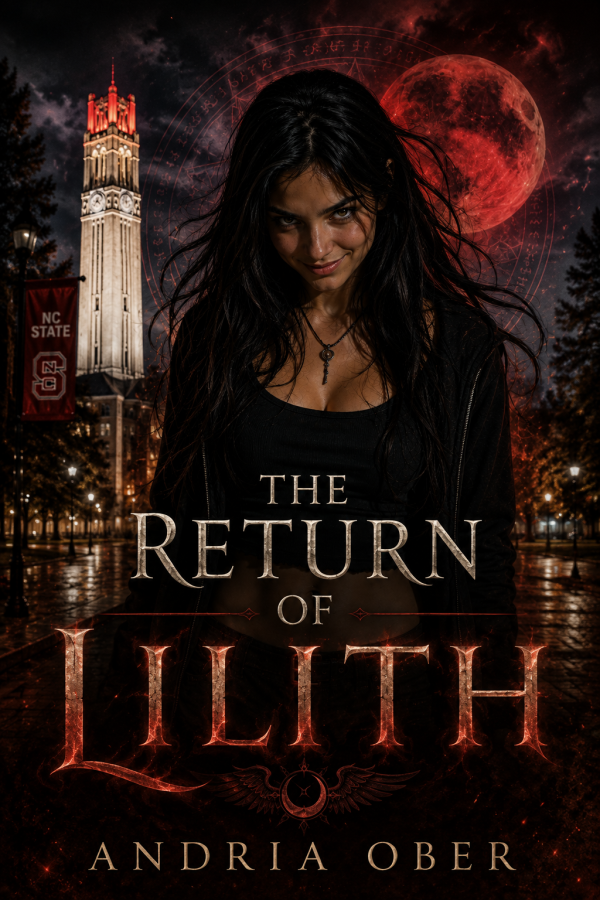
Chapter 2
My head was throbbing, and I couldn't focus on anything. My mind was a chaotic jumble, different memories overlapping and contradicting each other. Images flickered behind my eyes—one moment I was casting magic in a fierce battle, the next I was thrown by an explosion in a HUMVEE, the roar of fire and metal all around me. These memories didn’t fit together, as if they belonged to different people—yet they all felt mine. I tried to hold onto one, but every time I grasped at a detail, another would intrude, just as vivid, just as real. The pain in my head made it impossible to move, but beneath that pain was a strange sensation—a feeling that something about me had shifted, something both unfamiliar and intimately familiar at the same time. I felt as if I was fighting myself just to remember who I was.
As the sensation returns to my limbs, I become acutely aware of every ache and throb. The rough sheets scratch against my skin, each shift making me wince. My shoulders burn with a dull, lingering ache, and my lower back feels twisted and sore, as though I’ve been lying in this uncomfortable bed for days. The weight of the blankets presses down on my body, pinning me in place, and even the faint pressure on my left knee sends a sharp twinge up my thigh. When I move, the mattress squeaks loudly, a jolt of pain shooting through my head in response. Gradually, the pain in my head fades to a dull thump, but now I notice the smaller pains elsewhere—the stiffness in my neck, the ache in my wrists, the pins and needles in my feet. I decide it’s safe to open my eyes, but squint carefully, wary of any bright light that might reignite the agony in my skull. When my eyes adjust, I realize I’m in a relatively dark room, with just a sliver of light seeping through the edges of the curtains.
I sat up slowly, careful not to make myself dizzy. As the blankets slid down to my waist, a rush of cool air prickled my skin, drawing goosebumps across my arms and chest. Instinctively, I pulled the covers back up—then paused. My hands rested over my breasts, and for a moment I just stared at them, bewildered. Wait. Breasts. Did I always have breasts? I remembered having them in some distant, hazy life, but there was also another memory, more recent and raw, where my chest was flat and broad, my hands rougher and larger. My heart pounded as I pressed my palms against the softness, feeling the unfamiliar weight and shape beneath my fingers. My proportions were wrong—my arms slimmer, my waist narrower, my hips curved in a way that didn’t match the body I last remembered inhabiting. It was as if I was waking up inside someone else, yet every sensation was intimately, confusingly mine. I was caught between familiarity and alienness, overwhelmed by the impossible reality that my body—this body—was not the one I remembered. Panic tangled with curiosity as I tried to piece together who I was, and why all of this felt both so right and so utterly, terrifyingly wrong.
I push myself upright, bracing with hands that feel both like mine and not mine, the muscles responding with a familiar strength yet an unfamiliar finesse. With deliberate caution, I swing my legs off the edge of the bed, watching them dangle for a moment—smooth, shapely, lightly tanned. I set my feet on the floor, the cold biting against my toes, and shakily try to stand. My balance is off, my center of gravity shifted; my hips sway differently beneath me, and the muscles in my thighs tighten in ways I don’t expect. Every small motion feels like both a memory and a discovery: the sensation of skin against the floor, the way my knees bend, the gentle weight of my chest shifting as I rise. I can feel my legs, yet when I look down, they aren’t the legs I remember from another life—gone are the paler, hairier limbs, replaced by these unfamiliar, elegant lines. My fingers brush over my waist, tracing the curve that is both deeply familiar and utterly strange. Each new sensation is a contradiction, echoing with the ghosts of other bodies I’ve inhabited. I stand, unsteady, caught between the instincts of two lives—one that knows how to move in this body, and one that aches for the old patterns. How can my body feel both normal and foreign at the same time? The question echoes through me as I take a hesitant step, relearning what it means to inhabit this flesh.
I look between my legs and see my womanly features there as well. Wait, I think, I'm not a woman—but then again, I remember being a woman. My body is most definitely a woman's body. So why do I remember being a man as well? As I stare at my reflection in the mirror, sudden flashes of another life erupt in my mind: the roughness of stubble on my chin, the weight of armor on broad shoulders, the smell of sweat and steel in a battlefield. I remember laughing with a brother-in-arms around a campfire, the thrill of swordplay, the ache of wounds taken in combat. These memories feel as real as my memories in this body—dancing in moonlit gardens, singing with a voice higher and sweeter than I ever remembered having, feeling the weight of long hair tumbling down my back. I am overwhelmed by these conflicting lives, memories layering atop one another until I can barely breathe, each more vivid than the last. I grasp at a name, and it comes to me—Lilith. Yes, I am Lilith, the first human to be created in the Garden of Eden. I remember being in the Garden and being happy till Adam came. Just the thought of that man makes my blood boil. I remember the day when I left the Garden, being escorted away by Michael and Lucifer. The pain and the hurt that comes with that memory are almost overwhelming, but now it's tangled with the ache of lives I never thought were mine.
I am young-looking, despite having lived for ten thousand years. Staring into the mirror, I realize I have never truly seen my face before—not like this, not in clear, unbroken detail. In all my lives, a true mirror was a rare luxury, and water’s surface always rippled and distorted my features. Now, I trace the unfamiliar contours of my cheekbones, the shape of my lips, the set of my eyes—features that don’t match the faces from the fractured memories crowding my mind. It feels strange to study a face that is, by all rights, mine and yet entirely unknown. My skin glows with a vitality I can’t recall ever possessing, my eyes deep and ancient, holding centuries of secrets even as they blink in confusion. I watch my expression shift—curiosity, uncertainty, a flicker of hope—each emotion a stranger across this canvas. I reach out to the glass, longing for recognition, and my own reflection stares back, enigmatic and new. I move back to the bed and sit, unsettled by the discovery. I look around the room again and notice some clothes folded neatly at the end of the bed.
There are a pair of black leggings, a matching white lace bra and panty set, and a loose white t-shirt. As I pick up the bra, a strange confusion settles in my chest. I recognize it instantly—its shape, its purpose, even its texture between my fingers—yet I can't recall ever wearing one before. Somehow, I know exactly what it's called, what it's for, and the steps to put it on flicker at the edge of my mind, half-remembered instructions that slip away as soon as I try to grasp them. My hands hesitate, fumbling with the unfamiliar clasps, the motions both foreign and oddly instinctive. How do I know this? Did I learn it in another life, or is it just part of this new existence? The knowledge is there, but it doesn’t feel like mine, and the disconnect leaves me feeling unsteady, as if I’m playing a part I haven’t fully rehearsed. I know what all these clothes are, but I can't remember how—or why—I know this information.
I look at myself in the mirror again, feeling even more lost than before. I don’t remember ever wearing clothes like this, yet there are memories in my mind that insist this is exactly what women wear—memories that aren’t rooted in any clear moment or place. As I try to sort through them, I realize the lines between my lives and experiences are blurring. I’ll recall walking through a battlefield in armor, only for the memory to dissolve into a gentle afternoon in a sunlit garden, my hands threading flowers into my hair. Sometimes, these lives merge in strange ways—an echo of laughter that doesn’t belong, a pang of longing for a face I’ve never seen. The contradiction isn’t just confusing; it’s exhausting, leaving me unsure of what is real and what is a leftover fragment from another existence. It’s as if my mind is shuffling through memories at random, and with each passing moment, it becomes harder to tell which life belongs to me now. There also seems to be a huge gap of time in my memory, a gaping hole where years—maybe centuries—should be.
I heard a key in the lock and my body tensed, instinctively searching for a weapon before reason caught up. A woman’s voice called from the other side, "It's me, Lilith. It's your daughter Shri'la." The name hit me with a jolt—Shri'la—a name that echoed through the tangled corridors of my mind. Faces flickered across my thoughts: a child with bright eyes and mischievous laughter, a young woman with proud horns and a gentle smile, an adult shadowed by hardship but still radiant with love. I tried to pin down which image was truly hers, but every time I focused, her face shifted—sometimes older, sometimes impossibly young, sometimes blurred at the edges by the fog of time and fractured memory. Still, the happiness I felt in those recollections was overwhelming, pure and aching all at once. My heart leaped as the door opened and her laughter rang out, a sound so familiar it brought tears to my eyes. I rushed forward and wrapped her in a fierce embrace, clinging to the only thread of certainty in the whirlwind of my memories. It felt like it had been an eternity since I last saw her, and for a moment, all the confusion faded away.
I pull back from her and take a good look, searching her face for the details that set her apart in my mind. At first, her features flicker and shift as my fractured memories try to settle—child, teen, grown woman, all layered one over another. But as I focus, Shri’la’s presence becomes clearer, her face solidifying into the woman before me. Her beauty is striking, just as I remembered, but now I notice the subtle changes: her black horns, longer and thicker than before, form a sort of dark halo around her head, lending her an almost regal bearing. The long black hair frames her slight blue skin, and her barbed tail, longer and more expressive, sways with restless energy. I meet her eyes—deep, luminous, and brimming with unshed tears. In that gaze, I finally see my daughter, aged by pain and trial yet still the same soul I cherished. I feel the ache of lost time and the pride of recognition, both sharp and overwhelming. She looks like she has struggled with many trials, and I hope with all my heart that however long I have been away has not been too hard on her.
Shri'la closes the door and says, her voice trembling, "I have missed you so very much, Mum." The words hit me with the force of all the lost years between us. Tears spring to my eyes, blurring the sight of her face as I hear the pain she has carried in my absence. Her face crumples, and she presses a shaking hand to her mouth, trying to hold herself together. I pull her into my arms, and we both break—shuddering sobs filling the space between us, years of longing and loneliness pouring out in tearful gasps. I cling to her, my firstborn, feeling her body tremble in my embrace, her horns brushing against my cheek. The ache of regret and love is too much to contain; I bury my face in her hair and let my grief and relief mingle in the tears streaming down my cheeks. In that moment, nothing else matters but holding her and letting our hearts mourn and heal, together at last.
Tears still glistening on my cheeks, I pulled Shri'la into my arms again, holding her tight as if the force of my embrace could make up for all the years we’d lost. Her arms circled around me just as fiercely, and for a moment, we simply held each other, our bodies trembling with grief and relief. I rested my chin atop her head, feeling the cool press of her horns against my jaw, and stroked her hair in slow, gentle motions. The steady rhythm of her breath, shaky but gradually calming, matched my own. I could feel her heartbeat racing against my chest, a fragile, desperate hope flickering between us. We clung together, drawing strength from each other's warmth and solidity, letting our tears mix, and our pain soften in the safety of this reunion. After a long moment, I managed to whisper, “What did I do that took me away from you for so long?”
Shri'la said, "You fought Michael, and he had set a trap for you. Both Michael and Lucifer were there, and they ripped your soul from your body. Michael tried to destroy your soul, but..."
"But my soul is bound to the material plane till humans can return to Eden," I speak. "How long have I been gone?"
"For a little over three thousand years," Shri’la tells me. The words slam into me, and suddenly Lilith’s memories surge forward, unstoppable—a torrent of centuries lost, of empires rising and falling, of languages spoken and forgotten, of faces that flicker and fade. I feel the weight of millennia pressing on my chest—three thousand years of exile, of wandering the nothingness between life and death, of time slipping past like sand through desperate fingers. Brief flashes erupt behind my eyes: the burning of ancient cities, the heartbreak of losing Shar’li, the laughter and tears of daughters whose names I barely remember. The grief and longing of every lost moment threaten to drown me; I clutch at the bed for support, my breath ragged. In this rush, I am Lilith completely—ageless, restless, mournful, and burning with the need to find my family across the vast, cruel gulf of time.
I dropped to the bed in disbelief, the enormity of three thousand years crashing down on me all over again. My mind reeled, trying to comprehend the centuries that had slipped away, the endless days and nights I had lost. The weight of absence pressed on my chest, squeezing the breath from my lungs. How many sunrises had I missed? How many stories, joys, and heartbreaks had slipped by, unshared? As Lilith’s memories surged, they tangled with my own grief, the ache of being ripped from everything I loved. And then my thoughts turned sharply to my wife—my beautiful Shar’li. Her laughter, her touch, the way her eyes sparkled with mischief and wisdom. Panic clawed at me, sharper than before. "Three thousand years? I've been gone that long? Where is Shar’li? Please don’t tell me something bad has happened to her," I asked, my voice trembling with hope and dread.
Shri’la’s voice breaks as she tells me, "Mother was so distraught by your absence that she couldn't stand to be without you. She stopped feeding and locked herself in a tomb." The words hit me like a physical blow—my beautiful Shar’li, so strong and vibrant, reduced by grief to hiding from the world and starving herself. I can picture her there, curled up in darkness, her spirit dimmed by my absence. A wave of guilt crashes over me, raw and suffocating. Shri’la continues, her own tears falling freely now, "She was found at some point and moved, so we don't know where she is now." My mind spins with images: Shar’li’s face, hollowed by sorrow; the cold stone of her tomb; the emptiness that must have filled her heart. The pain in Shri’la’s eyes mirrors my own, and I realize how deeply my disappearance shattered our family. The need to find my wife burns through me—hope and desperation tangled together—as I cling to the memory of her, refusing to let it be the end.
My heart shatters as I hear this news—my love, my life, lost and suffering somewhere in the dark. The agony is so raw it nearly knocks me to the floor, but in that same moment, something deep inside me hardens and blazes to life. I cannot let this be the end. Shar’li needs me, and after three thousand years, I refuse to let her slip away again. I grab hold of Shri’la’s hand, my own shaking but determined. "Tell me we are going to find her. I have to get back to her again," I beg, my voice breaking with desperate hope. Sobs wrack my body, but through the tears, a surge of resolve wells up—my grief twisting into purpose. I will not rest until I hold my wife again, no matter what stands in my way. My love is lost and alone, but I am no longer powerless. This is the worst pain I could imagine, but it is also the fuel that will drive me to move mountains to find her. I cling to this new strength, letting it steady me even as the tears keep falling.
Shri’la looks into my eyes with fierce determination, her own tears shining, but her voice steady. "Yes, Mum, we are going to find her. I finally found you, and we are going to find her as well. I promise." She pulls me into a tight hug, her arms strong and comforting. I feel her resolve, the way her body trembles not just with sorrow but with the strength of her conviction. She presses her cheek against mine, and together we draw courage from each other’s warmth. "We’ll bring her back, no matter what it takes," she whispers fiercely. I can see how much this promise means to her, how deeply she aches for our family to be whole again. Her words and embrace steady me, lighting a fragile hope inside my battered heart. She is right—together, we will get Shar’li back.
"First, we need to make sure you can live in the modern world without attracting attention. I've already started the process—I've created a new legal identity for you, complete with documents and a backstory. According to the records, your 'parents' died in a car accident, and you’re being adopted by me." Shri'la’s voice is matter-of-fact, but there’s an undercurrent of excitement and anxiety. "Once everything is official, you’ll move in with my family and me. I want you to meet my husband, David, and our son, James. They’re kind and open-hearted, but…"
She hesitates, glancing at the door as if making sure no one is listening. "David and James don’t know what I truly am, or who you really are to me. I want to keep it this way for now. The world is hard enough for those of us who practice magic, let alone for demons. I’m not sure how they would handle the truth. For now, we’ll blend in, keep our secret, and gather the resources and allies we need. Once you’re settled, we can start searching for Shar’li."
Her careful planning reassures me—she’s thought of everything, balancing practical needs with the delicate threads of family and secrecy. But before we go any further, Shri’la fixes me with a serious look. “There’s a lot you need to know about the current world, Mum. Magic is still rare, but most humans don’t believe it exists at all. There are no laws against it, and no one is hunting mages or magical beings—but that’s because the mage community itself works very hard to keep magic hidden from the public. The world runs on technology and science now, and most people will dismiss anything magical as superstition or fantasy. It’s safer for everyone if we keep our abilities secret and avoid drawing attention. If people found out the truth, it would cause confusion or panic, not persecution. So, we blend in, keep our magic quiet, and protect our family’s secrets above all.”
She squeezes my hand, concern evident in her eyes. “Most people have no idea about demons, magic, or the supernatural. They’re taught to dismiss it as myth. My husband and son think I’m just another woman with a mysterious past. I’ve built a normal life, but it’s a fragile illusion. If the truth comes out, it could ruin us—or worse.”
She looks down, her voice softening with a touch of sadness. “That’s why I’ve had to hide so much of myself from them, and from the world. They both believe that my parents are dead and that I am estranged from the rest of my sisters. This was an easy story to tell them since you and mother were gone, and the others we got separated decades ago, and I don’t know how to contact them."
A new wave of worry crashes over me, sharp and relentless. My voice trembles as I ask, "What happened between you and your sisters?" Panic claws at my thoughts, dredging up memories of laughter, squabbles, and the warmth of my daughters gathered around me. I search Shri’la’s face for reassurance, desperate for any sign that my family isn’t lost beyond reach. The possibility that I might have lost the rest of my daughters—that our family could be broken and scattered forever—threatens to unravel me completely. My heart pounds with dread, each second stretching into an eternity as I wait for her answer. How much more heartbreak can I bear before I shatter?
Shri’la’s shoulders slump, her voice heavy with sorrow. "They’re alive, Mum, but I don’t know where they are now." She hesitates, the pain of old memories flickering in her eyes. "After you vanished, Tra’tha fell in with an incubus—a cruel, manipulative demon. He twisted his way into our lives, and before we realized it, he had trapped us all under his control. For hundreds of years, we lived as his prisoners, forced to serve and obey, chained by magic and fear. I managed to escape—barely—but I couldn’t bring the others with me. I tried to go back, but by the time I found the courage and means, they were gone. The incubus had moved them or they’d scattered on their own, and every trail I followed went cold." Shri’la’s voice cracks, tears welling. "I’ve searched for them over the centuries, but the world is vast and the supernatural even harder to track. I still hold onto hope they’re out there, somewhere, waiting to be found."
My family is in ruins, shattered and scattered to the winds. Shri’la is all I have left—her presence a fragile lifeline in a world that suddenly feels empty and cold. The loss of my other daughters carves a gaping hole through the center of my being, an ache so deep I can barely draw breath. Despair and guilt swirl inside me, threatening to drown out even the small comfort of my daughter’s arms around me. I try to cling to hope, to the idea that maybe one day I’ll find my beloved Shar’li and the rest of my children, but it feels like wishful thinking—a dream just out of reach. All I have are memories, regrets, and a desperate longing for the family I once held close. I wonder if this is the agony Shar’li felt after I vanished: the helplessness, the endless ache. Still, somewhere beneath the grief, I remind myself that demon queens are difficult to kill; perhaps, even in hibernation, she will endure until I can bring her back. For now, I hold onto Shri’la, my last anchor, and let the sorrow come.
I collapsed onto the bed, my body wracked with sobs that tore through me, leaving me gasping and hollow. The grief was a tidal wave—relentless, cold, and suffocating—rising up from the deepest parts of my soul until I thought I might drown in it. My chest hurt with every breath, my eyes burning as tears streamed unchecked down my cheeks. I clutched at the blankets, desperate for something solid as memories of my lost family battered me from all sides. The ache was more than emotional—it was physical, my limbs heavy and trembling, my heart so raw it felt as if it might split open.
Through my shuddering cries, I felt Shri’la gently move me to the center of the bed, her arms wrapping tightly around me. She pressed her forehead to mine, her own tears mingling with mine as we clung to each other in the darkness. Our sorrow filled the room, a chorus of pain and longing, wordless but understood. We cried together, heartbroken and exhausted, until sleep finally claimed me, a merciful oblivion that dulled the sharpest edges of my grief—if only for a little while.
The Return of Lilith V.2 Chapter 3
Author:
Audience Rating:
Publication:
Genre:
TG Themes:
TG Elements:
Permission:
Chapter 3
The sun blinded me as it shone through the dusty, bullet-resistant window of my HUMVEE, turning the world outside into a shimmering white blur. Our convoy stretched along the cracked, sunbaked road—eight vehicles in total, each armored and bristling with antennas, kicking up clouds of fine Afghan dust that clung to every surface and seeped through every crack. Through the glare, I could just make out the silhouette of the lead MRAP lumbering ahead, its gunner scanning the barren landscape. The low hum of engines was broken only by the occasional squawk of the radio and the rhythmic rattle of loose gear in the back. It's been an uneventful convoy—almost two months without real trouble—but the silence felt heavy, unnatural, as if the whole country was holding its breath. According to the latest intel, the road ahead was clear, but I kept replaying the briefing in my mind, doubting the certainty in every word. The air conditioning fought valiantly against the relentless heat, but sweat still pooled beneath my body armor, soaking my shirt and stinging my eyes. The Kevlar vest pressed against my chest like an oven door, and for a moment, I fantasized about stripping it off and just feeling the open air. I forced the thought away, gripping my rifle a little tighter, the weight of anticipation settling over me as we rolled deeper into the Afghan countryside.
We come upon a small village twenty clicks from Kandahar. The convoy slows, tires crunching over loose gravel and broken pottery as we weave between low mud-brick buildings. Sun-bleached doors hang crooked on their hinges, and faded laundry flutters from rooftops, abandoned in the rush to disappear. Unlike previous times through this area, there are no civilians in sight—no old men squatting in the shade, no women peering out from behind curtains, no children darting toward us with wide grins and outstretched hands. Usually, the kids would be yelling for candy, chasing after our gunners, weaving dangerously close to the wheels. The absence of their laughter and the empty, watchful windows send a chill down my spine. The only movement comes from a stray dog slinking between alleys, its ribs showing beneath patchy fur. My knuckles whiten around my rifle. "Trainer," I speak into my vehicle coms to my gunner, "head on a swivel and keep an eye out for any sign of trouble, something doesn't feel right."
"Roger, Sarge," Trainer answers, his voice tight over the comms. I glance up and catch his silhouette tense in the turret, scanning the rooftops and alleyways with the heavy machine gun pointed just left of center. "You're right, it's awfully quiet here today. I don't like it. Last time we rolled through, there were kids everywhere. This... this feels wrong." He shifts his weight, the gun's barrel tracking a shadow behind a doorway. Even from below, I can see his knuckles are white around the grips, the usual cocky humor gone from his tone. "I've got a bad feeling about this," he adds quietly, almost to himself, before raising his voice back to the rest of the crew: "Stay sharp up here—eyes on every window and rooftop."
Static crackles in my headset, then the convoy commander's voice cuts through, sharper than usual—"All Vehicles, SITREP." I can picture him hunched over his radio in the command MRAP, eyes darting over the village through hardened glass, sweat glistening on his brow despite the AC. The tension is clear in his tone, not the usual bored routine. Lead vehicle is quick to respond: "Whiskey 1... Whiskey 3... All clear." The rest of the convoy checks in by call sign, each voice clipped and wary, the phrase 'All clear' echoing down the line like a nervous mantra.
I press the radio button, my gloved finger slick with sweat, and steady my voice before replying: "Whiskey 6, all clear." I scan the empty village through the smudged glass, eyes flicking to every dark doorway and rooftop. My tone is flat, but my pulse is racing—too quiet for comfort. "No movement, no contacts. Area looks deserted, but something feels off. Whiskey 6 out." I release the mic, listening as the rest of the convoy checks in, each call sign echoing down the line. For a moment, I allow myself a deep breath and reach for my Camelbak. The water is lukewarm, but it gives my mouth something to do as I try to ignore the knot of unease in my gut. I force myself to focus on each shadow and alleyway, nerves wired tight, hoping this is just another tense but uneventful transit.
Just as it looks like the convoy is about to leave the cramped maze of mud-brick houses, a deafening roar shatters the uneasy silence. The ground heaves beneath us, a hot shockwave rattling the windows and slamming into my chest. In front of us, the lead MRAP erupts in a column of dirt, smoke, and flying metal. The vehicle lifts off the ground, twisting almost in slow motion before crashing back down on its roof, wheels spinning in the air and debris raining across the road. For a split second, everything is still—then shouts and panicked voices crackle over the radio net. Trainer’s voice cuts through the chaos, raw and urgent: “Fuck! IED! IED! Lead’s hit!” Dust and the sharp tang of burning fuel fill the HUMVEE as adrenaline surges through my veins and I instinctively reach for my weapon.
The radio crackles with urgency, the convoy commander’s voice tight and commanding—"IED! IED! All callsigns, fall back to RP Bravo—repeat, fall back to Rally Point Bravo! Whiskey 1, status report! Whiskey 4, get security on the rear! No one moves until we get accountability!" His words come rapid-fire, cutting through the chaos as he tries to reestablish order. In the background, I can hear the frantic reports and the edge of panic in other voices as everyone scrambles to process the hit, but the commander’s tone is steady, demanding swift action.
I drowned out the rest of the report to HQ. "Smith, get us back out of here quick. Trainer, keep your eye on the rooftops," I shouted to my driver and gunner, my voice barely steady over the chaos. My crew snapped into action—Smith’s hands shook on the steering wheel as he slammed the gearshift into reverse, his jaw clenched so tight I could see the veins standing out on his neck. His eyes darted between the mirrors and the dusty rear window, desperately searching for a way out as the panic crept into his breathing. In the back seat, Rodriguez cursed under his breath, fumbling for extra magazines and pressing himself low against the armored door, knuckles white around his rifle. We started to back up, but before the tires could even gain traction, a second IED erupted behind us, the explosion rocking the HUMVEE and sending a shockwave through all of us. I saw Rodriguez flinch and duck instinctively, face pale, lips moving in a silent prayer. We were stuck in a box, and the realization hit all at once—there was nowhere to go. Small arms fire began raining down from the rooftops, the sharp cracks of AKs echoing in the tight streets. Trainer opened up with his M2 .50 cal, his shouts nearly drowned out by the thunder of the gun. Brass casings showered down into the cab, the acrid smell of gunpowder mixing with sweat and fear. One glowing casing slipped down the back of my armor, burning the hell out of my skin, but I barely registered the pain—adrenaline had taken over, and every sense was focused on survival.
Trainer yells down, “reload!” I grab a box of rounds from behind Trainer and pass it up, hands trembling as I fumble with the latch. The seconds crawl by, every heartbeat a lifetime as the .50 cal falls silent and the enemy fire grows heavier, bullets pinging off the armor like a hailstorm. The radio, once our lifeline, suddenly fills with static and garbled shouts—communications breaking up just when we need them most. I scan the rooftops, desperate for shapes, but my headset crackles again and then dies—comms are out. The HUMVEE's engine coughs, sputters, then chokes as shrapnel tears through the hood, and I hear Smith cursing, slamming his fist on the dash in frustration. I yell for a SITREP, but only silence and chaos answer me. The air inside the vehicle thickens with smoke and the sharp, metallic taste of fear. I never hear Trainer fire off any more rounds. I look back to find Trainer slumped down in his harness, unresponsive to my commands, blood pooling beneath his vest. The windshield spiderwebs with bullet impacts, and the small arms fire hammers all around us as we sit, pinned and unable to move, everything failing all at once—comms, engine, weapons, and hope.
“Fuck, Trainer’s hit!” I scream, the words tearing out of my throat as bullets shatter the side windows and dust pours in through the cracks. Smith and I scramble—he grabs Trainer’s vest, and I reach up, hands slick with blood and sweat, fighting to pull our gunner down into the cab. Every second feels endless as rounds snap overhead and the world shrinks to the frantic chaos inside our armor-plated box. Trainer’s body is heavy and limp, blood soaking his uniform and pooling across the floorboards. As we finally drag him into the cab, his head lolls to the side, eyes glassy and unfocused. I stare at the red stain spreading beneath him, willing him to breathe, to move, to say something—but he’s gone. The realization slams into me, cold and hollow, even as the firefight rages on outside. My hands shake uncontrollably, and for a heartbeat, I can’t hear anything but my own ragged breathing and the pounding of my heart, the world collapsing into grief and disbelief.
We have the only crew-serve weapon here in the box, and in that instant, I know it’s up to me to keep us alive. Heart pounding, I rip off my seat belt and scramble over Trainer’s lifeless body, my knee slipping in blood as I force myself not to look at his vacant eyes. My ears ring with the relentless gunfire and the metallic stench of blood is thick in my throat. I shove open the hatch and haul myself into the turret, the world exploding into chaos and sunlight as bullets ricochet off the armor all around me. The air up top is a furnace of dust, smoke, and burning metal. I grab the handles of the .50 cal, Trainer’s gloves still sticky against the grips, and feel the weapon shudder beneath my hands. I slam the charging handle back, set my thumbs on the triggers, and unleash a barrage of fire at the rooftops. The recoil rattles my teeth, spent casings clattering around my boots, and I sweep the barrel across the skyline, trying to force the enemy back from the edges. I shout target directions to Smith and Rodriguez below, my voice raw, barely audible over the thunder of the gun. The enemy keeps coming, darting between cover, their muzzle flashes winking from broken windows and doorways. I can’t cover both sides—there’s too much chaos, too much ground to defend. An RPG screams out from the left and slams into the cab of the vehicle in front of us, sending a fireball and shrapnel into the air. My ammo can runs dry, the gun hammering empty with a hollow metallic click. Gritting my teeth, I duck back down into the cab, shouting, "Smith, evacuate and get to cover!" I grab my assault pack and M4, my hands slick with sweat and grime, and throw myself out the door. I sprint for the nearest buildings, rounds snapping past my head, when an explosion behind me lifts me off my feet and searing heat tears across my legs and back. I hit the side of a mud-brick wall hard, lungs burning as I scream—pain and adrenaline merging into a single, blinding moment.
***
My eyes fly open as I scream, the sound tearing from my throat before I even know I'm awake. For a long, disorienting moment, everything is confusion—gunfire echoes in my ears, the smell of burning metal and blood fills my nose, and my hands frantically slap at my body, searching for wounds I can still feel but can't find. Sweat soaks my shirt, and my heart hammers like it's still trapped in that bullet-riddled HUMVEE. Shadows flicker in the corners of the room, shapes that morph between Afghan rooftops and cheap hotel furniture. I can’t make sense of where—or who—I am.
Then, arms wrap around me from behind, gentle but firm, grounding me. A soft whisper brushes my ear: "It's ok, it's ok, you are safe." The words anchor me, snapping the world back into focus. The adrenaline ebbs as the nightmare fades, replaced by the sterile light and stale air of a hotel room. Shri'la holds me close, rocking gently, her touch breaking through the fog of terror. But my thoughts are tangled: I’m Kyle Rodgers, Afghanistan still burning behind my eyelids, but at the same time, I know I’m not there—I’m here, with her, in this room. My mind reels, struggling to reconcile the soldier’s instincts with the safety of this embrace. For a moment, I feel like both people at once—caught between battle and peace, the past and the present, Afghanistan and a place where I now, impossibly, feel safe. Why do I, Kyle, feel at home in the arms of this woman whose face I shouldn’t even know?
Slowly my mind starts to piece it all together, the reality both familiar and foreign. I am here because I have returned, and I am Lilith—but the visions that haunt me are not just dreams. My eyes lock with Shri'la as I try to steady my thoughts. "That was a memory of the last convoy I was on. They were ambushed and everyone was killed, most likely. I don't know how I survived to get to that mountain cave you found me in." But as I say the words, a deeper confusion gnaws at me. How is it possible that I, Lilith, remember every detail as if it were my own life? The fear, the sweat, the grit of Afghanistan—memories that are not mine, yet feel like they've always been there, woven into my soul. These memories are so pronounced, so visceral, I feel like it was me that was there, not just watching, but living it. How did I, once the queen of darkness, become the keeper of Kyle Rodgers’ memories? Why do I know his pain as my own?
Shri'la replies, her brow furrowing in concern, "How do you have his memories too? When I released your spirit from being bound to him, his soul should have moved on." She shifts closer, searching my face for any sign of understanding, her fingers unconsciously tightening around my hand. "This makes no sense," she murmurs, her voice low and troubled. "I've performed soul rituals before, but never have I seen anything like this. Did his soul find a way to latch onto yours after you were changed? Or is there something about your return that allowed both of you to exist in the same vessel?" Her eyes glisten with worry and curiosity, the weight of ancient knowledge and maternal instinct flickering behind them as she tries to make sense of the impossible.
I shake my head, "his memories are now my memories. I remember everything that happened to him and me as if I lived both lives. It is like I'm two different people, but my body is as it was when I fought Michael, but I can see his, my, life as if it was me there." As I look down at my hands—these hands that have wielded both darkness and hope—a sudden understanding ripples through me. I see, for the first time, the threads of fate weaving our souls together. When Shri'la freed my spirit, it wasn't just my power and being that returned to this world. Kyle's soul, battered and unfinished, must have clung to mine in that moment between worlds. Instead of moving on, his essence merged with mine, intertwining our memories, fears, and hopes. That is why I know his pain, why I feel his love and loss as my own, and why the world feels both ancient and new to me. I understand the modern world not just because I observe it, but because Kyle's life flows through me—two stories now one, two hearts beating in a single vessel. This understanding settles over me like a bittersweet comfort. I am Lilith, but I carry Kyle Rodgers within me, and together, we are something wholly new.
"This all feels so confusing," I comment to Shri'la, finding comfort in her embrace as my mind spirals. I find myself staring into the darkness of the room, searching for some anchor in the shifting tide of memory and self. I struggle to get a hold of who I am. Am I Lilith or am I Kyle Rodgers? I don't know which one is the more dominant me. No—Lilith is the dominant one now. I can feel my memories in the front, stronger and brighter, but Kyle's life is woven so tightly into my soul that I can never be just one or the other again. For the first time, I wonder if something fundamental was lost in the merging—did my soul truly remain whole, or did it fracture, reshaped into this new existence? I realize that what I am now is not a vessel for two lives, but a new soul born from sacrifice, grief, and a second chance. I may never return to who I was before, but maybe there's meaning in becoming someone new.
I finally calmed down and sat up on the bed, a mischievous grin spreading across my face as I fixed my gaze on Shri’la. "So, you’re married and have a son now, huh? My little succubus all grown up—imagine that! I still remember you stomping your foot and screaming at me, ‘Never! I’ll never let some man boss me around!’ every time I asked if you’d ever find a mate." I smirked and wagged a playful finger at her, unable to resist teasing. "Honestly, your pout could have melted stone—especially when I’d remind you that one day you’d fall head over heels just like the rest of us." A warm chuckle escaped me as I recalled the dramatic way she’d cross her arms and glare, only to sneak a hug when she thought no one was looking. Her being my firstborn made us enjoy all her ‘firsts’—her first crush, her first spell, her first time sneaking out—a little more than the others. Not that we didn’t love them too, but with her, every milestone was new and magical. It just wasn’t something we’d experienced before, so we couldn’t help but measure the others against the bar she’d set. Shri’la was always closer to me than my other girls, and teasing her now felt like stepping right back into those cherished memories.
"Yes, yes mother, you were right as usual. It just took a few thousand years to find a fantastic man. Please don’t give him a hard time like you do other men. He treats me great, and he is a great father. He is a wizard, so you don’t have to hide your magic from either of them. Unfortunately, my mate is mortal, unlike you and mum." Shri'la’s laughter trails off, but her eyes grow distant and misty. She hugs a pillow to her chest, voice softening, "I miss mum. Every day, I wish she could have been here when I brought you back, to see what our family has become. She would have loved David, and she would have been so proud of James—he’s just as stubborn as you always said I was." Shri’la glances away, blinking quickly as if she might cry, then smiles faintly. "Sometimes, when we’re all together, I look around and wish you both could see us—see our little traditions, the way James laughs, how David tries to cook breakfast on Sundays. I hope we find mum in time so she can meet both of my favorite men. Family feels incomplete without her, even with all this happiness. But having you back gives me hope that she’ll come home too."
I swallow hard and try not to frown at the reminder of my succubus queen and her unknown whereabouts. For a moment, I let my gaze linger on Shri’la’s face—the arch of her brows, the shape of her lips, the tilt of her chin. It’s uncanny, almost bittersweet, how she mirrors her mother so perfectly. The same midnight hair, that quiet strength in her eyes, even the way she laughs echoes memories I thought I’d lost. Of all my daughters, you are the only one who looks exactly like her. I’ve never been able to see any of my features in your face, only hers. Sometimes, when you smile, it’s like she’s standing right in front of me again. I expect him to treat you like a queen, you are the daughter of a queen, remember." I force a little levity into my voice, chasing away the ache. "Now, what is a wizard?"
Shri’la leaned forward, her eyes brightening with a touch of nostalgia as she spoke. “Wizards started appearing about two thousand years ago—no one is quite sure how or why. Some say it was a side effect of the great wars between the magical races, others think it was a gift or a curse from the old gods. What we do know is that these are mortal humans who, for reasons no one fully understands, can tap into magic. Their power is limited compared to immortals, and they have to study for years to master even the simplest spells. None are as powerful as you, so you may want to tone your magic down a few hundred notches when you’re around them.” She gave a small smirk, then added, “Some families believe magic is hereditary and trace their bloodlines with pride, while others think a wizard can be born to anyone. It’s all a bit mysterious, even now.”
I lean forward with curiosity, a gentle smile on my face. "Tell me more about your son, Shri'la. What is he like?"
Pride lights up her features instantly. Shri'la sits a little taller, her eyes sparkling as she talks about her boy. "Well, he is the sweetest child I could have ever wanted. He’s mortal like his father, and I’ll admit I was nervous at first—part of me was afraid I might give birth to a little succubus. But James… he’s just James. We raised him around magic, so he understands it, but his magic is so very different from mine or David’s. At first, when I saw he could use magic like David, I wondered if he would have my demon magic, but it’s not that. It almost reminds me of your magic, mother." She pauses, a soft, proud smile lifting her lips. "He has this gentle stubbornness, always asking questions, always looking out for those smaller than him—even if he doesn’t know how to show it yet. And when he laughs, it’s like sunshine. Sometimes I catch myself just watching him, amazed that he’s ours." Shri'la’s voice is thick with love and wonder, and she glances at me, as if inviting me to share in her pride.
Angelic magic? My thoughts tumble in disbelief. How could James possibly have that? I remember the agony and awe of the Tree of Life seed fusing with my soul, the way Michael and Lucifer had to guide me through every secret and trial before I could even begin to wield that power. That magic was supposed to be unique—singular, a gift and a burden only I could carry. I glance at Shri'la, searching her face for an answer that can't exist. "How could he have that magic? I only got it because of the Tree of Life seed, and even then it took years for Michael and Lucifer to teach me. His magic should have been demonic like yours, or wizard magic like David's." The idea stirs an uneasy hope inside me—if James has angelic magic, then something extraordinary is happening in our bloodline, something the world has never seen. But it also brings a surge of worry. What will it mean for him to carry a power meant for angels and ancient queens?
As I wrestle with the impossibility of James having angelic magic, a memory from Kyle’s life suddenly flashes into my mind—so clear and sharp it briefly drowns out my own thoughts. I’m standing in a crowded marketplace, probably Afghanistan, watching a street performer make coins vanish and reappear behind children’s ears. The soldiers around me laugh, joking about “real magic,” but Kyle feels the weight of something else—an ache, a longing, and the certainty that if magic truly existed, it would be both wondrous and terrifying, a secret best kept hidden. That old skepticism and wonder now mix with my own knowledge, giving me a strange, double perspective: the world I once ruled openly is now a place where magic is a rumor, a parlor trick, or a threat.
A realization hits me, part memory, part instinct: the general populace doesn’t know of magic—at least, not the way we do. I look at Shri’la, curiosity and caution tangled in my voice. "How do you all hide magic from the world?" I asked Shri'la.
Shri’la drew her knees up to her chest, her tone matter-of-fact but tinged with a hint of old caution. “We have very strict laws about how we use magic in public. Most of us keep any magic work hidden, performed only behind closed doors or with special wards to keep the outside world from noticing. There are magical enclaves—pockets of the world shielded with powerful wards—where we can live and train our children more openly. In those places, we don’t have to worry about being seen. But outside, we’re careful—it’s all subtle spells, whispered incantations, and lots of mundane explanations. There are magical authorities who investigate breaches, and punishments can be severe if someone is reckless. The risks are too great if we’re exposed.” She glanced at me, seriousness in her eyes. “Magic has to stay a secret, for everyone’s safety. The world isn’t kind to what it doesn’t understand.”
“Why do you hide magic from everyone?” I wondered
"Religion," she replies simply, her voice heavy with the weight of history. "That’s the real reason magic is hidden. For centuries, religion—especially the dominant faiths—condemned magic as evil, claiming it was the work of demons or the devil. Those of us with magic were hunted, burned, or driven out, labeled as witches, heretics, or monsters. Even when we did good, fear and superstition always won out. The Christian church especially was relentless, spreading the belief that magic was sinful or just fantasy, until most people forgot it ever really existed. To survive, we had to vanish into the shadows, practicing the old arts in secret and passing them on quietly to those ready to learn. We still teach the new generation, but always behind closed doors and hidden wards. That's why James goes to a special school for magical children. But even there, because his magic is so different, the teachers have no idea how to help him—they just assume he’s a dud."
“What’s a dud?” I ask, but my mind is racing, struggling to make sense of everything I’ve just learned. I feel anger simmering beneath my confusion—anger at a world that would judge a child for being different, anger that my own family could be hurt by such ignorance. My life—lives—have always been defined by power and survival, by carving a place in worlds that never understood me, whether as Lilith or as Kyle. Now, faced with this new reality where magic is hidden and children are labeled for not fitting in, I can’t help but feel protective and unsettled. Even though I have not met him, he is part of Shri’la, so he is part of me. I want answers, I want to understand, but mostly, I want to make sure my family is safe.
“A dud is a child that comes from magical families but cannot use magic, but I know that he can use magic. I sense it in him,” she tells me, her voice unwavering and full of maternal pride. Shri'la’s eyes shine with certainty as she continues, “The teachers don’t see it because his magic doesn’t behave like theirs—it’s quieter, deeper, like something ancient waiting to be awakened. Sometimes I catch him lost in thought, or making little things happen without realizing it, and it feels so much like you, Mother—like the way you could bend the world without a word. He’s not a dud. He’s just… different. And I know, in my heart, that one day they’ll see it too.”
I lean in, curiosity sharpening my tone. "So, you think his magic is like mine?" I ask, searching Shri’la’s face for any hint of certainty. "None of you girls ever showed any ability to use my magic, probably because you’re all succubus like Shar’li. Has he shown any of the classic signs—like, is he drawn to dreams, or does he have trouble controlling his energy around others? He isn’t showing any signs of being an incubus, is he?" I rattle off the questions, hungry for every detail, wanting to understand every nuance of my grandson’s gifts—and worried about what those gifts might mean for him in a world that doesn’t understand magic or difference.
"No, like I said, he appears to be a normal human wizard with a different type of magic," Shri'la sighs, her voice trembling on the edge of desperation. She wrings her hands together, her eyes shining with hope and worry all at once. "I am hoping that you will be able to help him with his magic. I almost hate to ask you this, because it feels selfish, but you would have to go to his school. I know you just returned to me, and now I’m asking you to leave so soon." She looks down, swallowing hard, her voice cracking slightly. "But, Mother, I don’t know who else to turn to. James needs someone who understands him, someone who can protect him and teach him when I can’t be there. Please—please help him, even if it means being apart from me again. I just don’t want to fail him the way I feel like I failed you."
I reach for her hand, squeezing it with reassurance. "Of course, I will help him. He is our blood, Shri’la—yours and mine. Family is everything to me, and I could never turn my back on him or on you. I know how much it hurts to be apart after all these centuries, but protecting our own comes first. Besides, how could I refuse my grandson?" I attempt a playful smile, softening the seriousness with a little levity. "So, what do you think about a little after-school tutoring on the basics of angelic magic? I’ll make sure he knows he’s not alone—none of us are, as long as we have each other."
Shri’la’s expression turns serious, a crease forming between her brows as she voices her concern. “You will have to be careful about teaching him, though. The school has rules, and I don’t know what they’ll do if they find out you use magic so differently—especially powers as old and rare as yours. You’ll have to keep a low profile, at least until you know who you can trust. And the only way you can stay there with him is for you to enroll as a student too.” She bites her lip, glancing away nervously, worry flickering in her eyes. “Promise me you’ll be careful, Mother. I just got you back, and I can’t lose you again—not to suspicion, or fear, or anything else that place might bring.”
"Why do I need to go to school?" I grumble, crossing my arms and shooting my daughter a stubborn glare. Memories of Kyle’s school years flash through my mind—endless rules, pointless homework, teachers who never saw the real me. I hated it there, and the thought of reliving that nonsense makes my jaw clench. "Besides, it's not like they’ll be able to teach me anything about magic," I mutter, defiance flaring in my voice. I catch sight of Shri’la’s downcast face, her hopeful eyes peeking up at me, and my resolve wavers just a bit. Damn it, I think, I’ve faced angels and demons and never backed down, but one look from my daughter and I’m helpless. My stubborn pride wants to dig in, to refuse on principle alone, but I can already feel it unraveling as guilt and love start to win out—just like they always do.
I push myself up off the bed, every movement radiating reluctance, and wander to the end of the room where my reflection stares back from the black TV screen. My thoughts churn—Shar’li is still out there somewhere, and my heart aches to go searching for her, but I know I can’t let my family down. With a dramatic huff, I wave my hands in the air, rolling my eyes for my daughter’s benefit as I turn to face her expectant gaze. "Fine," I grumble, dragging out the word, "I’ll go. But they better not give me any crap when I get there, or I swear I’ll turn the whole school upside down." My voice is half threat, half jest, but underneath it’s clear that love is what’s guiding me. Without waiting for her response, I stomp off toward the bathroom, muttering under my breath about school uniforms and teenage drama, but already planning how I’ll keep James safe.
I let out a long, resigned sigh as the last of my resistance fades. I glance around at the cramped, stale motel room—the peeling wallpaper, the hum of the old AC struggling to keep up, the sense of limbo clinging to every corner—and realize I can’t put it off any longer. "When do we leave this crap hole and start my new life as a schoolgirl?" I call out, my tone equal parts sarcasm and surrender. "Just so we’re clear, I’m only doing this because James is family, and you know I can never say no when you look at me with those eyes." The words come with a soft edge, affection slipping through the bravado. "You'd better work on finding Shar’li and fast, because I won’t let her suffer any more than can be helped. Family comes first—always." I stand there for a beat, letting the weight of my new commitment settle, feeling a strange mix of dread and hope as I finally submit to what’s being asked of me.