
Author:
Caution:
Audience Rating:
Publication:
Genre:
Character Age:
TG Themes:
Permission:
April - London - Angel
Angel rode her Honda out to the edge of London, where the city turned to flats and then fields, to see the place where Angel had been made—not born but shaped.
The façade of St. Margaret’s Home for Girls was the color of old blood, the paint peeling in strips revealing the bones underneath. The sign out front was warped by sun and rain: “Empowering Girls For a Brighter Tomorrow.”
She buzzed the bell. After a minute, a face appeared behind the wire glass: an older woman, probably late fifties, makeup smeared at the edges, eyes sharp and appraising. “Can I help you?” she asked, not opening the door.
“Angelique Valentine,” Angel said, using the name with practiced ease. “I was a resident here. I’d like to see my old files.”
The woman looked her up and down. “We’re not a museum, love. Records are private.”
“I’m not here to complain or sue,” Angel said. “I just want to know who I was. Before.” She let her accent slide toward upper-middle, the one that had opened doors in New York. “My company is considering a grant. I need to see how you’re doing before we sign off.”
The woman’s face shifted. “You work for one of those tech types?”
“I am the tech type,” Angel said. “May I?”
The door buzzed. Angel stepped into the stench of bleach, overcooked cabbage, and teen girl funk. The foyer was a mess of motivational posters and security cams. A battered register listed every visitor for the last month—none.
The woman led her into a room with Formica tables and mismatched chairs. “Wait here,” she said, then vanished up a staircase.
Angel looked around. The walls were covered in children’s art—crayon families, unicorns, some surprisingly accurate skulls. In one corner, a shelf sagged under the weight of old DVDs.
A different woman brought Angel a cup of tea. “Milk and sugar?”
“No, thank you,” Angel said. She sipped the tea and waited.
Five minutes later, the original woman returned. She carried a plastic binder labeled “Valentine, A.” There was something like envy in her eyes. “You look good,” she said, a little too pointedly. “Most don’t, after this place.”
Angel took the binder. “Thank you, Mrs…”
“Peel. I’ve been here twenty-two years.”
“Impressive.”
She scoffed. “Not really. They keep us because nobody else will do it for the money.”
Angel leafed through the file. Intake forms. Medical reports. A photo of herself at eleven, defiant in a red school jumper, an abrasion on her chin. She found a section marked “Behavioral Incidents” and scanned for anything she’d forgotten.
Peel hovered. “You want the truth, or just the paper?”
Angel looked up, met the woman’s gaze. “Always the truth.”
Peel leaned back, arms crossed. “We did our best. But we were understaffed. Government cut funding. Sometimes the girls got rough with each other. We had a few bad staffers, but they were gone quick.”
Angel kept reading. She found a line about a missing girl: “AWOL, returned by police, bruises noted; " and wondered if it was really her.
Peel sniffed. “You’ve done well for yourself.”
“Luck and leverage,” Angel said, closing the binder. “But thank you.”
“Were you happy?” Peel asked, sudden and sharp.
Angel considered what the “real” Angela would say. “It was survival, not happiness.”
Peel nodded. “That’s about right.” She took the binder, replaced it with a single A4 sheet: an alumni form, asking for donations.
“I’ll think about it.”
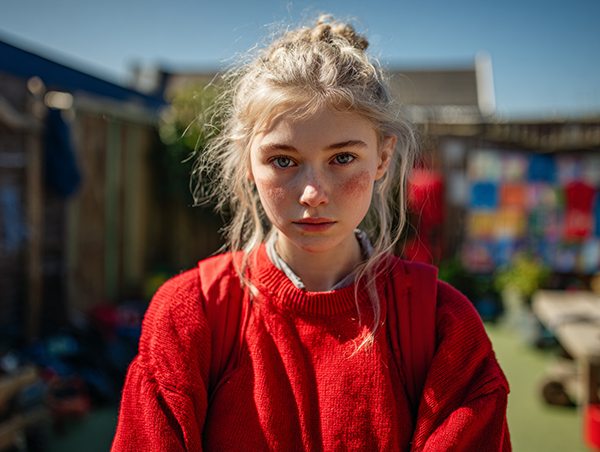
Angel rode back to London. The cold wind felt good on her face, like it could cut away the old skin.
She made it to her old flat by three, keys still working. The rent had been on auto-pay since she and Maud had left London; Mark—she—never believed in burning bridges.
Inside, the place was exactly as she’d left it: the chipped IKEA table, the overflowing bookshelf, the wall calendar still stuck on the week she’d moved to America. Angel dropped her bag and just stood, letting the silence settle around her.
She pulled open the wardrobe. Inside, a half-dozen costumes still hung, sheathed in dry cleaner bags. She touched the spandex, the rhinestone bras, the battered pairs of stage heels. They smelled faintly of sweat and perfume, a Proustian rush of backstage nerves and cheap after work alcohol.
She found her old makeup kit and opened it. The powders were stale, the brushes stiff, but just holding them made her chest ache with nostalgia. She’d hated the job some nights, but she’d loved the feeling of being seen. Of walking into a room and knowing every eye was on her, not out of love or mere lust but out of pure awe.
Maybe it was because she had worked so hard at getting good at it. Maybe she was an exhibitionist at heart. Maybe it ran deeper than she’d ever wanted to admit.
She opened the bottom drawer of the dresser. Angel’s old journals were there—she’d always kept the discipline of writing, even when life was a blur of shifts and hangovers. She flipped to the most recent one, the one started a month before the swap.
Blank pages. A whole diary, empty. She wondered if she had ever noticed. She doubted it. She thumbed back to the earlier entries. There were notes on every regular at the Elephant: who tipped, who groped, who cried in the private rooms. Lists of pole tricks she wanted to master. Drawings of tattoos she might get, if she ever had the money.
She closed the journal and lay back on the ratty mattress. It was all still there, the city, the memory, the hunger. She wanted to dance again. Not for the money or the men, but for herself. She made a mental note: ask Mark if she could install a pole in the penthouse. Maybe in the gym. He wouldn’t say no.
Her phone buzzed. A New York number; Maud.
Angel answered. “You miss me already?”
Maud’s voice was tinny but warm. “Don’t flatter yourself. I need you to bring me back some proper tea bags. The shit here is like pond water.”
Angel laughed. “Done. How’s the knee?”
“Sore. But the nurse is nice. She wears those little white socks you like.”
“I’ll bring you biscuits, too.”
A pause. “You okay, Angel?”
Angel hesitated. “I went back to the home today. St. Margaret’s.”
Maud’s tone sharpened. “Why torture yourself?”
“I needed to see it. Needed to know I wasn’t just making it up.” It wasn’t a complete lie. Angel really did want to know where she (Mark) came from.
Maud made a noise, half-growl, half-sigh. “You weren’t. That place fucked up a lot of girls.”
“I thought maybe there’d be something… I don’t know. Closure.”
“Closure’s a lie,” Maud said. “You just carry it differently.”
Angel closed her eyes. “Tell me about my childhood. The real one. The one before I started lying.”
“You’ve forgotten even that? What that client did to you at Christmas…” Maud was silent for a moment, then said, “Your mum dropped you at the council office when you were three. She said she’d be back, but nobody believed her. You were fostered three times, then adopted by a couple in Reading. They were strict. Not cruel, just mean. They didn’t like how you dressed, how you talked. You might have been beaten, I’m not sure.”
Angel’s stomach went cold. “Did I ever meet my real mum?”
Maud exhaled. “Once. When you were twelve. She tried to get you back, but social services blocked it. Said she was unstable.”
Angel tried to remember, but the old memories didn’t come with the body. “What about after?”
“She wrote you letters,” Maud said. “You never answered.”
Angel pressed her palm to her chest, like she could steady her heart. “Thank you.”
“Don’t thank me, luv,” Maud said. “You’re the one living with it.”
“I’m glad you’re in New York. You deserve it.”
Maud laughed. “I deserve Spain. Or at least a holiday. But this’ll do.”
Angel smiled. “I’ll call you tomorrow.”
The next morning, Angel rode her Honda back into town, carving between lorries and buses with the speed that always made her feel alive.
She’d made the mistake of looking up the old adoption records—there were whole websites now, full of kids trying to piece together where they came from. It was like a mass grave for hope.
She parked outside Mark’s London penthouse, helmet tucked under her arm. The doorman recognized her, or at least the face. “Ms. Valentine,” he said, with an appreciative glance. “Welcome home.”
Angel winked. “Save me the top lift. I hate waiting.”
The penthouse was glass, marble, and money. Mark—her—had always liked things clean and expensive. Angel hadn’t been back here since that fateful night on Christmas Eve. She shed her jacket and dropped onto the nearest sofa, staring out at the city.
Mark was already there. He wore a pale t-shirt and sweats. He looked softer than she remembered and had a mug of something in his hand. He didn’t look surprised to see her.
“You followed me,” she said.
“Wasn’t hard. Virginia has your new phone on location tracking, permanently—for your personal safety of course..”
Angel rolled her eyes. “Stalker.”
Mark shrugged. “I care.”
For a second, neither spoke.
Mark said, “I wanted to say sorry. For the fight at the health screen. For not being there when you needed me.”
Angel waved a hand. “It’s fine. I’m not mad.”
“I am,” Mark said. “You deserved better.”
Angel stared at him, unsure if this was a trick. “It’s not a competition. We’re both pretty fucked.”
Mark smiled, slow and sad. “Yeah.”
Angel said, “You hungry?”
Mark grinned. “I can always eat.”
They ordered sushi and ate it straight from the cartons, sitting on the floor, watching the city pulse and flicker below.
After, Mark said, “You went to St. Margaret’s.”
Angel nodded. “From what I’ve seen and read, it hasn’t changed much.”
“I never want to see that place again,” Mark said.
Angel nodded. “I understand. But I needed to see where you—well, now I—came from. Especially with the baby coming. Just for the record, I’ve decided. I’m keeping it no matter what.”
Mark’s face brightened up when he heard this.
Angel continued. “I’m thinking about fixing it—the home, St. Margaret’s. Or at least funding something that actually works.”
Mark’s eyebrows went up. “That’s not like you.”
“Maybe it is now,” Angel laughed. Then she asked more quietly, “What happened after you ran away from home?”
“I lived on the streets and did what I needed to survive until Maud found me,” Mark replied. Angel didn’t want to press further, she could guess what that meant.
“What was your mum like?” Mark asked, surprising himself
Angel stared out the window. “She left when I was five. I’m not sure. Dad said she was a junkie, but I don’t believe it. I don’t remember her, not really. Just her perfume. Dad was… strict.” Her jaw tightened. “He wanted me perfect. Harvard, the company, everything.”
Mark saw the outline of Angel’s former life as the CEO of the company he now led—work, ambition, loneliness. “Do you hate him?” he asked.
Angel considered. “Sometimes. Sometimes I think I became him, just to win.”
Mark leaned back. “I think I ran away to be the opposite of mine. Whoever she was.”
“You don’t have to be anyone’s version but your own.”
“That’s rich, coming from you,” Mark said.
She grinned. “Self-awareness is my new thing.”
He kicked at her foot. “Wanker.”
Angel kicked back, but he caught her ankle, held it and started giving her a foot massage, just the way he knew her body would like it. “You want to try again? Us, I mean.”
Angel didn’t answer for a long time. The city was alive below with endless possibilities, every one of them brighter than the life she’d left behind.
“I don’t think we ever stopped trying,” she said, finally.
Mark squeezed her foot. Angel felt her chest go tight, then warm, then hopeful. She’d never needed saving, but she liked the way it felt to be chosen.
April - London - Mark Steele’s Penthouse
Angel woke first. She lay there, counting the thump of Mark’s heart under her ear, enjoying the rare stillness. She thought about the night before, how easy it was to fall back into old rhythms, how hard it was to remember which parts were her and which belonged to the Mark that came before. But mostly, she thought about St. Margaret’s. About all the girls still there, waiting to survive.
She untangled herself, pulled on sweats, and went to the kitchen. The apartment was still dark, but she found the espresso machine by instinct, poked at it until it hissed to life. She sat at the island, checking her phone, scanning emails, putting together a to-do list.
It was a compulsion. She could feel the old CEO brain wiring up, ready to solve, optimize, fix. She kind of hated it, but it was hers, so she ran with it.
Mark wandered in twenty minutes later, eyes puffy, hair every which way. He grabbed a glass of water and drained it in one go. “You always up this early?”
“Jet lag,” Angel said. “And existential dread.”
Mark grunted. “Anything in the news?”
“Mostly market rumors. Your PR team did a good job with the engagement story, but there’s a fresh one about a hostile takeover bid from Silk.”
He made a face. “Hunter’s not going to back off. She’ll escalate.”
Angel shrugged. “So escalate back.”
They sat in silence for a bit, Angel sipping her espresso, Mark rubbing the bridge of his nose.
After a minute, Angel said, “I want to do something.”
He perked up. “Like what?”
“I want to fund the Elephant. The ‘shelter,’ not the club. Deb is already finding it hard to make ends meet with her rates and discounts to the newer girls. If we buy in, it’ll help all of the girls; girls like me—like us. That one’s personal. But I also want to fund real shelters. I want to give them what we never had.”
“That’s… big. Expensive.”
“You’re loaded, I should know,” Angel said. “And it’s not really about the money. It’s about changing the story.”
Mark frowned, weighing it. “Charity isn’t infinite, Angel. If you throw money at every cause, you dilute the impact.”
“I’m not talking about a blank check,” she said. “And this one is close to both of our hearts. I want to vet them. Talk to the people running the homes. See what they need, what works, what doesn’t.”
Mark arched an eyebrow. “Like due diligence for trauma?”
“Exactly,” Angel said, warming to her own pitch. “If we’re going to do this, I want to do it right. No press releases. No naming buildings after ourselves. Just fix what’s broken.”
Mark ran his thumb along his jaw, thinking. “I’ll have Victoria draft a list. Top ten shelters in Greater London. You can start there.”
Angel smiled. “Thanks, boss.”
She blew him a kiss, then opened her laptop.
April - London - Angel
The next afternoon, Angel hit the ground running. She visited three women’s homes, each more desperate than the last. The first was run by a saintly Glaswegian who doubled as cook and security. The second had walls so thin you could hear every cough, every sob. The third was in an old council house, staffed by ex-addicts and volunteers. They served tea and biscuits, but the main course was survival.
Angel took notes on her phone: “Too few staff. Too many kids. Bathrooms out of order. Security a joke. Need proper locks. Legal aid for immigration cases. Food bank frequently empty.”
She asked blunt questions. “What’s the biggest threat to your residents?” “What would you do with twice the budget?” “How many of your women end up back on the street?” The answers were ugly, but nobody sugarcoated it for her. They knew everything about her—and more— from the tabloids.
She made it a point to talk to the residents, too. Some were shy, some hostile, a few openly flirtatious (“You’re much hotter in person,” said one, staring at Angel’s tattoos). She didn’t mind. She let them lead, and when someone wanted to tell their story, she listened.
At the end of the week, Angel asked for an invitation to a local (borough-level) meeting. The room buzzed with the low hum of conversation as Angel stepped inside.
A long table was set up in the center, surrounded by a mix of council officers, refuge managers, and outreach leads, each with their own stories etched into their faces. A couple of police representatives leaned against the wall, arms crossed, listening intently. Angel scanned the attendees, noting the smaller, peer-led networks tucked into the corners—groups representing BME-led refuge providers, their members animatedly discussing strategies for better support.
She had orchestrated this meeting through Mark's connections at Steele (U.K.), a calculated move to bridge the gap between the larger organizations and the grassroots efforts that often went unnoticed. The Esmée Fairbairn Foundation and Comic Relief were known for their generous funding, but Angel wanted to ensure that she would hear the voices of those on the front lines.
The mood was all business—no time for niceties. The chairwoman, a severe Welshwoman named Bronwen, called the meeting to order. “First on the agenda: Valentine Grant. Apparently, we’ve got a new patron in town.”
The eyes swung to Angel.
She stood, hands in pockets, and said, “I’m not a patron yet. I’m here to learn what you need.”
A hard-faced administrator sneered, “We need six months rent and a new boiler. You writing cheques tonight, darling?”
Angel smiled, not blinking. “Maybe. But I want to know who’s going to use it best.”
Bronwen nodded. “You heard her. Go on, tell her your sob stories.”
What followed was an hour of brutal, rapid-fire testimony. Underpaid staff. No funding for therapy. Half the girls were self-harming, and the other half were being stalked by ex-boyfriends. Legal aid was impossible to get, especially if you were an immigrant or “looked like trouble.”
Angel took it all down. She noticed who interrupted, who listened, who stayed late to clean up the mess of papers and tea cups. She built her own ranking, not by need but by grit. When it was over, she found Bronwen at the coat rack.
“You’re not what I expected,” Bronwen said, eyeing her up and down.
“What’d you expect?”
“Someone who wanted her name on a plaque.”
Angel shook her head. “Not interested. You know my history. I could have been anyone of those girls in the shelters I’ve visited.”
Bronwen hesitated. “You’ll change your mind. They all do.”
Angel shrugged. “Maybe.”
“You’re alright, Ms. Valentine. If you want to see what real need looks like, come by the house tomorrow. Bring coffee. I’ll show you the worst of it.”
Back at the penthouse, Mark was on a Zoom with Victoria and a pair of corporate lawyers. He barely looked up when Angel came in, but she could tell he was keeping an eye on her. She went to the kitchen, poured a stiff drink, and flopped onto the counter stool.
Mark ended the call, then leaned over. “How’d it go?”
“They think I’m either a savior or a fraud,” Angel said.
She sipped her drink, then looked at him. “I want to do more than just write a cheque. I want to build something. Make it harder for these places to vanish in the night.”
He nodded. “That’s doable. You’ll need a team, though. And a board.”
She rolled her eyes. “Already micromanaging?”
He shrugged. “It’s what I do.”
She caught his hand, squeezed it. “Thank you. For believing in this.”
Mark looked at her, eyes a little softer than usual. “I believe in you.”
She leaned across the counter and kissed him. She tasted salt and gin and the faintest trace of possibility.
The next morning, Angel met Bronwen outside a battered terrace house in East London. The door buzzed, and inside, the air was thick with baby formula and bleach. Bronwen led her upstairs, past the common room where three kids watched Paw Patrol on mute while their mothers chain-smoked in the kitchen.
Bronwen gave her the tour: the cupboard with a single can of beans, the laundry room with one working machine, the “therapy suite” that was just a folding chair and a broken lamp.
At the top of the house, Bronwen opened a door. “Here’s what you paid for,” she said, voice flat.
Inside, a girl sat on a mattress, knees drawn to chest, eyes fixed on a battered mobile. She looked up when Angel entered.
Angel crouched next to the bed. “Hi,” she said. “I’m Angel.”
The girl gave a one-shoulder shrug.
“You don’t have to talk to me,” Angel said. “I just wanted to see if you were okay.”
The girl was silent for a minute. Then, “I’m fine.”
Angel nodded. “Good. If you need anything, you can tell me. Or Bronwen. Or anyone, really.”
The girl glanced at her, suspicious. “You a social worker?”
Angel grinned. “No. I just used to be you.”
The girl cracked a small smile.
Angel got up, nodded to Bronwen, and left.
In the stairwell, Bronwen said, “You’re better at this than you think.”
Angel shook her head. “See you next week?”
“Bring more coffee,” Bronwen said, and closed the door.
She called Mark from a park bench. “I want to do this,” she said.
Mark was silent for a second, then said, “Do it.”
“Really?”
“I’ll have Victoria set up the trust. You can run it your way. Just promise me you won’t bankrupt us.”
Angel laughed. “No promises. But I’ll try.”
She hung up, then looked at the world—grey, dirty, unpredictable—and felt something close to joy.
For the first time since the swap, she knew exactly what she wanted. She wanted to save someone. Maybe even herself.

Angel spent the next week in the trenches. She traded designer gowns for hoodies and joggers, blending in at the shelters, watching, listening, never judging. It was the best and worst thing she’d ever done.
The first shelter she hit was a twenty-four-hour women’s safe house on the edge of the Lea Valley called, Emberlight. The manager, a no-bullshit Jamaican woman named Joy, ran the place like a submarine—everything tight, nothing wasted. Angel shadowed her through a single twelve hour shift on her first day.
Most of the residents were still asleep when Angel arrived at midnight, but within an hour a woman arrived escorted by police and flanked by her two children—a boy and a girl, both under six—clutching their mother’s tattered coat. The mother’s face was a canvas of bruises, a black eye blooming against her pale skin, her hands trembling as she tried to steady herself. Joy, the no-nonsense manager, sprang into action, guiding them through the intake process with practiced efficiency.
“Warm drinks first,” she instructed, ushering them to the kitchen where steaming mugs awaited. As the kids sipped their cocoa, Angel watched, heart heavy. She stepped forward, offering clean clothes from the donation bin.
Joy didn’t miss a beat, completing a Domestic Abuse Safety Assessment (DASH) in the background while Angel engaged the children, showing them toys to distract from the chaos.
“These are for you,” she said, handing over a couple of stuffed animals. The little girl’s eyes lit up, her fingers curling around the plush teddy.
“Her name is Elena,” Joy explained softly, glancing at the mother, who sat with her head bowed, fighting tears. “She fled after her partner threatened her with a knife. She thought she could find safety here.”
Later, Joy received a call from another woman, Keisha, in a temporary B&B, terrified because her abuser had tracked her down.
Joy turned to Angel. “Keisha’s in a bad spot. Her abuser found her at the B&B, and we can’t waste any time. I’m working with the council to get her and the kids out of there fast.” She paused, her voice steady but urgent. “If he shows up again, it could get dangerous. We need to make sure they’re safe.”
As dawn broke, the children stirred awake, and staff members sprang into action, preparing breakfast and packing bags for school. Angel helped out, cutting fruit and pouring cereal, trying to create a sense of normalcy amidst the turmoil. A school liaison officer arrived shortly after, ready to assist with enrollment, ensuring the kids could slip into school without drawing attention to their situation. A support worker settled beside Elena, gently explaining the house rules and the importance of confidentiality. They discussed next steps—legal aid, housing applications, benefits—and offered trauma counseling.
The health visitor arrived next, checking on a newborn baby cradled in her mother’s arms. At just twenty-one, Chloe was grappling with postnatal depression and anxiety, her eyes flickering with fear and exhaustion.
In that moment, surrounded by the rawness of their experiences, Angel realized that she wasn’t just witnessing their struggles; she was part of their fight for survival.
Her old self—the Mark inside—would have been bored, or maybe angry at the inefficiency. But she got it now. You could only hold the edges together and hope the wound closed on its own. She took notes. “Too few cribs, not enough locks on the windows. Some of the girls in the rooming house are still seeing men on the side. They pay, but it’s risky. Nobody wants to talk about it. No money for security. Joy doesn’t completely trust the police.”
The next home was in North London, near Finsbury Park. A refuge for women who’d already cycled through the others and needed longer-term support: PTSD, OCD, neuroatypical, the full alphabet soup. They did art therapy here, and Angel was surprised how much it helped. The staff was good, but you could feel the thinness, how easy it would be for the whole system to snap.
She met a woman named Zahra, thirty-five, who’d had her jaw wired shut after her ex’s last visit. Zahra couldn’t speak, but she wrote pages and pages in a spiral-bound notebook, which she let Angel read. The first sentence: “Don’t waste your money on the men, give it to the women who keep the lights on.” The second: “If I could run the place, it would have cameras on the roof.”
Angel laughed, left a note in Zahra’s book: “Cameras are in the budget. And so are you.”
Everywhere she went, she saw Angel’s own story refracted: the small cruelties, the ways women learned to keep themselves alive. She’d lived on the outside, but this was the engine room. She felt the old Mark inside her but now there was a new layer: empathy, or at least the beginnings of it.
At night, Angel lay in Mark’s penthouse suite, bingeing trash TV and writing reports to herself. The disparity in her circumstances now and those of the women could not have been more glaring. But she had been there or just on the edge of it for three months; the other Angel, the one whose body she had taken had seen it all. Some nights, she wanted to text Mark, to talk or to cry or just to share the insane things she’d seen. But she waited. She wanted to do this on her own.
On Friday, around midnight, she called Ruby. The phone rang once, then Ruby answered with a burst of laughter and an “Oh, fuck off! Who is this?”
“It’s me, Angel,” she said.
“Bullshit. You’re in New York with your billionaire. Simone, get over here. It’s Angel, says she’s in London.”
A flurry of shouts and giggles, then Simone: “Prove it. What’s my mum’s name?”
Angel grinned. “Claire Laurent. She hates men, loves gin, and once got you out of a shoplifting charge by threatening to call the French Embassy.”
Ruby hooted in the background. “It’s her. Where the fuck are you?”
Angel checked her watch. “I can be at the club in thirty.”
They screamed, hung up, and Angel threw on her jacket and boots. She hopped the tube, made it to Tottenham Court Road in under fifteen, and slid into the Elephant through the side door.
The place hadn’t changed. Same old bouncers, same blue neon, same blend of hairspray, vodka, and sweat. She found Ruby in the dressing room, spiked red hair and all, grinning like a Cheshire cat. Simone was there too, even more glamorous than Angel remembered. They hugged, squeezed, then pulled her down onto the bench, eyeing her up and down like she was a rare steak.
“You’ve gone posh,” Simone said, poking at Angel’s designer boots. “Is this what New York does to you?”
“It’s a loan,” Angel said, “from a very generous trust fund.”
Ruby snorted. “You look like you’ve got secrets.”
Angel winked. “You have no idea.”
For a few minutes, Angel just watched the familiar chaos: Simone flicking her lashes, Ruby teasing a new girl about her outfit, the background noise of women doing what women do best—survive, and make fun of it.
“You gonna get dressed?” Simone asked.
Angel raised an eyebrow. “I’m retired.”
“Not for a reunion set,” Ruby said, already pulling a mesh bodysuit off the rack.
Angel laughed, then unbuttoned her blouse, just to the edge, and let them see the high-end lingerie beneath. “Agent Provocateur,” she said, deadpan. “I’ll let you try it on if you promise not to break it.”
The girls howled. Simone did a little bow. “She’s still got it.”
They didn’t hit the main floor. Instead, after last call, they all decamped to the Fox & Hound, just a hop and skip away, where Angel bought the first and second rounds. They sat in a corner booth, trading war stories.
“So what’s it like, being rich?” Ruby asked.
“Boring, mostly,” Angel said. “But I get to spend Mark’s money. And that is not boring. He’s agreed to fund some women’s shelters and invest in the Elephant. I’m in charge.”
Ruby did a double-take. “You? In charge? Bloody hell.”
Simone leaned in. “You always said you’d own the club one day.”
Angel turned solemn. “It’s not about power anymore. It’s about not letting the next girl end up like me. No, worse then me.”
A silence, for a second, then Ruby said, “I’ll drink to that.”
They clinked glasses, and for a moment, the world was bearable.
The gifts came out after pint three.
Angel pulled a pair of velvet bags from her backpack. “For you,” she said, sliding one to Ruby, one to Simone.
They eyed her, suspicious, but opened them. Ruby’s was a custom-made garter set, black with tiger stripes, lined in silk. Simone’s was a baby-blue corset, stitched with real pearls. The money was Mark’s but the gift was from her.
“Fuck off,” Ruby whispered, fingers trembling. “This is like a thousand quid.”
“Two,” Angel corrected. “I checked.”
Simone squealed, pulling the corset to her chest. “Oh my god, I’m never taking this off. I’m going to sleep in it.”
Angel grinned. “It’s washable.”
They oohed and aahed, then started debating who got to wear theirs first. The other girls, half drunk and half envious, crowded around, taking photos and planning a full runway debut for the next girls’ night.
“Why are you spoiling us?” Ruby said, trying to sound casual, but her eyes were glassy.
Angel shrugged. “It’s not my money. And you’re my people.”
Simone hugged her, tight. “We missed you, you know. The new girls are shit. No loyalty.”
Angel felt something sharp in her throat. “I missed you too.”
They stayed until the pub closed, then lingered on the pavement, shivering, still laughing. Angel looked at the two of them, arms wrapped around each other, and for the first time, she felt like she belonged.
“I’m setting up an emergency fund,” she said. “For you, for the girls. No questions asked, no judgment. Just—call, and you get what you need. If that’s okay?”
Ruby snorted. “You’re not a fairy godmother, Angel.”
She grinned. “No, but I can fake it.”
Simone elbowed her. “We’ll take it. But only if you promise to wear the corset to the next girls’ night.”
“Done,” Angel said.
They started walking, tipsy, toward the station. Angel watched the city, ugly and beautiful, and wondered if she’d ever get used to feeling this alive. She doubted it.
By the second week, Angel was on a first-name basis with every shelter manager in a three-mile radius. She’d memorized the rhythms: the quiet of early morning, the bedlam of dinner rush, the brittle calm that set in after dark. She’d also learned to spot the ones who needed more help than she could give.
One morning at Emberlight Shelter, a call came through from the street team: “We’ve got a repeat. She won’t give her name. Says it’s not safe.”
Angel was on tea and coffee duty, so she watched from the kitchen as Joy escorted a frail woman up the steps. The woman wore three coats, hair matted, eyes jittery. She looked like every cautionary tale, but there was something in her face that made Angel stop.
Joy said, “She’s been here before, many times. Don’t push her.”
Angel nodded, poured an extra cup, and carried it to the common room.
The woman was perched at the edge of the old floral couch, trembling so badly she spilled half her tea. When Angel sat beside her, she flinched, then stared, hard.
“Name’s Angel,” she said, keeping her voice low. “You want a biscuit?”
The woman shook her head, but didn’t look away. Her hands kept moving—tapping, twisting, then tugging a ragged scarf tighter around her neck.
Angel waited, counting her own breaths, until the woman said, “Do you work here?”
“Sometimes,” Angel said. “Mostly I just listen.”
The woman gave a broken smile. “Nobody listens.”
Angel shrugged. “I’m not great at it, but I try.”
Another pause. Then: “You look like someone I lost.”
Angel felt a ripple of something—a memory she didn’t own. “Who?”
The woman didn’t answer. Instead, she pulled a crumpled photo from her pocket and stroked it, thumb tracing the image until the paper threatened to tear.
Angel watched, silent, until the woman’s eyes started to drift. Then she stood, refilled the tea, and left her alone.
Later, Angel found Joy outside, smoking in the tiny yard.
“That one’s a regular?” Angel asked.
Joy flicked her ash. “Clara. Been on the circuit since before my time. She’s had more names than you’ve had hair colors.”
“Kids?”
“Lost custody years back. She always asks about her daughter. I don’t know if the girl made it.”
Angel nodded. “She knew my face.”
Joy smirked. “You got one of those faces.”
“Not really,” Angel said, and went back inside.
Clara stayed the night. She didn’t eat, but she sat at the kitchen table until it was time for bed. Angel noticed the way her hands froze at certain moments: when the TV switched channels, when someone slammed a door, when a baby started to cry in the next room.
She watched Clara watch the world.
In the morning, Angel caught her in the hallway, staring at a faded photo taped to the wall: a class of primary school kids in Halloween costumes, all gappy smiles and paper masks.
Clara’s jaw worked, like she was chewing invisible gum. “I had a daughter once. She looked like that.”
“What happened?” Angel said softly.
Clara looked away. “They said I couldn’t care for her. I tried. But they said no.”
Angel let the silence hang. Then, “If she wanted to find you, what would she do?”
Clara shrugged. “She wouldn’t. She’s better off. She’s probably rich, or dead.”
Angel saw herself in the answer, and it pissed her off.
“She’s not dead,” Angel said, with more force than she intended.
Clara flinched, then smiled. “You think so?”
Angel wanted to hug her, or shake her, or both. “I know it.”
Clara’s eyes went glassy. She touched Angel’s wrist, then let go.
Over the next few days, Angel made it a point to check in on Clara. She brought her tea, a new scarf, once even a pair of socks. She didn’t push, but she paid attention.
It was in the third visit that Clara slipped.
They were in the kitchen, waiting for the kettle. Clara watched Angel closely, then said, “Do you have a birthmark?”
Angel blinked. “Excuse me?”
Clara pointed, vague. “On your thigh. Like a little brown heart.”
Angel froze. She did—high on her left leg, only visible when she wore shorts, or less. But it was covered by the fractal tattoo that Mark—the “real” Angel—had placed there.
“How did you—?” Angel started.
Clara shrugged. “Just a feeling.”
Angel’s skin crawled. She changed the subject, but her mind wouldn’t let it go.
She started digging that night.
Over the next few days, she pulled up her adoption records. With the help of the U.K. branch of Steele Industries, she traced Clara’s surname—Tomlinson—through the public files, then the NHS database, then old news articles. Nothing lined up and there were gaps: social care files “misplaced,” a hospital record with a redacted birth date, a string of addresses in the system but no clear line.
She called Joy. “Do you know anything else about Clara? Did she ever mention where she’s from?”
Joy thought, then said, “Brixton. Maybe. Or Lewisham. She bounces around.”
“Family?”
“None we know of. Just the daughter she talks about.”
Angel scrolled through her emails. She found a line in her own intake file: “Birth mother—Clara T.—last seen Brixton, 1999.”
Her chest went tight.
She called Mark, but hung up before it rang.
Instead, she went to the shelter. It was after hours, but she convinced the night worker to let her in. She found Clara in the common room, awake, watching static on the TV, and sat down with her. Clara looked at her for a second, then returned to watching the static. It was about five minutes before Angel spoke to her.
“Can I see the photo?” Angel asked quietly.
Clara hesitated, then handed it over.
The image was old, water-stained. A woman holding a newborn, wrapped in blue. Clara had written on the back, in looping script: “For my daughter, if I ever see you again. I never left you. I love you.”
Angel handed it back, hands shaking.
“Do you remember her name?” Angel asked.
Clara smiled. “I do. But it hurts to say.”
Angel waited.
Finally, Clara whispered, “Angelique.”
Angel’s world tipped sideways.
She sat, stunned, as Clara cried beside her.
She didn’t know how long they sat there, silent but together.
Eventually, Angel said, “You never left me.”
Clara looked up, surprised. “What?”
Angel swallowed, voice thick. “You did everything you could.”
Clara reached for her hand. “I wish I could have done more.”
Angel squeezed her fingers. “You did enough.”
For the first time, Clara smiled. Not a broken smile, but a real one—full, and alive.
They stayed like that for a long time, holding on, not letting go.
The next morning, Angel hit the ground running. She started at the café then texted Victoria in New York, cc’ing Mark on the thread: “Need a private investigator, best in London, ASAP. Please expedite.”
By the time she finished her coffee, there were four candidate firms in her inbox. She called the one at the top. “Steele Industries. Mark Steele’s office. I want to know everything about a woman called Clara Tomlinson—Brixton, probably homeless, mid-forties to fifties. I need her history, next of kin, last known address, and every social service record that exists. Discreetly.”
The PI, a Scottish woman, said, “Give us three days. We’ll have your answers.”
Angel barely lasted two.
She checked her phone a hundred times a day, bouncing from meeting to shelter to hardware store (CCTV for Zahra, as promised). She met with architects about the Elephant’s new rooftop garden, held a press conference about women’s health, and did a phone interview with The Guardian in which she called Boris Johnson “the reason most Londoners drink before noon.”
At night, she lay in bed, scanning adoption records, building a timeline in her head, connecting dots that nobody else wanted to see.
On the third day, the PI called. “Ms. Valentine. You need to come to the office. It’s easier in person.”
Angel got there in twenty minutes, wind-blown and hyped on Red Bull. The PI met her in the foyer, led her to a small room lined with file boxes and screens. “Clara Tomlinson, born Brixton, 1976. Father dead at twelve, mother unstable. By sixteen, Clara was on her own—couch surfing, A-levels at night school, part-time jobs.”
Angel said, “What about the kid?”
The PI slid a photo across the table: Clara, young and smiling, holding a newborn. “Nineteen years old, she got pregnant by another student—long gone. She wanted to keep the baby, but was in council housing for vulnerable youth. When she started to show, they said she had to leave; policy is ‘no dependents.’ So she moved to a high-rise in Lewisham, alone.”
Angel’s chest tightened. “What happened after?”
“Social services flagged her for ‘failure to thrive.’ A neighbor complained about a crying baby and a mother who never left the flat. Clara was malnourished, likely postnatal depression. She reached out to her GP, but got bounced to the bottom of the queue—no urgent resources. Missed a health visitor appointment, so they escalated.”
Angel nodded, seeing it all play out. “Emergency foster placement?”
The PI tapped her pen. “Official story: baby would stay a ‘few nights’ while Clara got back on her feet. But after six weeks, a review panel found she’d made progress but not enough. They wrote, ‘Mother demonstrates motivation, but long-term welfare best served by stable placement with experienced carers.’ That’s the exact phrase.”
Angel flinched. “They took me.”
The PI pushed over a printout. “You were adopted by a couple in Reading, the McIntyres. Not abusive, but cold. They never told you about the adoption. Only revealed when you were sixteen, after an argument. No follow-up. No legal support for Clara.”
Angel clenched her jaw. “Did Clara fight?”
“She tried. Wrote letters to the council, attended every review. Brought character references from a local café, even got a therapist to sign off. But without a solicitor her appeals died on arrival. The last note in the file: ‘Mother agitated and unwell. Recommend no further contact for child’s safety.’ After that, Clara disappears from the system.”
Angel gripped the edge of the table. “Why?”
The PI shrugged. “Burnout. Homelessness. She cycled through temp jobs and hostels, then dropped off the grid. Every once in a while, she’d call around shelters, ask for you by name. But nobody put it together. Nobody cared.”
“How did you find the connection?”
“DNA match. You gave us your sample and Clara’s current shelter had a toothbrush with her blood on it—she has bad gums, loses a lot of blood. We compared, triple checked. One-in-ten-billion match. She’s your mother, no question.”
Angel’s vision went fuzzy. “That’s it, then.”
The PI softened. “I’m sorry.”
Angel stood, paced the room. “Did she ever get well? Did she ever have a real job?”
The PI flicked through her notes. “She worked at a supermarket in Croydon for two years. Lost the job when they caught her sleeping in the stockroom. But she never stopped looking for you.”
Angel blinked, fighting the sting behind her eyes. “Thank you,” she said, and left before the PI could see her cry.
April - London (Angel) and New York (Mark)
When Angel called, Mark picked up on the first ring. It was four a.m. in New York, and he looked half-dead, but his eyes snapped into focus the instant he saw her.
She didn’t waste time. “I found her.”
He sat up so fast the camera juddered. “Your—our—?”
“Your birth mother. Clara Tomlinson. She’s alive.”
Mark let out a slow breath. “What? Where?”
“Emberlight Shelter, in London. She’s been in and out for decades. She’s… not well, but she’s alive. She never stopped looking for you.”
Mark’s jaw twitched, the only sign he was feeling anything at all. “Did she ask for you?”
“She always does.” Angel smiled, then felt it fade. “She thinks she’s a ghost. She thinks I am, too. But I think she knows that I’m her daughter.”
They sat in silence.
“What do you want me to do?” Angel asked. “Do you want to see her?”
There was a long pause.
“She won’t recognize me, not like this. She’ll think I’m playing some sick joke.”
Angel’s gaze softened, her expression a mirror of his turmoil. “But you can still see her. If there’s anything else, there’s me. I can be a daughter to your mother… I want to… .”
Mark didn’t answer right away. “I spent years believing my mother was dead or worse. I never let myself care.”
The room fell silent. He ran a hand through his hair, frustration bubbling beneath the surface. He imagined Clara, frail and worn, waiting in that shelter, hoping against hope that her daughter would come back to her.
“Okay,” he finally said, his voice low but resolute. “I’ll go to London.”
Angel’s face broke into a smile. “You won’t regret it. Just remember, it’s not about fixing her life. It’s about being there for her.”
April - London - Emberlight Shelter
Half a day later, Mark found himself in front of the shelter with Angel at his side, the drizzling rain like a curtain between him and the unknown.
“What do you want me to do?” Angel asked.
“What can we do? Find out what she needs, make sure she gets the care she requires. I’ll come with you. And watch.”
Clara was on the same couch, watching the static and test patterns again. This time, when Angel sat down, Clara took the tea without a word. They sat like that, side by side, for a long time, the room eerily quiet for that time of the day. Angel wanted to talk, but words seemed insufficient.
When she got to the bottom of her cup, she looked at Angel with a weird, hopeful fear. “Did you ever hate me?”
Angel’s throat burned. “No. Never. I thought you were dead.”
Clara smiled. “Me too, sometimes.” She looked to her side at Mark, who was standing at a distance but within earshot. “Is he your…”
“Yes, he’s my partner.”
“Does he treat you well? Are you happy?” Clara asked.
“Yes, I’m happy,” Angel answered.
Clara squeezed her hand, bony and trembling. “That’s all I wanted.”
She shuffled away, leaving Angel alone with the static.
Mark's gaze lingered on his mother as she shuffled away from the flickering screen, disappearing down the dim corridor. A lump formed in his throat, and he fought to hold back the tears. With a shaky breath, he wiped his eyes, then sank into the worn couch beside Angel.
Angel saw Mark’s dilemma from the outside now. The urge to control, to fix, to bulldoze every problem out of existence. But that was never what people needed, not really. What they needed was to be seen. To be chosen.
So they both waited. Watched. Let Clara come and go, sometimes sober, sometimes not, always looking over her shoulder. On the third day, they both saw Clara again.
The woman walked past Haven House, looked up at the sign, then at Angel, and for a moment, their gazes locked. Angel wanted to run to her, to shout her name, but she didn’t move. She just waved, watched, waited, and hoped.
Mark arranged to meet the manager that day. With a trembling hand, he reached into his pocket and pulled out an envelope, holding it out to the shelter management. “This is for Clara Tomlinson. A fund for therapy, housing, medical care. No strings attached. Just... let her know she’s not alone.”
The manager took the envelope, surprise etched on her face. “Are you sure about this?”
Mark nodded. “She deserves to know someone cares.” Then he left to join Angel outside.
“I’ve asked Joy to text me if she needs any help,” Angel told him.
They wouldn’t force a reunion, wouldn’t demand closure. They would simply remain, steady and near, like a light left on in a dark hallway.
A week passed, then two. Angel did her rounds of the shelter, returning to Emberlight on a regular basis. Mark returned to New York, to work, and Clara stayed off the streets, sometimes watching the static, sometimes sitting by the window, staring at the sky.
One afternoon, Clara walked over to Angel, handed back the teacup she had just finished drinking, and said, “You have your father’s smile.” And in that moment, Angel knew: healing wasn’t a destination, but the quiet choice to keep showing up. For each other. For the ones they loved. For the ones they’d lost, and the ones they were learning to find again.
If you liked this post, you can leave a comment and/or a kudos!
Click the Thumbs Up! button below to leave the author a kudos:
And please, remember to comment, too! Thanks.