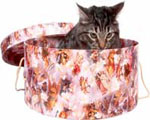
I found a jacket that remembers a missing girl, and it’s rewriting my body one day at a time. Now I have to solve that girl's murder before the coat finishes its work and I disappear into someone else’s life.

By Zofia Helena Janowna
Here is what I decided about my shoulders, over two days, without telling anybody I was deciding it.
Laura measured me in April. It was April, and it was a fitting for a blue shirt, and she took the number standing up in a hallway with people going past because that is when she got to me. Saturday she took it in her own room with the door shut and the light on and her thumb on the seam line, sitting down, slowly, twice. Those are not the same measurement. Nobody who has ever used a tape would tell you those are the same measurement.
And even if they were only three years. Three years is what it takes. The first year you build, the second year you plateau, and I have heard from two different people at the clinic that the third year is when it starts going the other way if you are not doing anything but pushing, because pushing is one motion. It is the same motion four thousand times a day. You get very good at one thing and the muscles that do the other things quit.
So it is not that something was taken off me. It is that I stopped adding.
I went into the bathroom on Friday morning and got the door shut and looked, which took some doing, because the mirror in that unit is mounted for a standing person and the renovation did not think about it, so what I get is myself from the chin up unless I put a hand on the sink and lift.
I lifted.
And I looked at my own shoulders for probably ninety seconds, and I could not tell you a single thing.
That is the part nobody warns you about. You cannot see your own body. You have looked at it every day of your life, which means you have no baseline, only an average. I could have been down four pounds across the back or up two and I would have seen the same thing, which was a person in a bathroom with his arm braced on a sink, doing something slightly humiliating in private and finding nothing.
I said it out loud, which I do, because saying it makes it a fact instead of an argument. "Three years in the chair."
It was a good explanation. That is the whole trouble with it. It was true, it was checkable, it accounted for the number, and it did not require me to do anything, and I have never in my life met an explanation like that and turned it down.
Then I let go of the sink and sat back down and it was cold enough in there that my hands hurt on the rims, and I put that off too.
The forecast said the front was coming through Friday night. Nineteen degrees Saturday. Twelve Sunday.
They started work on two at seven in the morning on Saturday, and to do it they had to drain the riser that feeds our floor, which is the only heat we get.
There was a notice. It had gone up in the elevator on Thursday, taped at standing height, which meant I read it at a forty-degree angle from about four feet back, and it said HEAT RISER SHUTDOWN * 2ND FLOOR ONLY * SAT 8AM to 5PM and under that in ballpoint somebody had written sorry.
At nine I went out into the corridor and it was colder in the hallway than it was in my apartment, which I had not known was possible in a building. They had the door of 227 open and the door of 231 open and a fan running in the stairwell, and there was a man in a Carhartt with his hood up on a five-gallon bucket, eating.
"How long," I said.
"Five o'clock." He tipped his head at the ceiling. "Maybe five."
"And then it's back on?"
"Then it's back on and then it's off again Monday." He was not being unkind about it. He was cold too. "You got somewhere to be?"
I said yeah.
I did not have somewhere to be. I had a room that was going to be in the forties by two in the afternoon and would not get back to fifty-four until sometime Sunday, and a front coming through behind it, and two shirts and a sweatshirt with a broken zipper.
The check had cleared Friday.
I do the money on the table with a pen because doing it in your head is how people end up short. Rent portion. The phone, which is the cheapest thing I have and the thing I would give up last, because a person with no phone number is a person a caseworker cannot reach and a person a caseworker cannot reach loses everything on a technicality inside of two months. Bus pass. The thirty-one dollars I owed the pharmacy since August, which I paid, because you pay the pharmacy. Food for the month, which I keep in a separate number and do not touch, because the day you start borrowing against food is the last good day you have.
And then at the bottom of the column, the way it is at the bottom of the column every month, the remainder.
Eleven dollars.
Eleven dollars is not a crisis. Eleven dollars, in fact, is a fairly good month. Eleven dollars is what you have when nothing has gone wrong, and the reason there is only eleven of it is that the numbers above it are correct and every one of them has to be paid, and the eleven at the bottom is the entire amount of my life that is not already spoken for.
I sat and looked at it for a minute the way you look at a number you already know.
You can stretch eleven dollars. Everybody who has ever had eleven dollars knows the tricks. But you cannot stretch it into an actual coat in an actual store, and I was not going to make it to the first of December in a sweatshirt, and there was exactly one place on the bus map where eleven dollars is a real number and not a joke.
I put the pen down and got my gloves, which are fingerless and are for the rims, not for warmth.
I did not tell Oriole I was going. She would have come, or she would have produced a coat out of nowhere within twenty minutes, which she could have, and I did not want to find out how.
The Thomas Bean Towers sitting next to the historic AME church preserved by the Cleo Robinson Parker Dance Venue is claimed by Five Points, the historic black mecca of Denver. The main Five Points community is on Welton Street between the twenty third street L line RTD light rail station and the end of the L line. It originally stretched much further down Welton Street but gentrification has replaced the buisnesses with high rise apartments and condos. The store I go to, Tivoli Store, is the one on the corner of Welton and thirtieth street because it has a ramp instead of a lip.
It is twelve blocks from Cleveland Place on Park Avenue which also faces The Thomas Bean Towers to get to Welton Street. I know every curb cut on the route, and two of them do not line up with the crosswalk, which means you cross, then double back eighteen feet against traffic to get up. I have done it four hundred times.
I have a month long disability RTD transit pass given to me each month by the Junior Warden of St. Andrew's Episcopal Church when I attend Mass on the first Sunday of each month. That means that on my way to the Tivoli store when I take the right on Welton from Park Avenue, I only have a couple of blocks to get to the L-line station where I can ride down to the stop at Twenty Ninth Street station where I cross the street to reach the Tivoli store at 3001 Thirtieth street with the Tivoli Beer painted ad on the side of the building. It took me twenty-five minutes going down because it is downhill and forty coming back, and the wind on Saturday was out of the north at whatever speed makes your eyes run.
Coats were on the back wall.
Here is what a coat has to do, and it took me two winters of getting it wrong to be able to say it this fast.
It cannot be long. Anything past mid-thigh goes under you when you sit, and then every push drags it, and by the end of a block you are being slowly strangled at the collarbone by your own coat. It cannot have a lot of body in the skirt of it, because that goes into the rims and then into the wheel, and a coat in a wheel will stop you dead in an intersection. It cannot be tight in the shoulders or across the back, because pushing is a full-arc shoulder movement and a coat that fits a standing man will bind at the third stroke. It cannot have a hood that pools behind your neck, because that is where the backrest is. And the pockets have to be reachable when you are sitting down, which sounds obvious and eliminates about half of everything.
The rack had maybe seventy coats on it. I went through them the way you do, by feel at the shoulder seam, not by looking, because looking takes four times as long.
Eight were possible. Five of those were too long. Two of the remaining three were nylon, which is warm for about nine minutes and then is a bag.
The last one was wool.
It was dark and it was heavy and it came to just below the hip, and when I got it over my shoulders in the aisle it did the thing that nothing had done in three years, which is that it stopped where I stopped. There was no extra of it anywhere. It sat down when I sat down. I put my hands on the rims and did four strokes up the aisle and back, which the volunteer at the counter did not react to at all, and there was no drag, no bind, nothing at the collarbone, and the front closed over my lap and stayed closed.
There was a tag in the collar, a paper one, on a string, stamped through the middle where they do the intake. It had worked its way up and it was against the back of my neck, and it scratched.
I turned it under.
That is it. That is the entire thing. I reached back with two fingers, folded the tag down inside the collar where it would lie flat, and went on pushing up the aisle, and I could not tell you today whether I saw a number on it. I probably did. Your eye goes over things. But I was cold and it was scratching me and the only question I had about that tag was whether it was going to keep touching my neck.
The price was written on masking tape on the sleeve. Eleven dollars.
I want to say I thought that was strange. I did not. Wool coats at the Brick Mile run eight to fifteen depending on who priced them and how they were feeling, and eleven is right in the middle of the road.
I went up to pay. There was a donation box by the counter, one of the big cardboard ones with the store's logo printed sideways because somebody assembled it wrong, and it was overfull, with a black plastic bag on top of the pile and a coffee maker balanced on the bag. It stuck out about eight inches past the counter into the lane, which is why I noticed it, because I had to come at the register on an angle to get around it.
I remember thinking the box was a hazard.
The volunteer was an older man with a cardigan over a cardigan and he took my eleven dollars and asked me if I wanted a bag for it and I said I was going to wear it, and he said good, because it was brutal out there. I had missed the return trip on the L line RTD light rail so I decided to roll the extra distance to the Thomas Bean Towers along Welton.
There is a check-cashing place two doors up from the corner store with the old glass in the window, the wavy kind that is original to the building, and I have gone past it four hundred times.
I stopped in front of it because I was putting my gloves back on.
And I looked at myself the way you do, sideways, without deciding to.
The first thing was the coat, and the first thing was good. I have to be honest about that or none of the rest of it means anything. In three years I have looked in a lot of windows and what is in them is always a person who has been arranged and sitting because he has to, in something that is bunched or hanging or riding up, with the chair being the loudest object in the frame. In that window there was a person in a dark wool coat with his hands in his lap and the coat going down clean over the knees and nothing bunched anywhere, and the chair was just what he was sitting in.
It looked settled. That is the only word I have got. It looked like a person who was sitting there on purpose.
I looked at it for longer than I meant to.
Then my eye went up, the way it does, and there was my face, and for about a second and a half I did not know whose it was.
Not the eyes. Not anything I could have pointed at. It was the line along the bottom, the jaw, the way it came down from under the ear and turned . It turned in a place that was not where I keep it. That is the closest I can get. The corner of it was somewhere else. It was maybe three-quarters of an inch off and it was completely, absolutely wrong, and I looked at a face I have been maintaining as a full-time occupation since I was fourteen years old and did not recognize the bottom of it.
Then it snapped, the way it does, and it was my face.
I stayed there a second with my heart going.
The glass is a hundred years old and it is wavy. That is a fact about that window and I could see the wave in it, running down through the N of the sign behind me, pulling the whole word out sideways. There was a streetlight behind my right shoulder at maybe two o'clock, throwing the light up under the jaw, which is the angle every photographer avoids for exactly this reason. And there was a wide dark collar sitting up against my throat that had not been there twenty minutes ago, and dark against the skin changes the edge. Laura has told me that. Laura has told me that in those words, about actors, about how you can take a chin off somebody with a collar.
Old glass, streetlight, new collar.
I had three reasons before I had gotten my second glove on, which is the fastest I have ever built anything in my life.
I pushed off and went up the block, and I did not look back at that window, and I want to be extremely clear that this was not because I was afraid of it. There was a wind and I had forty minutes of uphill and it was nineteen degrees.
But somewhere around Park Avenue I started doing something I have not stopped doing since.
There is a bank at Twenty Third Avenue with a black granite face, and I looked at that. There is the glass on the west side of a church, and I looked at that. There is the door of the corner store, and the window of the laundromat, which is bad glass, and the mirror they have angled up by the register in there that is supposed to be for shoplifting.
Five of them between the Five Points Community and Cleveland Place, and in every single one it was my face, exactly where I keep it.
So that was fine.
The coat was the warmest thing I had touched in three years. I got up to the second floor at twenty past four with the heat still off, and I did not take it off in the apartment, and I fell asleep in it on top of the blanket at some point before six with my hands still in the pockets.
If you liked this post, you can leave a comment and/or a kudos!
Click the Thumbs Up! button below to leave the author a kudos:
And please, remember to comment, too! Thanks.